Wildflower Meadow Pathways: Mowing Desire Lines Through the Blooms
I sometimes use affiliate links in content. This doesn’t cost you anything but I may make a commission payment from anything you buy through these links. As an Amazon Associate I earn from qualifying purchases. All opinions remain my own.
Most wildflower meadow advice stops at the planting and growing stage. Sow your mix, wait for the flowers, admire from a distance. Nobody quite tells you how you’re meant to actually get into your meadow once it’s up and blooming, short of trampling a straight line through it and squashing whatever was growing there.
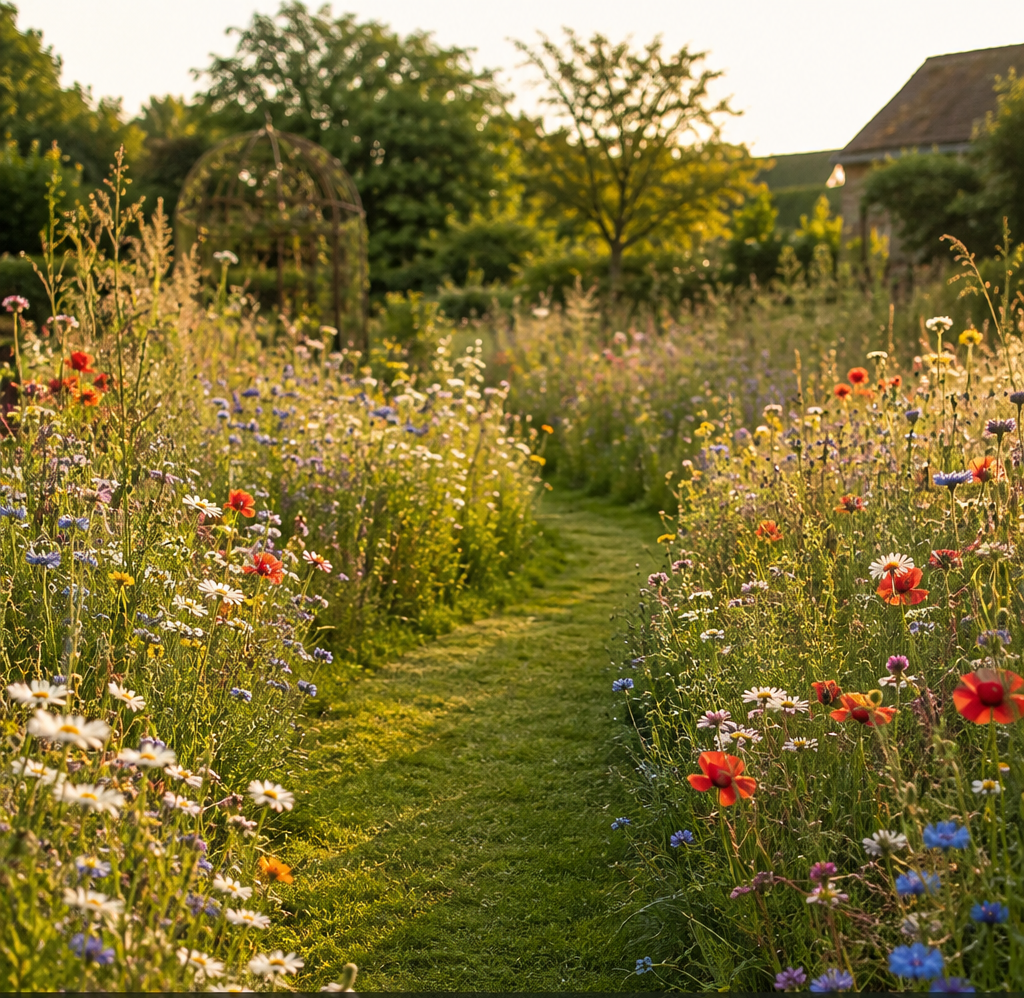
The answer is a mown path, sometimes called a desire line: a narrow, meandering strip cut through the meadow so you can walk among the flowers without flattening them or disturbing the wildlife using them. Done well, a mown path also makes a meadow look intentional rather than neglected, which matters if you share a garden with anyone who isn’t yet convinced that “wild” and “unkempt” are different things.
If you haven’t created your meadow yet, our complete guide to creating a wildflower meadow in a UK garden covers site prep, seed mixes and the first year of establishment. This post picks up from there and focuses purely on the paths.
🗓️ When to Start Cutting: The UK Meadow Calendar
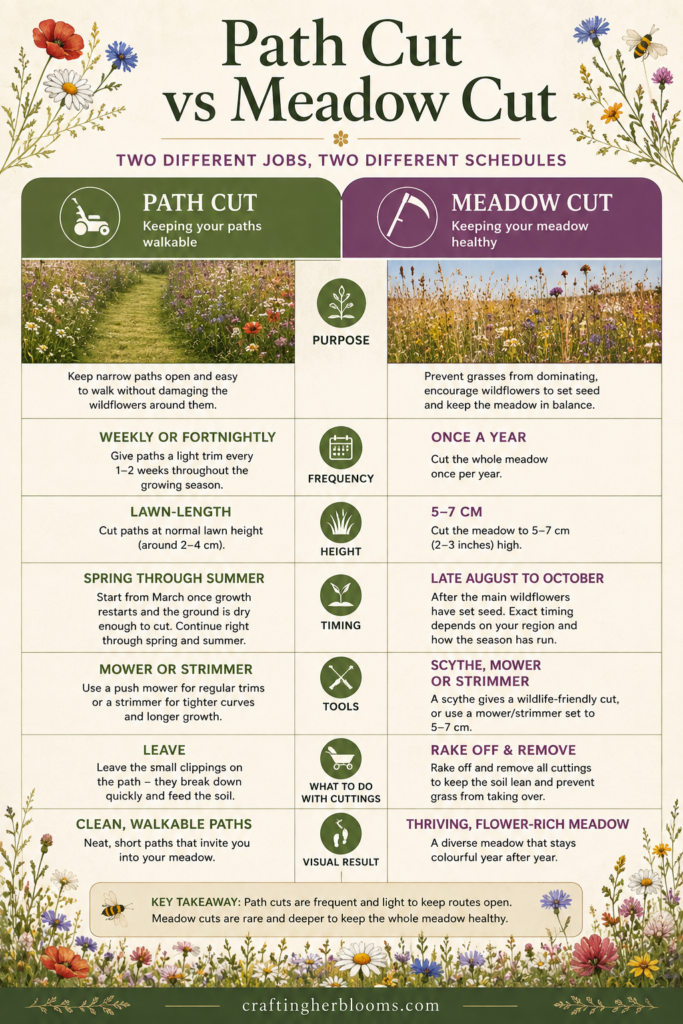
Path mowing and meadow mowing run on two different clocks, and mixing them up is the most common mistake.
Forged & Grown
Garden pieces, printed to order
3D printed planters and garden accessories, made in the UK. Self-watering designs, sculptural shapes, colour options — each one made when you order it.


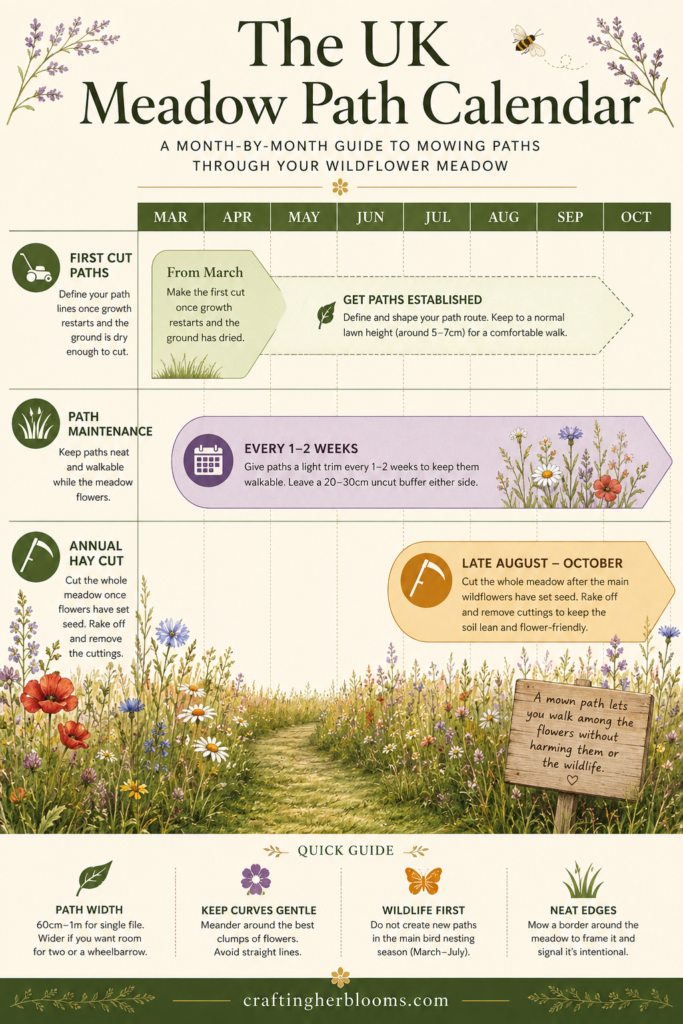
The meadow itself is usually cut once a year, in late summer, after the main wildflowers have set seed. In most of the UK that means late August through to October, depending on your region and how the season has run. This single “hay cut” is what keeps grasses from outcompeting the flowers over time, and the cuttings need to be raked off and removed rather than left to rot down, or you’ll enrich the soil and encourage even more grass next year.
Paths are different. Once the ground has dried out enough in spring and growth has restarted, usually from March onwards, you can start defining and mowing your path lines at a normal lawn height. From there, paths get a light trim every one to two weeks through the growing season to stay walkable, right through spring and summer while the meadow around them is left to flower undisturbed.
🧭 Shaping a Path That Looks Deliberate, Not Accidental
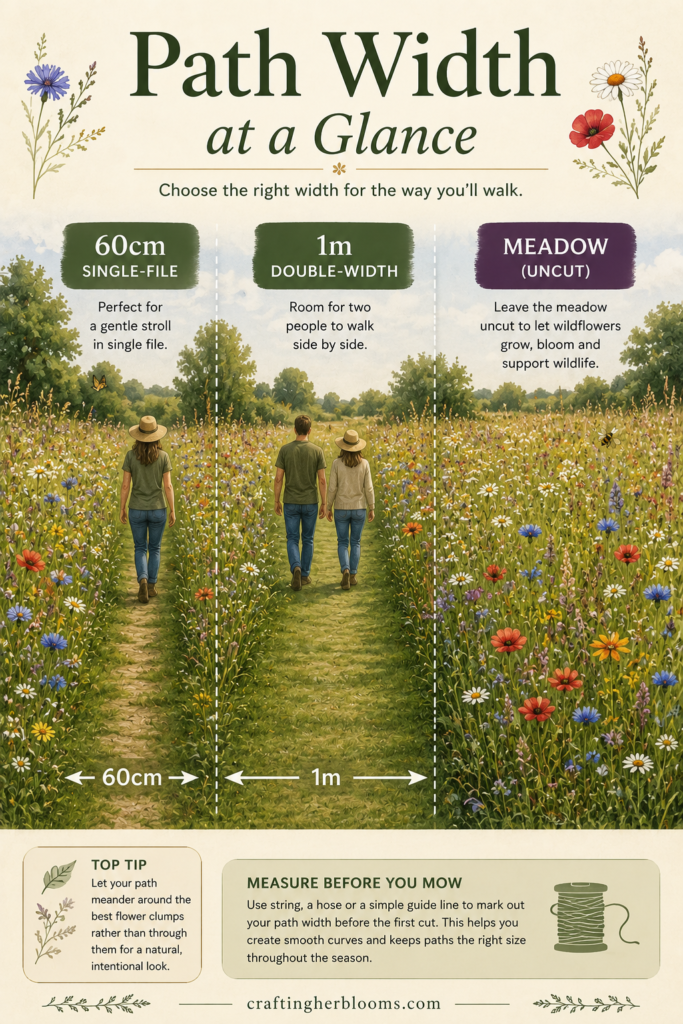
A straight path cut through a meadow tends to look like a mistake. A gently meandering one, curving around the best clumps of flowers rather than through them, reads as a deliberate design choice.
Aim for a path width of around 60cm to 1 metre for a single-file stroll, wider if you want room for two people or a wheelbarrow. Keep the curves soft and generous rather than sharp zig-zags, which are awkward to walk and harder to keep cut cleanly.
It’s also worth mowing a neat edge around the whole meadow, not just the paths through it. A crisp mown border framing the long grass is one of the simplest ways to signal “this is meant to be here,” and it’s a trick we’ve mentioned before in our piece on gardening for wildlife trends worth following this year.
🔧 Push Mower, Strimmer or Scythe: Choosing Your Tool
The right tool depends on how established your path already is and how tidy you want the edges.
For a path you’re maintaining weekly through the season, a standard push mower or rotary mower on a fairly low setting works well, in the same way you’d manage an ordinary lawn. It’s the fastest option and gives the cleanest, most lawn-like finish.
For cutting through longer growth, such as when you’re establishing a new path line partway through the season or reaching into tight curves a mower can’t manage, a corded or cordless strimmer is more practical. Look for one with an adjustable cutting width so you can neaten the edges without widening the path further than intended.
A hand or motor scythe is the traditional choice for narrow, precise work, and many meadow gardeners prefer it for the final finish along path edges. It takes a bit of practice to use well, so if you’re new to scything, it’s worth finding a local demonstration or short course before relying on it for the whole path network. Whichever tool you reach for, keep it UK-appropriate and sized for a domestic garden rather than agricultural equipment built for open fields.
If you’re building out a wider toolkit for path and border maintenance, our roundup of garden pruners worth having on hand covers the hand tools that pair well with a mower or strimmer for tidying edges as you go.
🐝 Keeping Pollinators and Wildlife Safe While You Cut
A mown path only helps your garden if it doesn’t undo the wildlife value of the meadow around it.
Leave an uncut buffer strip, even just 20 to 30cm, between the path edge and the flowering meadow. This keeps nectar and shelter close to where you’ll actually be standing and stops the mown area from creeping wider each time you cut.
Avoid establishing brand new path lines during the main UK bird nesting season, roughly March to July, particularly if ground-nesting species are known to use your area. Once a path is established and mown on a predictable, narrow route, wildlife tends to route around it rather than nest within it, but a first cut through previously undisturbed long grass is the moment to be most careful. This is one area where it genuinely pays to go slowly rather than clear a wide path in one go.
For more on balancing access with habitat, our guide to creating wildlife habitats in a small UK garden has practical ideas that apply just as well to a meadow corner as a full plot.
🌾 Keeping the Path Defined All Season
A path that’s cut once and then left will disappear back into the meadow within a few weeks, particularly during a warm, wet British summer.
The fix is simply repetition: a light mow every one to two weeks through the main growing months keeps the line crisp without needing to cut any harder or lower than a normal lawn setting. If you notice the meadow flopping over the path edges after heavy rain, a quick pass with a strimmer along the border is often enough to restore the line without a full remow.
This is also where a mown lawn area elsewhere in the garden earns its keep as a contrast. If you’re managing both a meadow and a more traditional lawn, our tips on wildlife-friendly lawn care that doesn’t mean digging anything up work well alongside a meadow path routine, since both rely on the same “cut little and often” principle.
🍂 Where Paths and the Main Meadow Cut Meet
By late summer, your neatly kept path and the long, flowering meadow around it will look quite different from each other, and that’s exactly the point.
When the annual hay cut arrives, usually once seed has visibly set and dropped, the whole meadow gets cut back to the same height as your paths, and the two blend together for a short while. This is also a natural moment to reassess your path line for the following year: widen a curve that never quite worked, or redirect it around a patch of flowers that did particularly well. Once the meadow starts regrowing from spring, you begin the cycle again, this time from an already-established path.
Spring and early summer are about establishing and maintaining the line while everything around it grows. Late summer is about letting paths and meadow meet at the same height before the next cycle. Keeping that seasonal rhythm in mind makes the whole job far simpler than treating every cut as a one-off decision.
If pollinators are a big part of why you planted a meadow in the first place, it’s worth timing your path maintenance around what’s actually in flower. Our seasonal guides to plants that support pollinators through spring and the summer pollinator plants worth prioritising are useful references for knowing when to be most cautious with the mower.
A well-kept path doesn’t compete with a wildflower meadow, it makes it usable. Once the rhythm is established, the paths become one of the easiest parts of meadow upkeep rather than an afterthought squeezed in around everything else.
🌿 Continue Your Journey
- How to create a wildflower garden that thrives in UK gardens
- The basics of pruning: types of pruning for your garden
- 10 tips for winter lawn care to keep your lawn healthy all winter long
- Lawn moss control UK: how to get rid of moss and stop it coming back
- Chop and drop: the no-fuss mulching method that mimics nature