
How to Create Wildlife Habitats in a Small UK Garden
I sometimes use affiliate links in content. This doesn’t cost you anything but I may make a commission payment from anything you buy through these links. As an Amazon Associate I earn from qualifying purchases. All opinions remain my own.
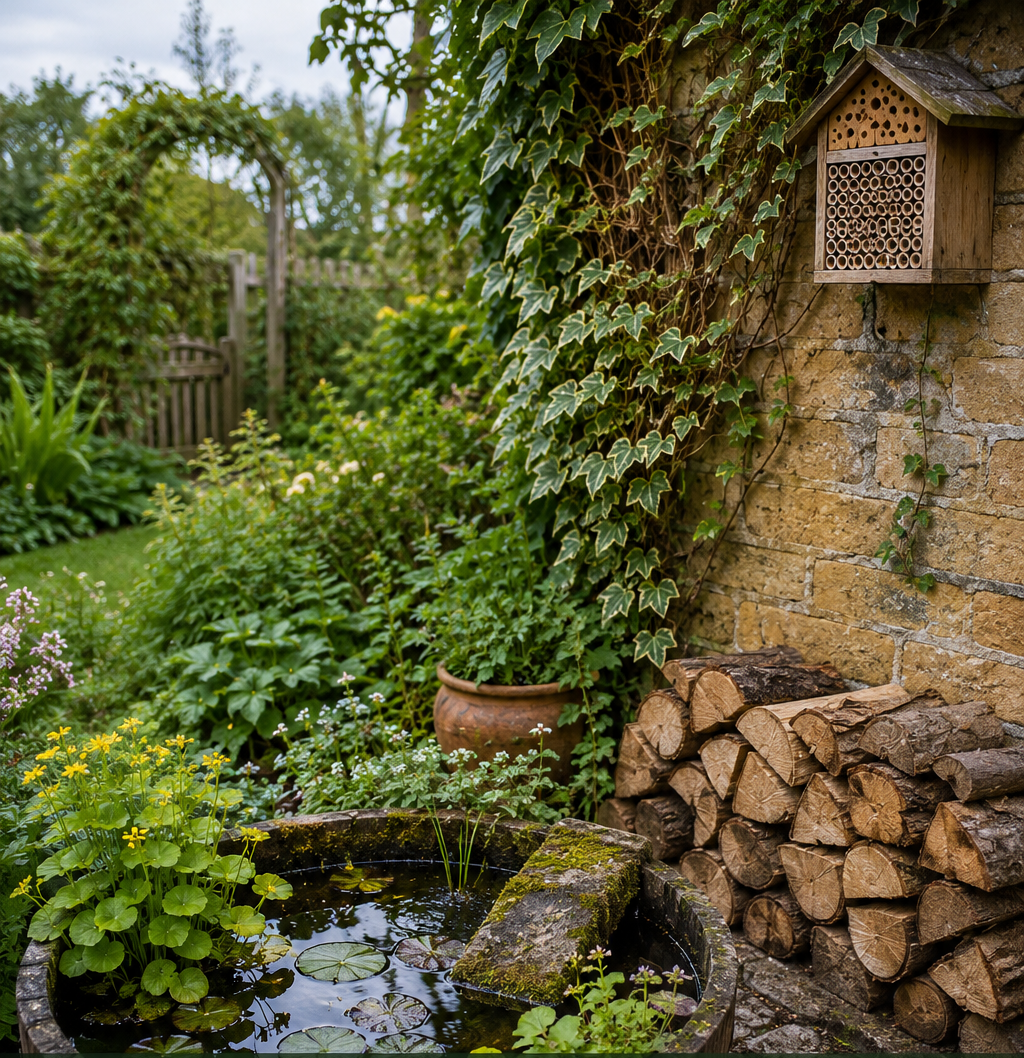
There’s a quiet revolution happening in British back gardens, and it doesn’t require a country estate or a team of landscapers. From Telford terraces to Edinburgh flats, gardeners across the UK are discovering that even the smallest outdoor space can become a genuine refuge for the creatures that need it most. A single log pile in a shadowy corner, a washing-up bowl sunk into a border, a 13cm gap cut into a fence panel — these modest gestures ripple outwards in ways that feel almost disproportionately powerful.
The case for habitat gardening has never been stronger. UK wildlife is under enormous pressure. Hedgehog numbers have fallen by a third since 2000. Over half of the UK’s solitary bee species are in decline. Many common farmland birds have disappeared from entire regions within a generation. Gardens now cover more land area than all our national nature reserves combined, which means what happens in your patch genuinely matters. This guide focuses on the physical structures and features that make a garden work for wildlife — the shelters, corridors, water sources, and hiding places that give creatures somewhere to live, not just something to eat.
If you already know your way around a pollinator-friendly planting scheme, this is the companion piece you’ve been waiting for. If you’re starting from scratch, you’ll find that habitat features are often the easiest wins of all — requiring more intention than skill, and rewarding you with wildlife encounters you simply can’t engineer any other way.
Start With a Habitat Audit
Before you build anything new, it’s worth walking your plot with fresh eyes and asking what’s already there. A mature ivy on a fence might look untidy but it provides cavity nesting sites for robins and wrens, insect forage across two seasons, and dense winter cover for roosting birds. The crumbling mortar in an old wall is riddled with micro-habitats that mason bees and spiders have been using for years.
Forged & Grown
Garden pieces, printed to order
3D printed planters and garden accessories, made in the UK. Self-watering designs, sculptural shapes, colour options — each one made when you order it.


Quick Quiz
Is your garden wildlife-ready?
Tick everything that applies to your outdoor space — however small it is.
0 of 5
craftingherblooms.com
Look for existing structure first: shrubs with dense, twiggy growth; piles of undisturbed leaves in corners; patches of rough grass; any dead wood or fallen branches. These are your foundation. Adding habitat features works best when they build on what's already in place rather than replacing it with tidy alternatives.
Note the sunny and shady aspects of your garden, too. A solitary bee house facing full south on a warm brick wall will be colonised quickly; the same box in north-facing shade may sit empty for years. A pond in a spot that receives some direct sun will host far more life than one tucked permanently beneath a tree. Knowing your garden's microclimates takes the guesswork out of placement and makes every investment count.
Ponds and Water Features: The Single Most Powerful Addition
Every major wildlife charity in the UK will tell you the same thing: if you do only one thing for your garden's wildlife, add water. Not because it's easy, but because the returns are extraordinary. A pond of virtually any size will attract more species to your garden than almost any other feature — insects, amphibians, birds, mammals, and creatures you won't even be able to identify without a field guide.
You Don't Need a Large Plot
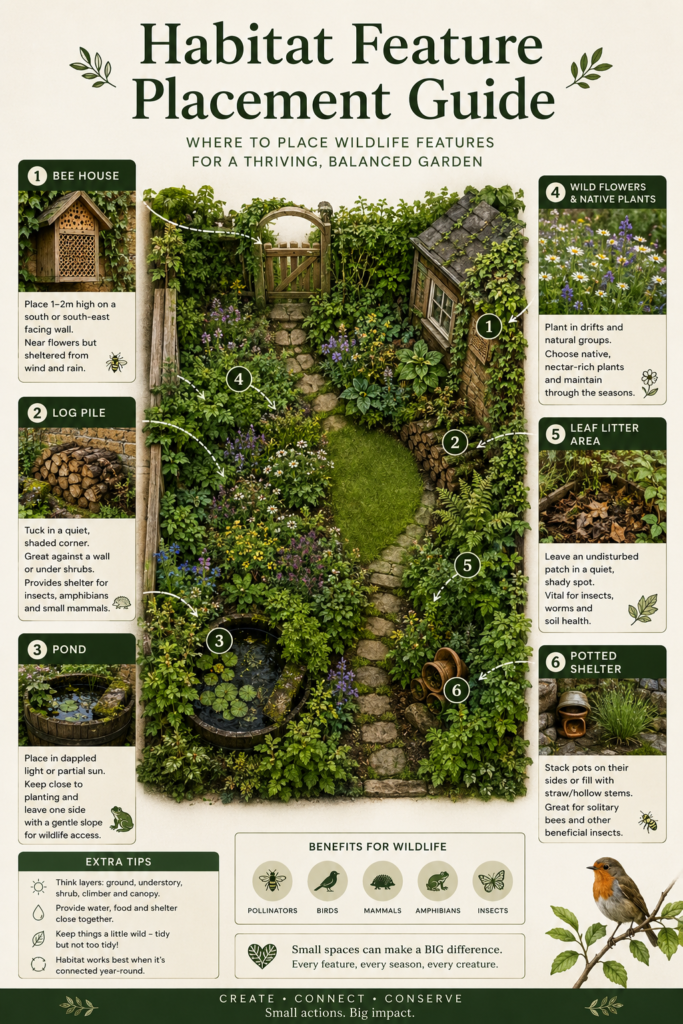
The great democratiser of wildlife gardening is that ponds scale beautifully to small spaces. A half-barrel or large trough sunk level with the ground will do the job. A washing-up bowl buried in a border, with a gentle stone ramp on one side, can attract breeding frogs, common newts, water boatmen, and a cast of visiting insects within a single season. The wildlife doesn't care about the container — it cares about the water.
The key requirements are consistent regardless of size. At least one gently sloping side or a rough stone ramp is essential so that hedgehogs, frogs, and any bird that tumbles in can clamber back out. A depth of around 30cm in the centre will prevent the water freezing solid in winter. And at least part of the water surface should receive several hours of sunlight each day to support the aquatic plant life that underpins everything else.
Use rainwater where you can — tap water is high in phosphates and will cause rapid algae growth. If you're using a barrel or container, fill it in autumn before the worst of the drought season arrives. Plant the margins with one or two native aquatic species such as water mint, brooklime, or marsh marigold; these provide oxygen, shelter for larvae, and a toehold for the smaller creatures that larger ones feed on.
What Wildlife Will You Actually See?
Frogs and toads often discover a new pond within the first year — sometimes within weeks. Common newts typically follow within two or three seasons. Dragonflies and damselflies use open water for breeding, and watching them hunt above a small garden pond on a July afternoon is genuinely one of the great pleasures of wildlife gardening. Water boatmen, pond skaters, and diving beetles arrive seemingly from nowhere. In a garden with mature trees nearby, you may even attract a heron — though this tends to alarm gardeners who had been hoping to keep their frogs.
Log Piles, Dead Wood, and the Art of Productive Decay
There is something slightly counter-cultural about being enthusiastic about rotting wood, but dead wood is one of the most wildlife-rich materials in any garden. In a natural forest, standing dead trees and fallen logs are colonised by dozens of species of beetle alone, many of which require dead wood at some stage of their life cycle. In the tidy British garden, wood is removed, burned, or chipped the moment it dies — which is why many wood-dependent species are in steep decline.
A log pile in even the smallest garden makes a real difference. Stack logs of varying sizes and species if possible — oak, ash, birch, and apple all attract different specialists. Position it in damp, semi-shaded conditions rather than full sun: this slows drying, encourages the fungal activity that creates the layered decomposition structure beetles depend on, and makes it attractive to amphibians looking for humid retreats.
Don't be tempted to tidy it. Resist the urge to restack logs that have shifted, or to remove bark that has started to peel. The gaps, crevices, and soft rot are the point. A log pile that looks a little dishevelled is doing exactly what it's supposed to do.
Smaller Dead Wood Habitats
If a log pile feels too much for a small patio garden, dead wood features can be scaled right down. A single thick branch section propped against a wall or pushed into a border will provide habitat. A bundle of hollow bamboo canes stuffed into a terracotta pot creates nesting cavities for solitary bees. Untreated wooden fence posts, left rather than replaced, will be worked by woodlice, beetles, and fungi for years.
The principle in all cases is the same: dead wood, left to decay at its own pace, in a sheltered spot, will be found and used by wildlife that has nowhere else to go in a tidy landscape.
Solitary Bee Houses and Insect Hotels: What Actually Works
The insect hotel has become something of a garden accessory cliché — and many of the decorative versions stacked with pine cones, seed heads, and bark chips serve more aesthetic than practical purpose. Understanding what actually works, and why, transforms an impulse purchase into a genuinely useful habitat feature.
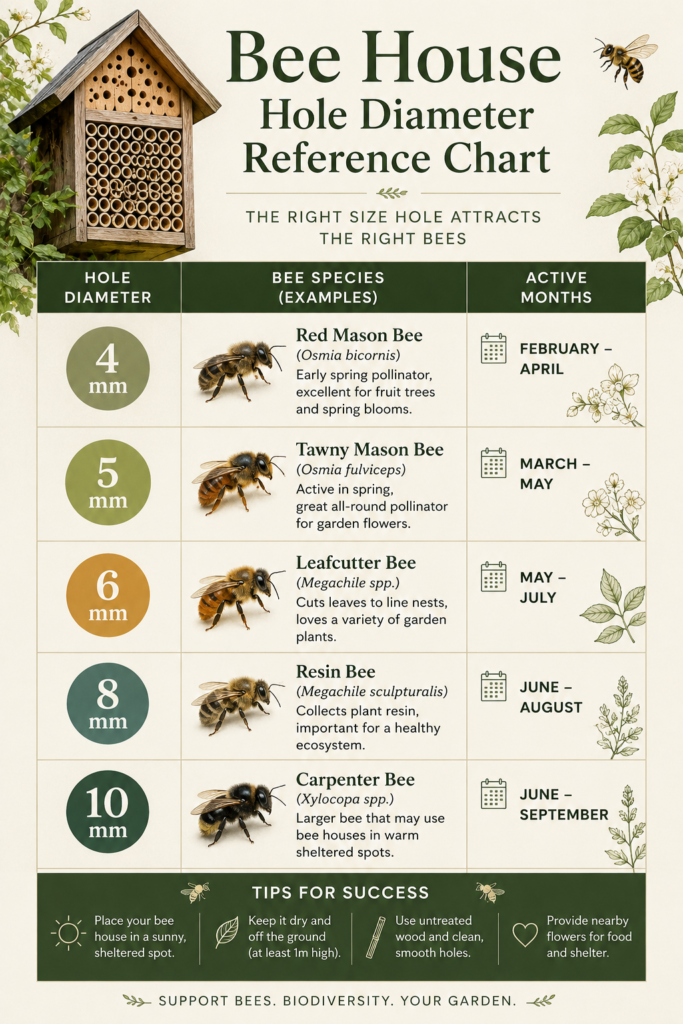
Solitary bees are the primary users of man-made nest structures in UK gardens, and their needs are specific. Red mason bees (Osmia bicornis), which emerge in April and May, and leafcutter bees (Megachile species), active from June onwards, both use pre-made cavities to lay their eggs. What they require is consistent: smooth-walled tunnels of 6–8mm diameter, made from drilled hardwood blocks or solid bamboo sections (not bundled reed, which splits and becomes damp), with a depth of at least 10cm and ideally 15cm. The entrance must face south or south-east, sheltered from prevailing rain, and positioned at least 1m above ground level.
A simple block of untreated hardwood — oak or ash is ideal — drilled with rows of varying diameters between 4mm and 10mm, screwed to a south-facing fence or wall, will outperform most off-the-shelf insect hotels. If you do buy a commercial product, look for one with a removable tray system so you can clean it between seasons, and inspect the tubes — hollow canes with rough interiors are far less likely to be used than smooth-bored ones.
Beyond Bees: Other Insect Tenants
Ground-level habitat features serve a different set of insects. A bundle of hollow stems (elder, buddleja, or bamboo) laid horizontally in a sheltered, slightly damp corner will be investigated by earwigs, lacewings, and various beetles — all of which are important predators of aphids and other garden pests. A simple terracotta pot loosely stuffed with straw, placed on its side in a sheltered border, provides overwintering habitat for queen bumblebees, which are far more vulnerable than most gardeners realise.
The best insect habitat features are generally the ones you make yourself from local, natural materials — partly because they're cheaper, partly because they can be tailored to your specific conditions, and partly because the process of making them forces you to understand what you're providing and why.
Hedgehog Highways and the Importance of Connected Gardens
The British hedgehog's most serious problem in urban and suburban areas isn't pesticides or badgers — it's fences. A hedgehog will travel between one and two miles in a single night in search of food, but the closed-panel fences that surround most UK gardens have turned back gardens into isolated islands. A hedgehog that cannot move between gardens eventually exhausts its local food supply or fails to find a mate, and the local population quietly collapses.
The solution is almost absurdly simple: a 13cm by 13cm gap at the base of your fence panel, in a corner or along the boundary, costs nothing and takes ten minutes with a jigsaw or by removing a single fence gravel board. That gap — roughly the size of a CD case — is large enough for a hedgehog to pass through and small enough to exclude cats.
Getting the Neighbourhood Involved
One gap in one fence helps, but the real benefit comes from linking multiple gardens into a continuous foraging network. Many areas across the UK have active hedgehog highway projects, often coordinated through local wildlife trusts or the British Hedgehog Preservation Society, which provide maps and coordinate with residents to create connected corridors street by street.
Even without a formal scheme, a conversation with your immediate neighbours about cutting matching gaps on their side of the boundary can extend a single hedgehog's territory dramatically. If you frame it as a ten-minute job with clear wildlife benefits rather than a permanent structural alteration, most neighbours are willing. Some have been waiting for an excuse.
Hedgehogs also benefit from supplementary feeding in late autumn before hibernation — tinned cat or dog food (meat-based, not fish) is ideal, placed in a feeding station that excludes cats and foxes — but the highway comes first. Food without access is no help at all.
Leaving Areas Rough: The Counterintuitive Habitat
Every wildlife-friendly gardening guide will tell you to leave a patch of grass uncut, and most gardeners nod along and continue mowing to the boundary. It's worth understanding why the advice is so consistent, because the ecology behind it is genuinely compelling.
Long grass is now one of the rarest habitats in the British countryside. Agricultural intensification has removed the traditional hay meadows and rough grassland margins that once supported dozens of species of grassland invertebrate. Your garden lawn, left unmown in at least one section, can partially substitute for that lost habitat. Even a strip one metre wide along a fence or wall boundary, cut once in late summer, will host flowering plants that support pollinators, provide cover for beetles and spiders, and give slow-worm and grass snake populations somewhere to shelter.
If your lawn is mostly ryegrass with little botanical diversity, this process takes a few seasons. But if you stop mowing and let what's there flower, you'll often be surprised — clover, self-heal, ribwort plantain, and common daisies establish quickly and attract far more insect life than a shorn surface. More diversity in the sward follows in subsequent years as seeds arrive from neighbouring gardens and local bird activity.
Relaxed Corners and Productive Mess
Beyond the lawn, the principle of productive untidiness extends across the whole garden. A pile of autumn leaves in a sheltered corner provides hibernation habitat for hedgehogs and overwintering sites for queen bumblebees. Hollow plant stems left standing through winter (rather than cut back in autumn) are used by overwintering solitary bees and ladybirds. Seed heads left on perennials through to February provide food for finches and tits through the lean months.
The shift in mindset from a tidy garden to a purposeful one is actually quite liberating. Many of the things that feel like neglect — the uncut corner, the pile of wood, the nettle patch — are doing specific ecological jobs. And if you can see those jobs being done, they stop looking like neglect entirely.
Bird Boxes, Bat Boxes, and Vertical Space
In a garden without mature trees, the shortage of natural cavities for nesting and roosting limits which birds and bats can make use of your space regardless of how good the planting is. A few strategically placed boxes on walls and fences can address that gap directly.
Choosing and Siting Bird Boxes
The most important factor in bird box success is not the box itself but its position. Blue tits and great tits require a hole-fronted box with an entrance diameter of 25–28mm, positioned between 1.5m and 3m above ground on a wall or fence that faces between north and east — this keeps it out of direct afternoon sun and prevailing south-westerly rain. House sparrow boxes work best in groups of three, placed under the eaves. Robins and wrens prefer an open-fronted box in dense cover, hidden from sight rather than displayed in the open.
Avoid placing any nest box where a cat can reach or sit below it, and don't position it near a busy feeding station — the activity discourages nesting. Once positioned, leave it completely alone during the breeding season from March to August, and clean it out each winter to remove old nesting material and parasites.
Bat Boxes and Long-Term Thinking
Bat boxes take longer to pay off than bird boxes — sometimes several years before a colony establishes — but once in use they provide a roosting site that a colony will return to for decades. The key requirements are: a rough-textured interior (never smooth) so bats can grip, no wood preservative treatment, a south or south-west facing aspect for warmth, and a height of at least 3m above ground with a clear flight path to the entrance. Several box types positioned at different heights on the same wall will attract different species.
Avoiding Chemical Interference
All of the habitat features described above work best when the garden around them is managed with minimum chemical interference. Pesticides — including slug pellets, insecticides, and broad-spectrum herbicides — remove the food chain that most garden wildlife depends on. A single application of neonicotinoid-based products to a plant can render its nectar toxic to bees for weeks. Slug pellets containing metaldehyde (now banned in the UK, but older stocks still in use) accumulate in the tissues of hedgehogs and ground-feeding birds.
This doesn't require perfection. You can manage specific pest outbreaks by hand, use targeted biological controls, or simply tolerate a higher level of damage in some areas. The goal isn't a pristine garden — it's one where the natural food web is intact enough for wildlife to regulate pest populations itself, which tends to happen more effectively than any chemical programme over time.
If you'd like to explore this further alongside your habitat work, the post on eco-friendly garden ideas covers sustainable garden management in more depth, and the companion planting guide covers how to use plant relationships to support pest balance naturally.
What Wildlife Will You Actually See?
It's worth being honest about timescales, because wildlife habitat features work on nature's schedule rather than ours. Some results are almost immediate: a new pond will have pond skaters within days, frogs prospecting within weeks. Solitary bee houses in a good location are often colonised within the first summer. Hedgehogs tend to find their way to well-placed feeding stations within a few weeks if there's a functioning highway.
Other results take longer. Bat boxes typically need two to five years before a roost establishes. Wildflower patches reach their peak diversity after three or four seasons. Log pile beetles may not arrive in numbers for two to three years as decomposition reaches the right stage.
The cumulative picture over three to five years in a well-managed wildlife garden is genuinely striking. Regular visitors to a garden with pond, log pile, insect habitat, rough grass, and hedgehog access typically include common frogs, common toads, smooth newts, hedgehogs (in gardens with highway access), slow-worms (in areas where they're established locally), at least a dozen bee species, a similar number of butterfly species, several species of hoverfly, and an expanding cast of garden birds including species you won't have seen before. None of this requires rare plants, expensive equipment, or specialist knowledge — just the willingness to provide the structures and then step back.
A Weekend Project List for Small Gardens
For anyone who wants to start immediately and practically, these five projects can each be completed in an afternoon, require no specialist skills, and start working for wildlife within weeks.
Cut a hedgehog highway. Remove a fence gravel board, or use a jigsaw to cut a 13cm square gap at the base of a close-board panel. Do it in both fences if possible. Text your neighbour.
Sink a mini pond. A large washing-up bowl or old Belfast sink, sunk level with the ground in a sunny border spot, with a stone ramp on one side and two or three marginal plants, is complete habitat.
Stack a log pile. Collect any dead wood — logs, branches, prunings from thicker stems — and stack it loosely in a damp, semi-shaded corner. Don't tidy it.
Make a bee block. Drill 6–8mm holes 15cm deep into a block of untreated hardwood and screw it south-facing to a wall or fence above head height. Done.
Stop mowing one strip. Pick a boundary edge or a patch beneath a hedge. Mark it with a simple edging. Don't cut it until late August. See what comes up.
These five things, done in a single productive weekend, create more functional wildlife habitat than most decorative wildlife product ranges combined.
Bringing It All Together
The small garden that works hardest for wildlife is rarely the most designed-looking one. It's the one where there are layers — some vertical structure from climbers or a small tree, some horizontal mess from a log pile or rough grass strip, water at ground level, nesting cavities at height, and connections to the wider landscape through boundary gaps and climbing plants that cross from garden to garden.
The satisfaction of habitat gardening is different from other kinds of gardening. You plant, you build, you install — and then the garden fills itself in. The frog you didn't introduce finds the pond. The mason bee you never bought fills the drilled block. The hedgehog you've never seen leaves footprints in the mud by the log pile on a September morning.
That is the payoff, and it is remarkable.
Continue Your Journey
If this post has inspired you to go further with wildlife-friendly practices, these posts take the work in different directions:
- How to Create a Wildlife Garden from Scratch: The UK Beginner's Guide — the foundational guide to starting a wildlife garden with no experience
- The Best Plants for Spring Pollinators in a UK Garden — building the planting that feeds the wildlife your habitats will shelter
- How to Make Your UK Lawn More Wildlife-Friendly (Without Digging It Up) — the complete guide to transforming your turf without losing it
- How to Start a Wildlife-Friendly Composting System in Your UK Garden — close the nutrient loop and create another habitat in the process
- Eco-Friendly Garden Ideas for UK Gardens: How to Garden Sustainably in 2026 — the broader sustainable gardening context
Which habitat feature are you planning to add first — or have you already tried one? Share your experience in the comments below; I'd love to hear what's worked (and what the wildlife made of it).
Want more practical wildlife gardening advice delivered to your inbox? Join the Crafting Her Blooms newsletter and I'll send you seasonal guides, planting ideas, and honest notes from a real UK garden.


