
Bee and Butterfly Buffet Planters: How to Mix Nectar Plants in One Container
I sometimes use affiliate links in content. This doesn’t cost you anything but I may make a commission payment from anything you buy through these links. As an Amazon Associate I earn from qualifying purchases. All opinions remain my own.
If you’ve ever stood in a garden centre holding a single pot of lavender, wondering whether it’s enough to actually make a difference for local pollinators, this post is for you. The honest answer is: probably not on its own — but one well-planted container absolutely can be. The trick lies not in which plants you choose, but in how you combine them.
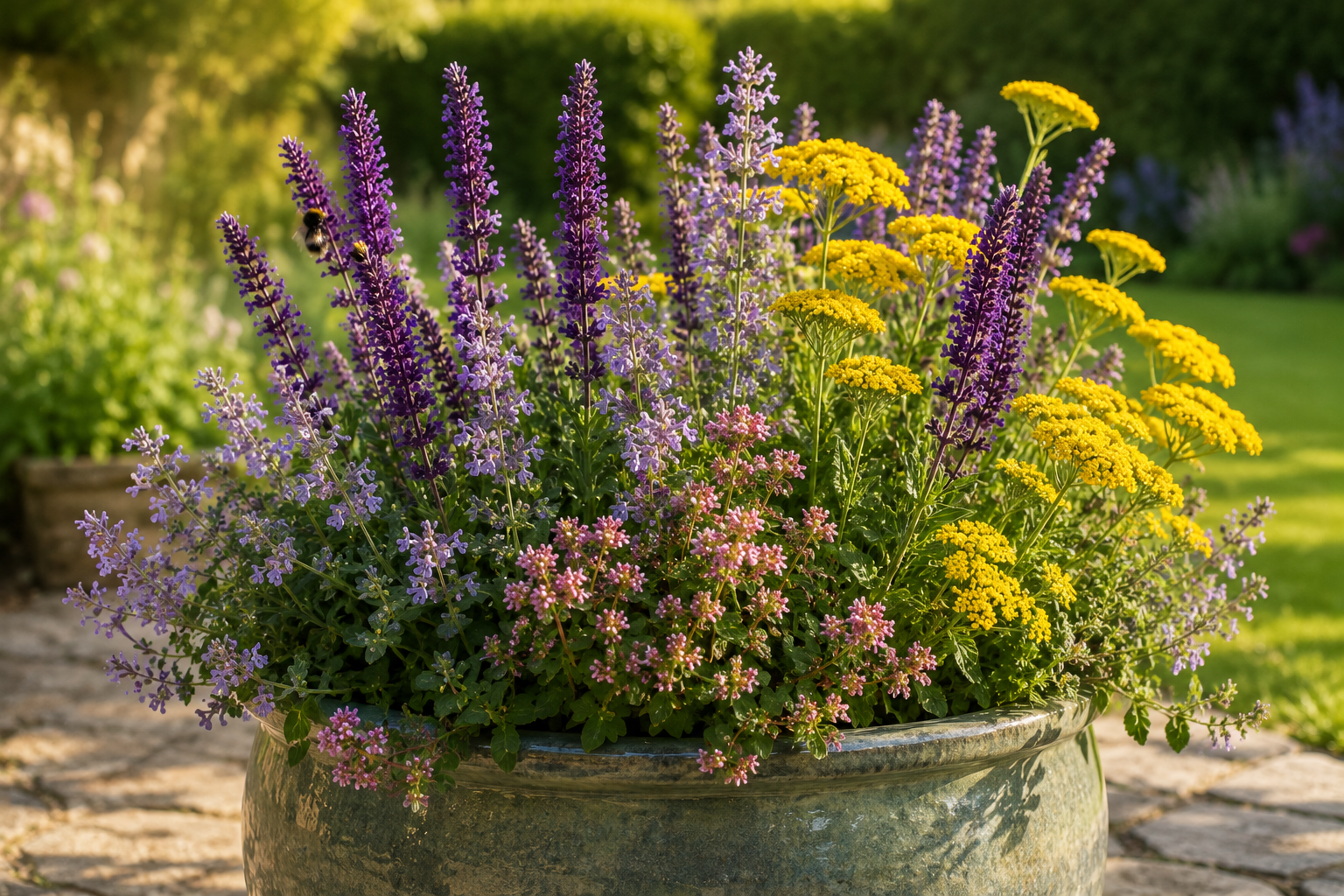
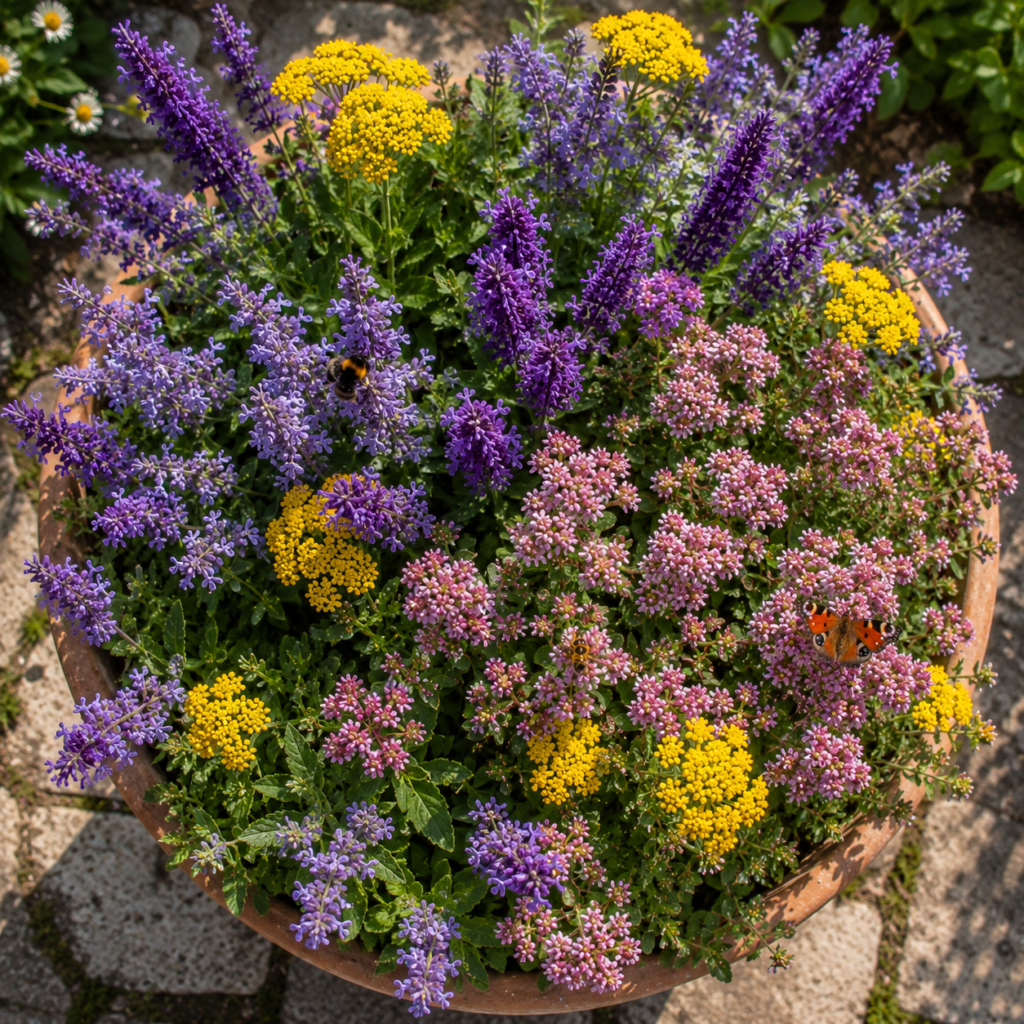
A bee and butterfly buffet planter takes a large container and fills it with a thoughtfully mixed selection of nectar-rich plants that flower at different times, in different shapes, and at different heights. The result is a miniature feast that keeps going from late spring through to autumn — the kind of consistent, varied supply that pollinators actually rely on, rather than a single-species burst of colour that’s over in three weeks.
This approach works brilliantly in UK gardens precisely because our summer is so compressed. From around May through to September, pollinators are foraging intensively to build reserves before the cold sets in. A container that bridges gaps and offers something in bloom during every one of those months becomes genuinely valuable — not just for bumblebees and honeybees, but for hoverflies, solitary bees, butterflies, and even moths that visit at dusk.
The good news is that you don’t need a large garden to do this. A doorstep, a balcony, a corner of a paved courtyard — if it gets reasonable sun for most of the day, you have everything you need. Here’s how to build a buffet planter that really works.
Forged & Grown
Garden pieces, printed to order
3D printed planters and garden accessories, made in the UK. Self-watering designs, sculptural shapes, colour options — each one made when you order it.


Why a Mixed Nectar Container Outperforms Single-Species Planting
There’s a common assumption that the more of one plant you have, the better — and for some purposes that’s true. But for pollinators, variety is at least as important as quantity. Different bee species have different tongue lengths and body shapes that suit different flower structures. Butterflies tend to favour flat, open blooms they can land on easily. Hoverflies — which are exceptional pest controllers as well as pollinators — often prefer small, accessible flowers entirely. A container that relies on a single species, however generous, is essentially putting out one dish at a buffet and calling it a meal.
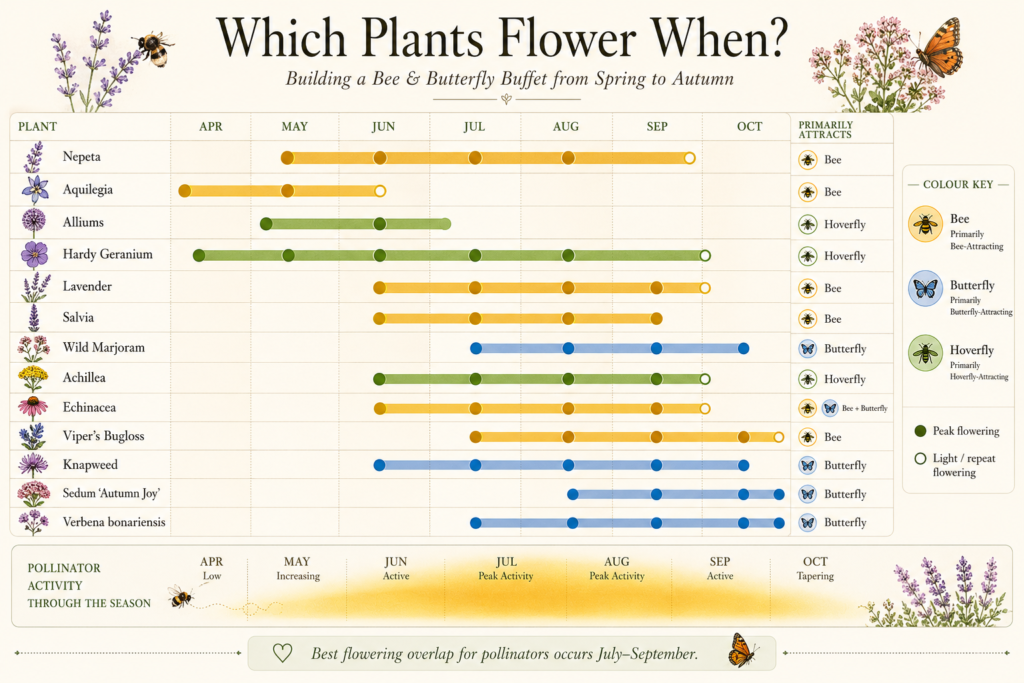
The other limitation of single-species planting in containers is the flowering window. Most nectar plants bloom for four to eight weeks at most. Once they’re over, the pot goes quiet — and whatever was visiting it moves on. Mix three, four, or five plants with staggered flowering times and you extend the productive season dramatically, sometimes to the point where something is still in bloom in October.
There’s also a structural argument for variety. A planter that mixes heights — tall spires at the back, mounding plants in the middle, low spreaders at the front — provides more foraging opportunities per square centimetre than a flat block of the same plant. Insects can approach from different angles, shelter in different microclimates, and move between bloom types without having to travel.
The “Boom and Bust” Problem in UK Gardens
One thing worth understanding about how pollinators experience our gardens is that they’re often exposed to what ecologists call a “boom and bust” pattern — a flush of flowers in May and June, followed by a significant gap from late July onwards. This late-summer drought is a real problem for bumblebee colonies trying to raise their final workers and queens before winter. A well-planned buffet planter that includes plants which flower into August and September — like wild marjoram, knapweed, or later-blooming salvias — can genuinely plug this gap in a way that a summer annual display never will.
What Makes a Good Buffet Planter: The Four Key Principles
Before we get into specific plant choices, it helps to understand the principles behind what makes a buffet planter work. These four criteria will guide every decision you make.
1. Staggered flowering times. You’re looking for a combination that spans at least May through September, ideally with something in bloom even earlier in spring for queen bumblebees emerging from hibernation. Think in three phases: early (April–June), mid (June–August), and late (August–October).
2. Varied flower shapes. Open, single-flowered forms are accessible to the widest range of insects. Tubular flowers suit long-tongued bumblebees. Flat-topped flower heads like achillea and yarrow are landing platforms for butterflies and hoverflies. A good buffet mixes all three.
3. No double flowers. This one is non-negotiable. Highly bred double-flowered varieties — pom-pom dahlias, double petunias, heavily ruffled roses — look lush but have either heavily reduced or completely inaccessible nectar and pollen. The extra petals that make them look attractive to us physically block pollinators from reaching the reward. Stick to single-flowered varieties throughout.
4. Genuine quantity. Pollinators need to eat. A tiny mixed arrangement in a window box offers a quick stop but not a proper meal. For a buffet planter that works as a real pollinator resource, aim for a container that’s at least 40–50cm in diameter, and plant it generously. Crowded is fine — this is not an aesthetic exercise in negative space.
The Best Plants for UK Bee and Butterfly Buffet Planters
The following plants have all been selected for their genuine wildlife value, their suitability for container growing, and their availability from UK suppliers. All are single-flowered varieties unless stated. Organised by flowering phase to help you plan your combinations.
Early Bloomers: April to June
Nepeta (Catmint) is one of the best all-round pollinator plants you can grow, and it’s excellent in containers. ‘Walker’s Low’ is the variety most often recommended, staying reasonably compact while producing clouds of lavender-blue flowers from late May right through summer if you shear it back after the first flush. Bumblebees are absolutely devoted to it.
Aquilegia (Columbine) brings real elegance to an early-season container and is beloved by long-tongued bumblebees, particularly the garden bumblebee (Bombus hortorum), whose long proboscis is perfectly suited to the spurred flowers. Single-flowered varieties are essential. They’re short-lived perennials but self-seed generously, so you’ll rarely need to replace them.
Alliums are often overlooked as container plants but work beautifully in a large pot — the drumstick types like Allium sphaerocephalon are particularly effective, producing deep purple globes on slender stems in June that hoverflies and bees visit constantly. Plant the bulbs in autumn for a reliable spring display.
Geranium (Hardy Cranesbill) — the perennial kind, not the tender pelargonium — offers open, simple flowers that are highly accessible to short-tongued bees and hoverflies. ‘Rozanne’ is the classic variety: it blooms from late spring well into autumn and tolerates container life better than most hardy geraniums.
Mid-Season Performers: June to August
Lavender is the plant most people already associate with pollinators, and rightly so. In a container context it works best when given a prominent, sunny position and not over-watered. Lavandula angustifolia varieties like ‘Hidcote’ and ‘Vera’ are the most reliably hardy and long-blooming for UK conditions. True lavender is particularly attractive to honeybees and numerous solitary bee species. If you’re growing lavender elsewhere in the garden already, our guide to growing lavender successfully covers all the detail on varieties and care.
Salvia — particularly Salvia nemorosa varieties like ‘Caradonna’ and ‘Amethyst’ — offers long, elegant spires from late June through August and is absolutely exceptional for bumblebees. The flowers are arranged in whorls up the stem, meaning insects can work their way methodically from bottom to top. It’s also strikingly beautiful in its own right, which makes it easy to justify a generous planting.
Wild Marjoram (Origanum vulgare) might be the single most valuable plant you can include for the late-summer period. The flat-topped clusters of tiny pink-purple flowers are an irresistible magnet for butterflies — particularly gatekeepers, meadow browns, and small tortoiseshells — and dozens of bee species. It flowers from July well into September and is utterly unfussy about growing conditions. This is the workhorse of the pollinator buffet.
Achillea (Yarrow) contributes a different flower structure — wide, flat flower heads that act as landing platforms, making them especially accessible to smaller insects like hoverflies and solitary bees. The native yellow form is the most wildlife-friendly, but the pink and red cultivated varieties are still genuinely useful as long as they’re single-flowered. Achillea is surprisingly drought-tolerant once established, which makes it well-suited to container growing during dry British summers.
Echinacea (Coneflower) bridges mid and late season beautifully. The large, open, daisy-like flowers with prominent central cones are visited by bees and butterflies alike, and as the flowers fade, the seed heads provide food for finches into autumn. Stick to the straight purple-pink species or simple cultivars — many modern varieties have been bred into forms that sacrifice wildlife value for visual novelty.
Late-Season Anchors: August to October
Viper’s Bugloss (Echium vulgare) is one of the most dramatic late-season pollinator plants in the British flora. The intense blue flowers are visited by extraordinary numbers of bumblebees and solitary bees, and it’s a priority food plant for the rare long-horned bee. It’s technically biennial, so it won’t flower until its second year — but it’s worth planning for. It also self-seeds, so once you have it established you’ll rarely lose it.
Knapweed (Centaurea nigra) is a native wildflower that punches well above its weight in terms of wildlife value — research consistently places it among the top nectar producers per flower head of any British plant. In a container context, the cultivated cousin Centaurea montana is more compact and better behaved, flowering from June with a repeat flush into autumn. Both are excellent for butterflies.
Sedum (Stonecrop) — particularly Hylotelephium spectabile ‘Autumn Joy’ — is the classic late-season closer for a pollinator container. The flat pink flower heads from August to October are covered in tortoiseshell butterflies and red admirals as they prepare for winter, and the plant is extraordinarily container-friendly: drought-tolerant, compact, and virtually indestructible. It also looks beautiful well after flowering, with the seed heads persisting attractively into winter.
Verbena bonariensis earns its place in almost every pollinator planting scheme. The tall, airy stems topped with small clusters of purple flowers bloom from midsummer right through autumn, attracting painted ladies, red admirals, and numerous bee species. It’s technically a tender perennial in most UK regions, behaving as an annual in colder areas, but it self-seeds prolifically and will usually replace itself without any help.
How to Design Your Buffet Planter
Choosing Your Container
For a genuine buffet planter — one that contains four or five different species — you need a container with a minimum diameter of 45cm and a depth of at least 35cm. Larger is better. Half-barrels, large terracotta pots, deep troughs, and even large galvanised metal planters all work well. Avoid anything that will bake the roots in summer: glazed pots and those with good insulating properties (terracotta, wood, thick resin) are better than thin plastic in a sunny spot.
Whatever container you choose, drainage is critical. A crowded mixed planting with varied watering needs will not tolerate waterlogging, and most of the plants on this list actively prefer well-drained conditions. If your chosen container doesn’t have drainage holes, drill some — this is non-negotiable.
Compost and Growing Medium
Use a peat-free, loam-based compost such as John Innes No. 3 as your base, mixed with approximately 20–25% horticultural grit to improve drainage. The peat-free choice is worth making on ecological grounds — peat bog destruction is a significant driver of wildlife habitat loss in the UK — and modern peat-free composts have improved enormously in quality over the past five years. Many of the plants on this list, particularly lavender, wild marjoram, and achillea, actively prefer lean, free-draining conditions and will perform better in a peat-free mix than they would in a rich, moisture-retentive compost.
Positioning: Sun Is Non-Negotiable
All of the plants in this list need a sunny position — a minimum of six hours of direct sun per day, and more wherever possible. This isn’t just about what the plants need: pollinators are also sun-dependent and will visit a warm, sheltered spot far more actively than a shaded one. If your garden or balcony is predominantly shaded, a different approach is needed (shade-tolerant alternatives like foxgloves, comfrey, and aquilegia can work in partial shade).
A Sample Planting Combination
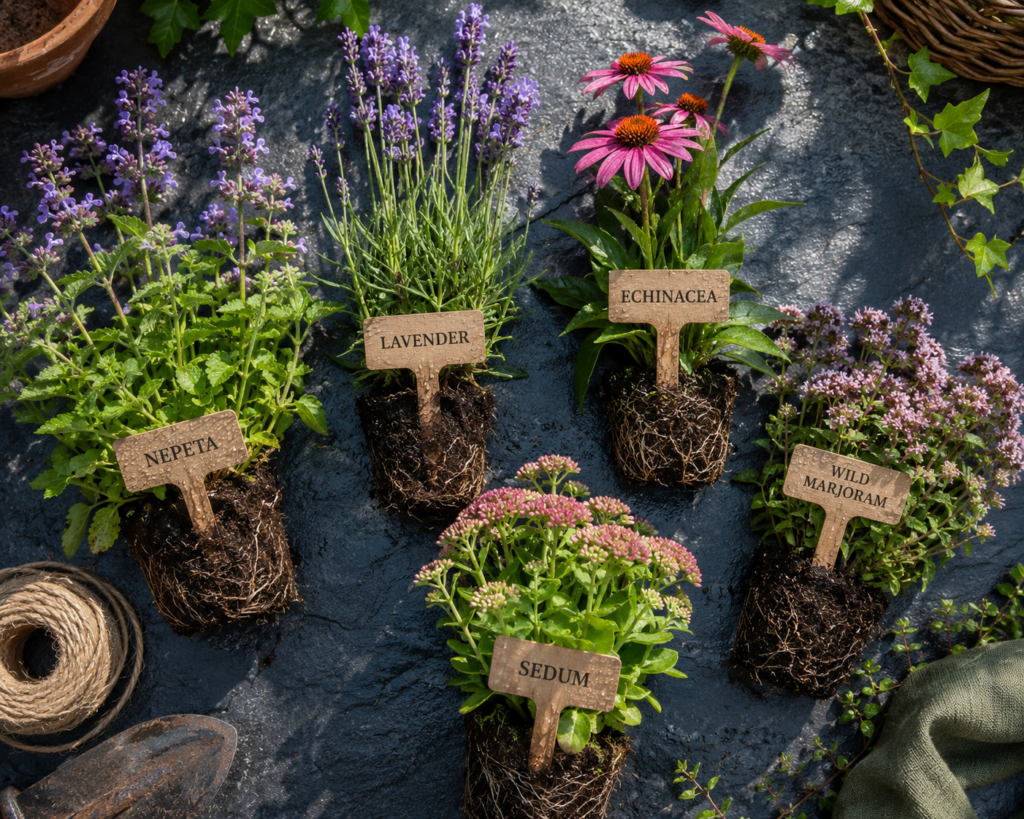
For a 50cm container, a practical combination that covers the full season might include: nepeta at the back, a small salvia variety to one side, wild marjoram in the centre, a compact echinacea or sedum, and hardy geranium trailing slightly at the front. Plant in groups of one or two per species rather than trying to cram in five specimens of each — this is not a matrix planting but a generous mixed pot.
If you’d like more inspiration for container planting in general, our container gardening guide covers the practical foundations in detail, including watering, feeding, and overwintering.
Caring for Your Buffet Planter Through the Seasons
Spring: Setting Up for the Season
If you’re putting together a new buffet planter, late April to May is the ideal time for most of the plants on this list. Start with a freshly mixed compost, plant generously, and water in well. Mulching the surface with a thin layer of grit will help retain moisture and reduce weed establishment.
For established planters being refreshed from previous years, early spring is the time to remove any dead material, top-dress with fresh compost, and divide any plants that have outgrown their space. Sedums and hardy geraniums in particular can be lifted and divided every two to three years to keep them productive.
In UK terms, gardeners in the South and Southwest can usually begin planting tender species like verbena bonariensis by mid-April. Those in the Midlands, Wales, and East Anglia should wait until early May. Gardeners in Northern England and Scotland should hold off until late May and be prepared to bring tender plants in if late frosts are forecast.
Summer: Maintenance for Continuous Flowering
The key maintenance task during the flowering season is deadheading — removing spent flower heads to encourage further blooming. This is particularly important for nepeta, hardy geraniums, and echinacea. Nepeta benefits from a harder cut (shearing back by about a third) after its first flush in June, which will typically produce a strong second flowering from August.

Watering will be the main practical demand. A large container in full sun during a British heatwave — increasingly common in recent years — can dry out surprisingly quickly. Water deeply and consistently rather than in small, frequent amounts, aiming to wet the full depth of compost rather than just the surface. Wild marjoram and achillea will tolerate a degree of drought; lavender actively appreciates it; sedums are extremely drought-resistant. Nepeta and salvias are somewhere in between.
Avoid feeding with high-nitrogen fertilisers during the season — these promote leafy growth at the expense of flowering. A balanced liquid feed every three to four weeks, or a slow-release granular feed worked into the compost at planting time, is all that’s needed.
Autumn: Letting It Stand
One of the most important things you can do for your buffet planter as it winds down is to resist the urge to cut everything back to neat stubs. Seed heads from echinacea, achillea, and verbena provide food for birds. The dried stems of hollow-stemmed plants like achillea offer nesting sites for solitary bees. Even the faded flower heads of sedum and knapweed serve a purpose if left standing.
A light tidy in late October or early November is all that’s needed — remove any genuinely dead or diseased material, but leave the structural plant skeletons intact wherever you can. This is an area where wildlife-friendly composting principles apply equally well to your planter: less intervention, more benefit. Our guide to wildlife-friendly composting has more on the philosophy behind leaving things a little less tidy.
Adding Extra Habitat Value
If you want to take your buffet planter one step further, consider pairing it with a small bee hotel positioned nearby — ideally mounted on a sunny wall or fence within a metre or two of the container. Solitary bees that visit your planter to forage may well use the hotel to nest, completing the cycle. The combination of food source and nesting habitat in close proximity is far more powerful than either alone.
Frequently Asked Questions
Can I make a bee and butterfly buffet planter in a small pot? A small pot can attract pollinators, but it won’t function as a genuine pollinator resource. For meaningful impact — particularly for bumblebees, which need substantial nectar reward to make foraging worthwhile — aim for the largest container you can accommodate. A 45cm pot is a realistic minimum; 60cm or more is ideal.
Which plants in this list are best for butterflies specifically? Wild marjoram, verbena bonariensis, sedum ‘Autumn Joy’, knapweed, and buddleja (if you have space) are all outstanding for UK butterflies. Butterflies tend to favour flat-topped or open flowers they can land on easily, rather than tubular forms better suited to bees.
Do I need to use native plants? Not exclusively, but it’s worth including some. Native plants like wild marjoram, knapweed, viper’s bugloss, and yarrow tend to offer more nectar and pollen per flower than many cultivated varieties, and they support a wider range of specialist insect species. A mix of reliable native and non-native plants — provided all are single-flowered — gives you the best combination of wildlife value and visual interest.
Can a buffet planter work on a north-facing balcony? Most of the plants on this list need full sun and will perform poorly in shade. For a north-facing aspect, consider shade-tolerant alternatives: comfrey, foxgloves, astrantia, and aquilegia all offer genuine pollinator value with less sun dependency.
When should I plant for this year? In May (when you’re reading this), there’s still time to put together a brilliant buffet planter. Most summer-flowering plants — nepeta, salvias, echinacea, hardy geraniums — can be planted now across all UK regions. Get them in as soon as possible to give them time to establish before the peak flowering season arrives.
A Small Container, a Large Difference
The appeal of a buffet planter is that it reframes the question. Instead of asking “is one pot enough to help pollinators?” you ask “how can I make one pot work as hard as possible?” The answer, it turns out, is the same principle that applies to any good feast: variety, generosity, and something worth coming back for throughout the season.
Whether you’re working with a large back garden, a small patio, or a single sunny balcony, there’s room for a container that does genuine wildlife work. A mix of nepeta, wild marjoram, salvia, achillea, and sedum in a well-drained pot in a sunny spot will attract more pollinators over a longer season than a single statement plant ever could — and it will look beautiful doing it.
The pollinators will find it. They always do.
Continue Your Journey
If this post has sparked ideas for your outdoor space, you might enjoy exploring some of our related guides:
- Container Gardening: A Practical Guide — everything you need to know about growing successfully in pots, from compost choices to watering strategies
- Growing Lavender in the UK — a deep dive into varieties, care, and why lavender is such an outstanding pollinator plant
- Best Patio Plants in Pots — inspiration for combining plants beautifully in containers across the whole season
- Wildlife-Friendly Composting — how to close the loop and support garden wildlife beyond just the plants you grow
- Eco-Friendly Garden Ideas — broader inspiration for making your garden work harder for wildlife and the environment
What’s already growing in your garden that pollinators love? Drop a comment below — I’d love to know which plants are drawing the most visitors to your outdoor space this year.
If you’d like more UK-focused gardening guides like this one delivered to your inbox, you can sign up for the Crafting Her Blooms newsletter — practical, seasonal, and always rooted in what actually works in a British garden.


