How to Garden for Wildlife in a Small Urban UK Garden
I sometimes use affiliate links in content. This doesn’t cost you anything but I may make a commission payment from anything you buy through these links. As an Amazon Associate I earn from qualifying purchases. All opinions remain my own.
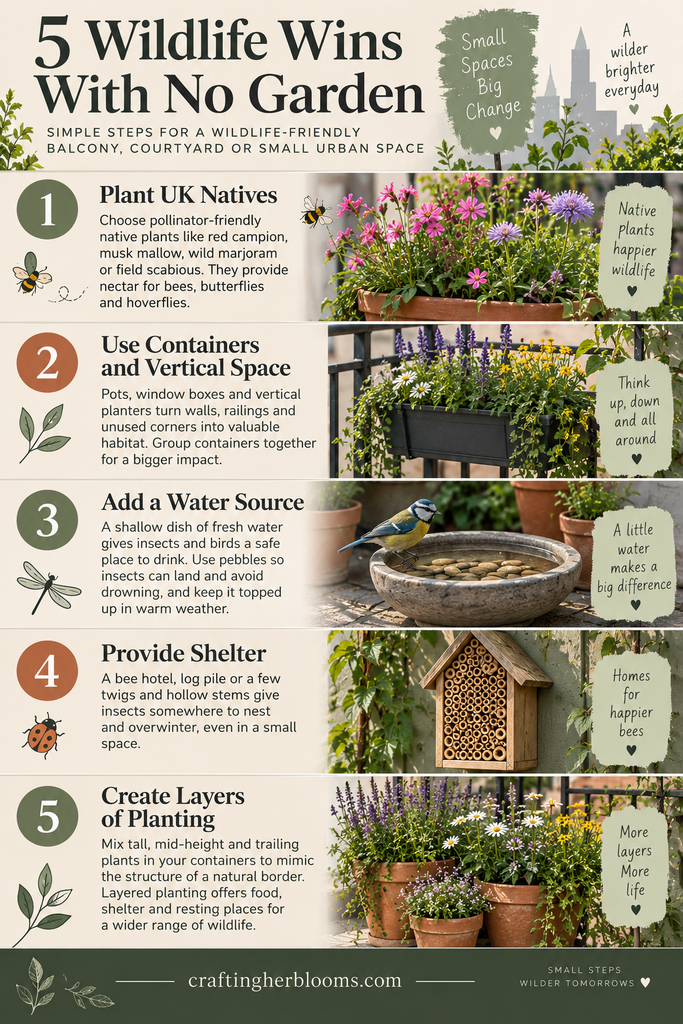
Most wildlife gardening advice assumes you have a garden to begin with. Even the guides aimed at “small spaces” usually mean a modest lawn and a few borders, not a third-floor balcony, a shared courtyard, or a strip of paving with nowhere to dig. If you live in a UK town or city with little or no growing space of your own, this guide is for you. The goal here isn’t a scaled-down version of a rural wildlife garden. It’s a genuinely different approach, built around containers, verticals, and features that need no permission and no soil.
🏙️ Why Urban Wildlife Gardening Is Its Own Thing
A balcony in a city centre faces different challenges to a garden in a village, and it’s worth naming them before getting into solutions.
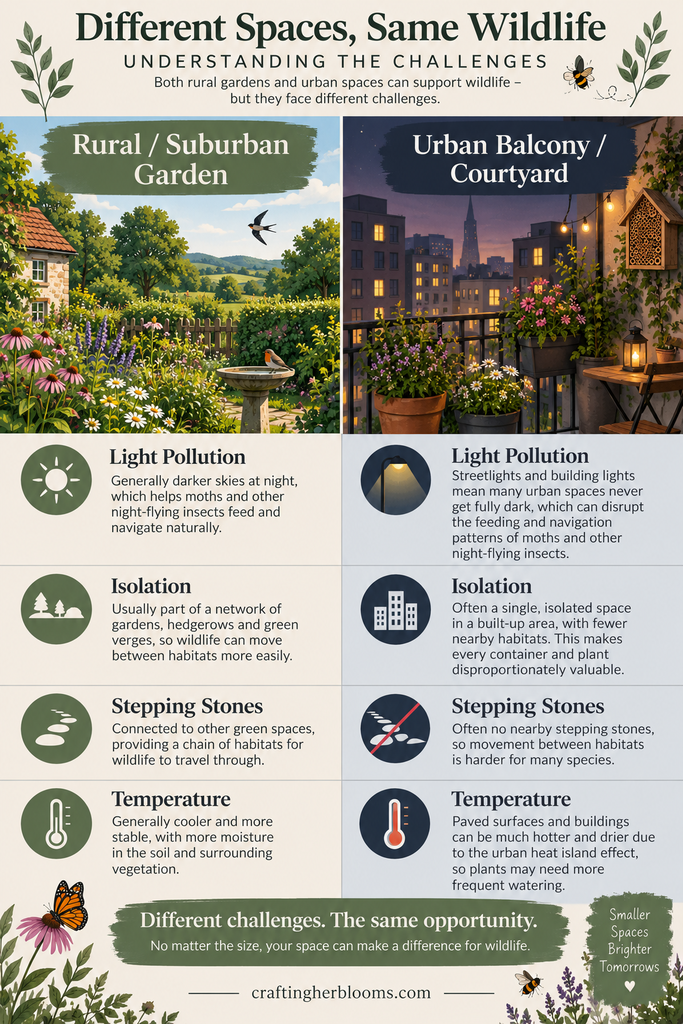
Streetlights and building lights mean many urban outdoor spaces never get properly dark, and light pollution can disrupt the feeding and navigation patterns of moths and other night-flying insects. Traffic pollution settles differently in dense urban areas too, and it can affect both plant health and the insects that depend on them.
Perhaps the biggest difference is isolation. A rural or suburban garden usually sits within a chain of other gardens, hedgerows, and green verges that act as stepping stones for wildlife moving between larger habitats. A single balcony or courtyard in the middle of a built-up area often doesn’t have that network nearby, which makes every container you add disproportionately valuable to the wildlife that does find it.
Forged & Grown
Garden pieces, printed to order
3D printed planters and garden accessories, made in the UK. Self-watering designs, sculptural shapes, colour options — each one made when you order it.


Heat behaves differently too. Paved courtyards and south-facing balconies can run noticeably hotter and drier than an equivalent patch of open ground, thanks to the “urban heat island” effect of concrete, brick and tarmac holding warmth. That’s worth factoring into which plants you choose and how often you’ll need to water containers through summer.
None of this makes urban wildlife gardening a lost cause. It means the priorities are different. Think isolated island of habitat rather than one link in a chain, and stack function into every pot you have room for.
🪴 Container and Vertical Solutions for Gardenless Spaces
If you don’t have soil to dig into, containers and vertical space are where the real growing happens.
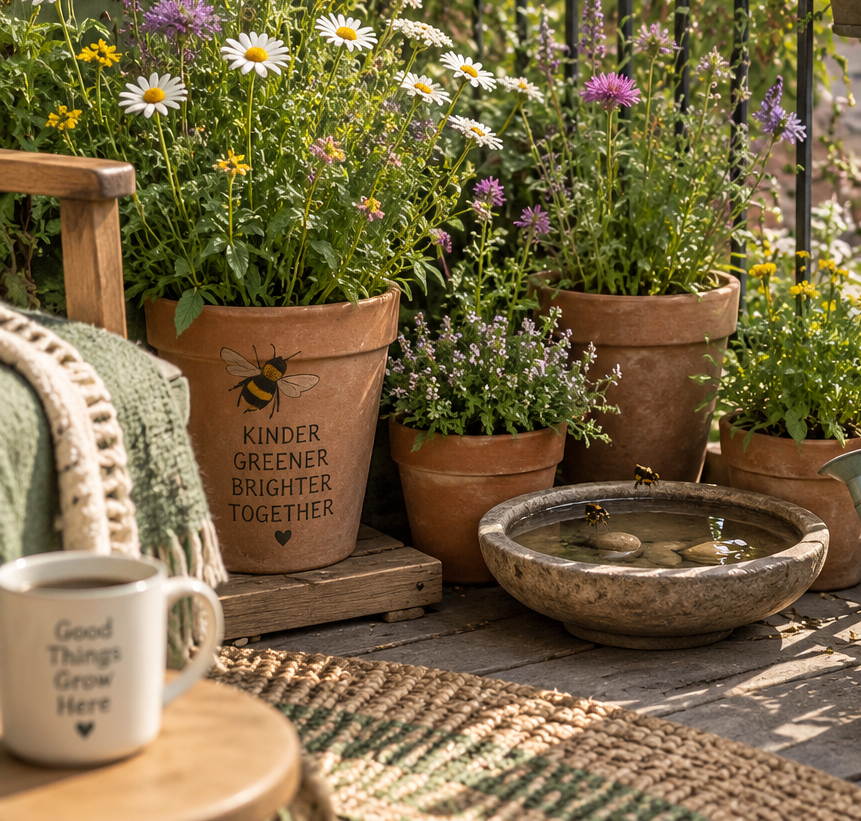
Large pots can support surprisingly layered planting, from small shrubs or climbers at the back down to trailing, ground-covering plants at the front. That gives you some of the habitat complexity of a proper border in a fraction of the footprint. Group pots together rather than spacing them out. A cluster of containers reads as a single, more substantial patch of habitat to visiting insects than the same plants spread thinly.
Where floor space is tight, look up. A simple vertical wall planter turns an unused wall or fence into growing space without taking up any of your balcony floor, which matters when every square foot is doing double duty as somewhere to actually stand.
Window boxes deserve more credit than they usually get. Even sown with a compact wildflower mix, a single window box brings pollen and nectar right up to eye level, and it’s genuinely one of the easiest wins on this list. If you’re starting from a bare balcony, our guide to growing herbs on a balcony in the UK covers a lot of the same container logistics, from drainage to wind exposure, even though it’s framed around herbs rather than wildlife planting specifically.
🌼 Best UK-Native Plants for Containers and Part Shade
Native plants matter more than exotic ones here, because UK pollinators and birds evolved alongside them and rely on their specific flowering times and structures.
A few reliable, container-friendly natives to look for:
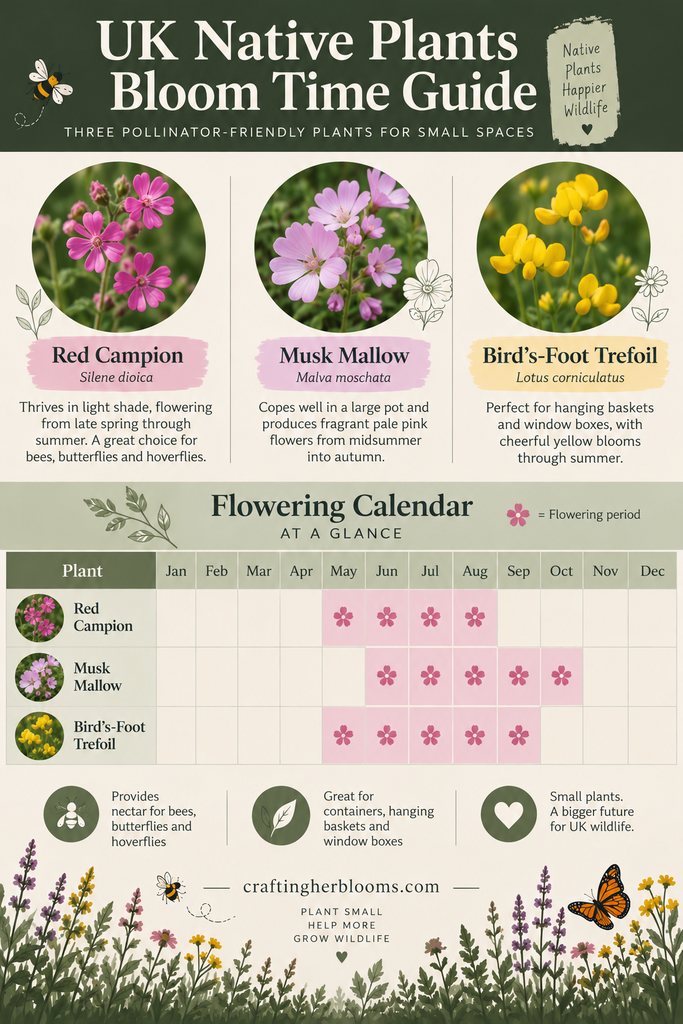
- Red campion thrives in the light shade many balconies and courtyards actually get, flowering from late spring through summer and drawing bees, butterflies, and hoverflies.
- Musk mallow copes well in a large pot, at least 30cm across, and produces fragrant pale pink flowers from midsummer into autumn.
- Bird’s-foot trefoil and ivy-leaved toadflax both work well in hanging baskets and window boxes, and they’re tougher than their delicate appearance suggests.
- Wild marjoram and field scabious both do well in a large, sunnier pot and tend to flower for a long stretch across summer, which keeps a steady supply of nectar coming rather than one short burst.
When you’re buying, look out for the RHS “Plants for Pollinators” logo on plant labels at garden centres. It’s a quick, reliable way to spot pollinator-friendly varieties without having to research every label individually, and most UK garden centres now stock at least a small range carrying it.
For a sunnier balcony or courtyard, our roundup of the best plants for summer pollinators in a UK garden has more options that adapt well to pots, not just open borders.
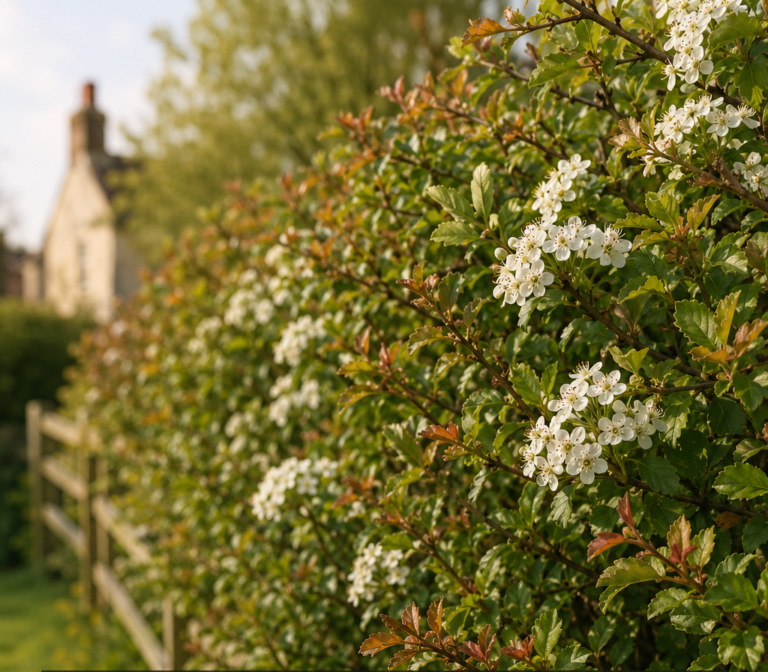
If your outdoor space stretches to a small bed or a large trough rather than just pots, a native hedge planted for wildlife is worth considering, even a short run of it, since it offers shelter that a single pot simply can’t.
🐝 No-Dig, No-Permission Features for Renters
If you’re renting, or you share outdoor space with neighbours, the features that matter most are the ones that need no digging and no landlord’s permission.
A shallow dish of water with a few pebbles for insects to land on is one of the simplest wildlife features you can add anywhere, and it needs topping up and cleaning rather than any real maintenance. A bee hotel, hung against a sheltered wall, gives solitary bees somewhere to nest. Look for one with tubes at least 100mm deep, since shallower ones don’t give developing larvae enough protection over winter.
Even a washing-up bowl can become a mini pond if you add stones or a gentle slope on one side, so insects and any visiting birds can climb in and out safely. None of these features involve altering the space itself, which makes them ideal for a rented flat or a shared courtyard where permanent changes aren’t an option.
For more ideas along these lines, our guide to creating wildlife habitats in a small UK garden covers features for readers who do have a small garden to work with. Treat it as a companion piece rather than a substitute. This guide is specifically for readers without one.
🦔 What Wildlife Actually Shows Up in UK Towns and Cities
It helps to know what you’re actually gardening for, because urban wildlife looks different to rural wildlife.
Foxes have thrived in UK towns and cities, and various UK cities also host red deer, parakeets, peregrine falcons and even newts and owls, depending on the local green spaces nearby. At balcony and courtyard scale, though, the wildlife you’re most likely to attract and support is smaller: solitary bees, hoverflies, butterflies and moths, plus garden birds like blue tits, blackbirds and house sparrows if you’re near enough to other green space for them to pass through.
Hedgehogs are a sadder story. Numbers have fallen sharply in recent years, and while a balcony alone won’t turn that around, ground-floor courtyard or shared-garden spaces that link up with a neighbour’s patch can genuinely help, particularly if there’s a small, hedgehog-sized gap in a fence or wall.
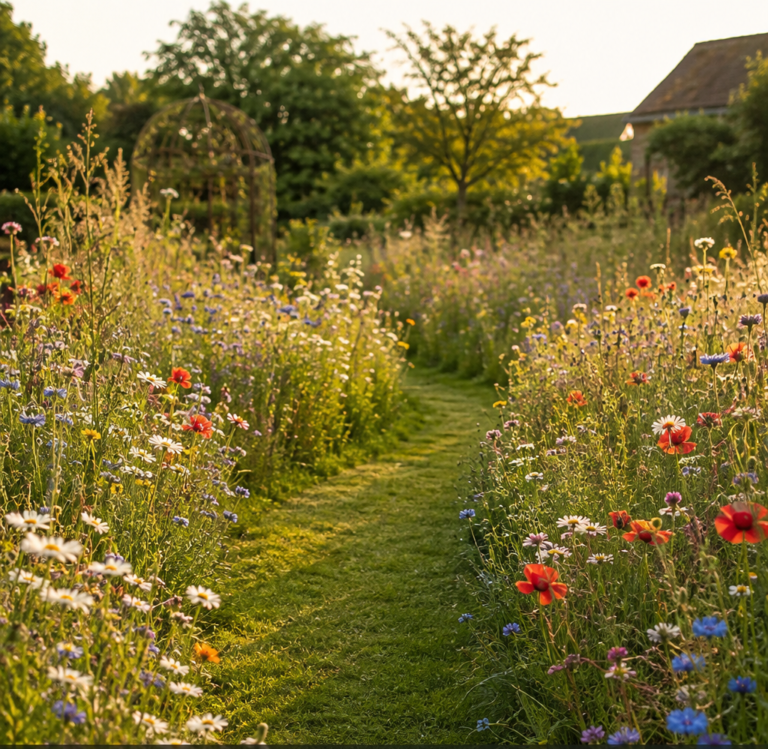
Gardens, balconies and courtyards across a city function as stepping stones for the wildlife able to use them. Your container garden is a small part of a much bigger patchwork, and it counts for more than it might feel like from your own balcony. Our guide to creating a wildflower meadow in a UK garden is aimed at readers with more space, but the underlying logic, planting for the insects that are actually around you, scales down just as well to a single container.
🗓️ A Simple Seasonal Rhythm for Urban Wildlife Gardening
You don’t need to track four separate UK growing zones on a balcony the way a larger garden might, but a rough seasonal rhythm still helps.
In spring, focus on getting plants in and features set up before the main pollinator season starts. Sow or plant out your native wildflower mix, hang your bee hotel somewhere sheltered before bees start looking for nesting spots, and top up your water dish now that insects are more active.
Through summer, the main job is upkeep rather than adding anything new. Keep containers watered, especially anything in a hot, paved courtyard or a south-facing spot, since pots dry out far faster than open ground. Deadhead spent flowers on plants like musk mallow to keep them blooming for longer.
By autumn, resist the urge to tidy everything away. Leave seed heads standing where you can. They feed birds through the colder months and shelter overwintering insects. Clean out and store your bee hotel’s used tubes once the nesting season is over, ready to refresh it in spring.
Over winter, a balcony or courtyard garden mostly rests, but keep the water dish ice-free where you can reach it safely, since natural water sources become scarcer for birds and insects in freezing weather.
🚫 Common Mistakes to Avoid
A few habits undo more wildlife-gardening effort than people expect, so it’s worth naming them directly.
- Using pesticides or slug pellets, even “natural” ones, near the same containers you’re planting for pollinators. Most work by killing insects indiscriminately, not just the ones causing a problem.
- Buying plants labelled “wildlife-friendly” without checking further. Not every plant marketed this way is genuinely useful to UK pollinators. Native and RHS Plants for Pollinators-labelled varieties are a safer bet than marketing copy alone.
- Over-tidying in autumn. Cutting everything back and clearing every fallen leaf removes the shelter that insects and some garden birds rely on to get through winter.
- Forgetting water in a heatwave. A balcony or courtyard can dry out fast in hot weather, and a water source that’s run dry helps no one.
✅ Quick-Win Starter Checklist
If you’re starting from a completely bare balcony or paved yard, here’s where to begin:
- Add one shallow water dish with pebbles.
- Plant one window box with a compact native wildflower mix.
- Group two or three pots of pollinator-friendly natives together rather than spacing them out.
- Hang one bee hotel somewhere sheltered and undisturbed.
- Pick one vertical element, a wall planter or a trained climber, to add habitat without using floor space.
None of these steps need a garden, a landlord’s sign-off, or a weekend of digging. Do one this month, and add the next when you’re ready.
🌿 Continue Your Journey
- How to Create a Wildlife Garden from Scratch: The UK Beginner’s Guide
- The Best Plants for Spring Pollinators in a UK Garden
- How to Start a Wildlife-Friendly Composting System in Your UK Garden
- Botanical Bento: The 2026 Garden Trend That Makes Small UK Spaces Feel Bigger
- Wildlife-Friendly Gardening in 2026: The UK Trends Every Gardener Needs to Know