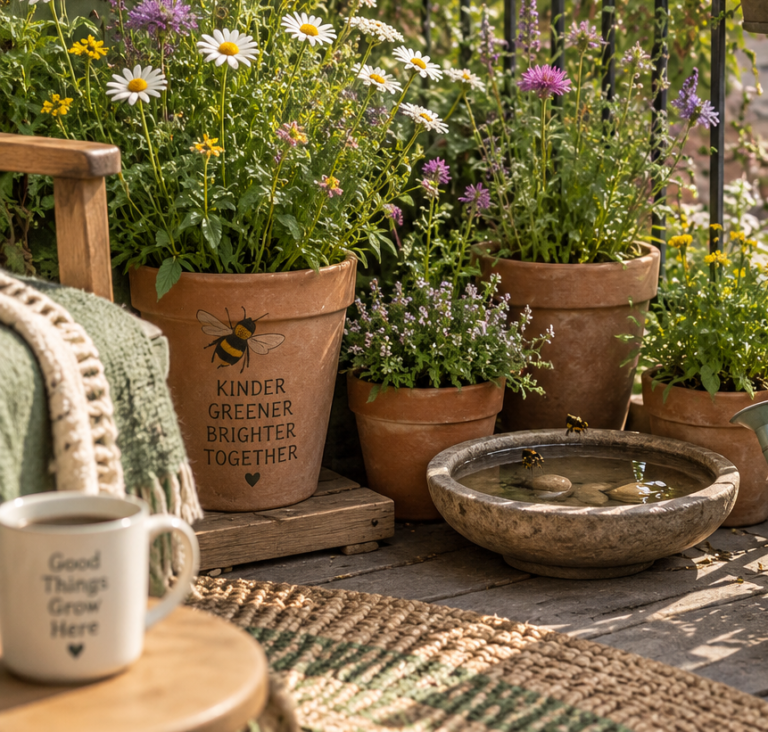
Botanical Bento: The 2026 Garden Trend That Makes Small UK Spaces Feel Bigger
I sometimes use affiliate links in content. This doesn’t cost you anything but I may make a commission payment from anything you buy through these links. As an Amazon Associate I earn from qualifying purchases. All opinions remain my own.
If you’ve ever stood in your garden — or on your patio, or your narrow courtyard — and felt like it was all a bit of an unresolved muddle, you’re not alone. We tend to treat outdoor space as one big room, which means it ends up functioning as no room in particular. The botanical bento trend changes that entirely, and it’s one of the most practical, beautiful ideas to come out of UK garden design in recent years.
The premise is exactly as satisfying as it sounds. Think of a bento box: a compact container divided into neat, purposeful compartments — rice here, vegetables there, a little pickled something in the corner. Each section has its own identity, but together they make a coherent, harmonious whole. That’s the design philosophy UK gardeners are now applying to their outdoor spaces, and the results are genuinely transformative, even — especially — in small gardens.
This isn’t a trend you’ll need an acre to adopt. It was practically made for British gardens: the terraced house patio, the sheltered courtyard, the suburban plot that needs to work harder than its square footage suggests. Here’s everything you need to know to try it for yourself.

What Is the Botanical Bento Trend?
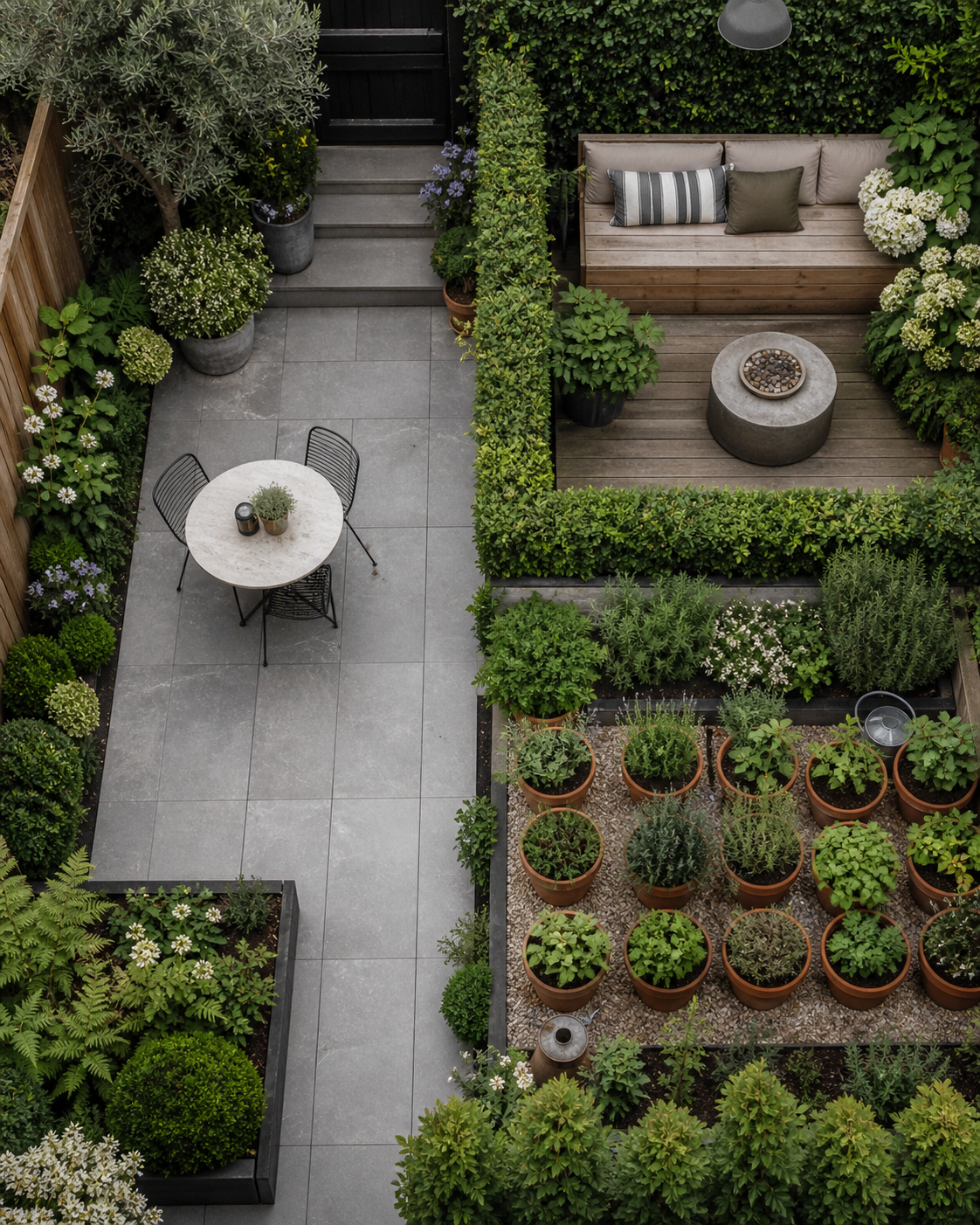
The botanical bento concept is rooted in the idea of micro-zoning: dividing one outdoor space into a series of smaller, clearly defined areas, each with a distinct purpose. Rather than treating your garden as a single open-plan space (which can feel both overwhelming and oddly useless), you give different zones their own character and function.
Forged & Grown
Garden pieces, printed to order
3D printed planters and garden accessories, made in the UK. Self-watering designs, sculptural shapes, colour options — each one made when you order it.


In practice, that might look like a sheltered seating nook in one corner, a productive herb-growing area along the sunniest fence, a wildlife-friendly patch in a quieter spot, and a small dining space near the back door — all within the same modest footprint. The bento box analogy holds because the zones are separate but visually connected: they read as part of the same space rather than as a collection of competing ideas.
UK home and garden coverage has picked up strongly on this in 2026, with outdoor living trends consistently pointing toward more intentional, multifunctional use of garden space. The move away from open-plan garden design mirrors what happened inside homes when large, undivided living spaces began to feel shapeless and impractical. Defined zones give a space clarity, and clarity — counterintuitively — makes it feel bigger.
Why It Works So Well for UK Gardens
The British garden has particular challenges that make botanical bento such a good fit. Our plots are often narrow and long, or small and square, hemmed in by fencing or walls, and expected to function across very different seasons. A single open-plan space struggles to accommodate all of this. It ends up being a lawn with some pots around the edge, or a paved area that sits empty for eight months of the year.
When you divide that same space into zones, something changes. Each zone has a reason to be used, which means the garden as a whole gets used more. A seating nook creates a destination; a productive growing area gives you a reason to go outside even in drizzle; a wildlife corner does quiet, useful work while you ignore it. Suddenly your ten metres by six metres is doing the work of a much larger garden.
The aesthetic also suits our climate beautifully. Botanical bento favours structure, calm, and curation — clipped evergreens, considered planting, materials that weather well. These are all things British gardens do particularly well, and they happen to look their best in the soft, diffused light we get so much of.
Month by Month · UK Garden
Botanical Bento Seasonal Calendar
| Zone / Month | Jan | Feb | Mar | Apr | May | Jun | Jul | Aug | Sep | Oct | Nov | Dec |
|---|---|---|---|---|---|---|---|---|---|---|---|---|
| Season | Winter | Spring | Summer | Autumn | Winter | |||||||
| 🌱 Productive Zone | ||||||||||||
| Sow indoors | — | chilli, aubergine | tomato, basil | courgette, squash | — | — | — | — | — | — | — | — |
| Plant out / direct sow | — | — | salad leaves, peas | herbs, salads, beans | tomatoes, courgettes | French beans, chard | autumn salads, kale | winter salads, spinach | garlic, overwintering onions | broad beans | — | — |
| Harvest | winter greens | winter greens | early salads, sprouting broccoli | peas, radishes, herbs | herbs, salads, strawberries | tomatoes, courgettes, beans | tomatoes, cucumbers, chard | squash, apples, kale | root veg, late tomatoes | winter salads, leeks | winter greens, leeks | winter greens |
| ✿ Display Zone | ||||||||||||
| Key tasks | Plan & order bulbs | Plant snowdrops, aconites | Tulips, alliums emerging | Peak spring display | Agapanthus, alliums | Summer perennials peak | Echinacea, rudbeckia | Late summer into autumn | Plant spring bulbs | Tidy & mulch beds | Structure plants only | Evergreen structure |
| 🦔 Wildlife Zone | ||||||||||||
| Key tasks | Leave undisturbed | Top up bird feeders | Sow native wildflowers | Install bee hotels | Peak pollinator activity | Wildflowers in bloom | Leave seed heads standing | Berries for birds | Collect & save seeds | Add log pile / leaf pile | Hedgehog hibernation | Leave undisturbed |
| 🍽 Dining & 🌿 Seating Zones | ||||||||||||
| Key tasks | Clean & store furniture | Check pergola / screen | Bring out furniture | Zone in use — Spring | Peak outdoor living | Peak outdoor living | Peak outdoor living | Peak outdoor living | Treat & protect surfaces | Store cushions / soft furnishings | Store or cover furniture | Clean & store |
Bold entries indicate peak season activity for that zone. Timings reflect typical UK mainland conditions — gardeners in Scotland or exposed northern sites should adjust by 2–3 weeks. South-west England may be 1–2 weeks earlier in spring.
How to Plan Your Botanical Bento Garden
The starting point is always the same: resist the urge to buy anything before you’ve mapped out your zones on paper. Grab a rough sketch of your garden’s footprint and think about how many distinct compartments it could realistically hold. For most UK gardens, three to five zones is the sweet spot — enough to give the space variety and purpose without making it feel chopped up.
Choosing Your Zones
This is where the fun begins, and it should be guided by how you actually want to use your garden rather than how you think you should use it. A few common zone combinations that work well for UK gardens:
- Dining zone — near the house, ideally with some shelter and a surface for plates and glasses
- Seating/relaxation zone — slightly removed from the dining area, perhaps with more shade or privacy
- Productive zone — herbs, salads, or small vegetables in the sunniest spot available
- Wildlife zone — a low-maintenance corner with native planting, a log pile, or a small pond
- Sensory or display zone — fragrant planting, a focal point, or something purely beautiful
You don’t need all of these. A compact patio might hold just three — dining, herbs, and a seating nook — and that’s more than enough. The principle is that each zone has a clear identity and purpose, and that you’ve thought about it rather than arrived at it by accident.
Defining the Zones
Once you’ve decided on your compartments, you need to create a sense of separation between them without building actual walls. This is where botanical bento design gets really interesting, because the boundaries themselves become part of the aesthetic.
Sample Layout · 6m × 4m Garden
Your Botanical Bento Garden, Mapped
Zone Key
Diagram is illustrative. Adapt zone sizes and positions to your own garden’s aspect, shape, and priorities.
Low hedging is one of the most classic approaches — clipped box (or its blight-resistant alternative, ilex crenata), rosemary used as a low edging plant, or lavender for a more informal border. These create a sense of enclosure without blocking light or sightlines. Paving changes work beautifully too: moving from one material to another (say, from porcelain slabs to gravel, or from decking to a planted area) signals a transition between zones in a subtle, elegant way.
Pergolas, screens, and trellis panels can define zones in a more three-dimensional way, especially useful for creating that sheltered seating nook or separating the dining area from a productive growing space. Planters and raised beds are also highly effective zone dividers — particularly useful in a rented garden where you can’t make structural changes. You can even use planting itself as the divider: a row of tall ornamental grasses, a line of standard-trained roses, or a run of trained fruit trees along a boundary all create that sense of moving from one compartment to another.
Planting for the Botanical Bento Look
The planting palette in a botanical bento garden tends toward the structured and architectural rather than the loose and naturalistic. That doesn’t mean it has to be stiff or formal — it means each zone has plants that make sense for it, and the overall effect is one of considered abundance rather than cheerful chaos.
Structural Evergreens as the Backbone
Every zone benefits from at least one plant that holds its shape across the year. In British gardens, the reliable workhorses here include clipped yew (excellent for slower-growing topiary), ilex crenata for box-like structure without the blight risk, euonymus in its various forms, and phormium for an architectural statement without the clipping. These structural plants act as the framework of your bento design — the dividers of the box itself — and they’re what makes the garden look intentional even in the depths of winter.
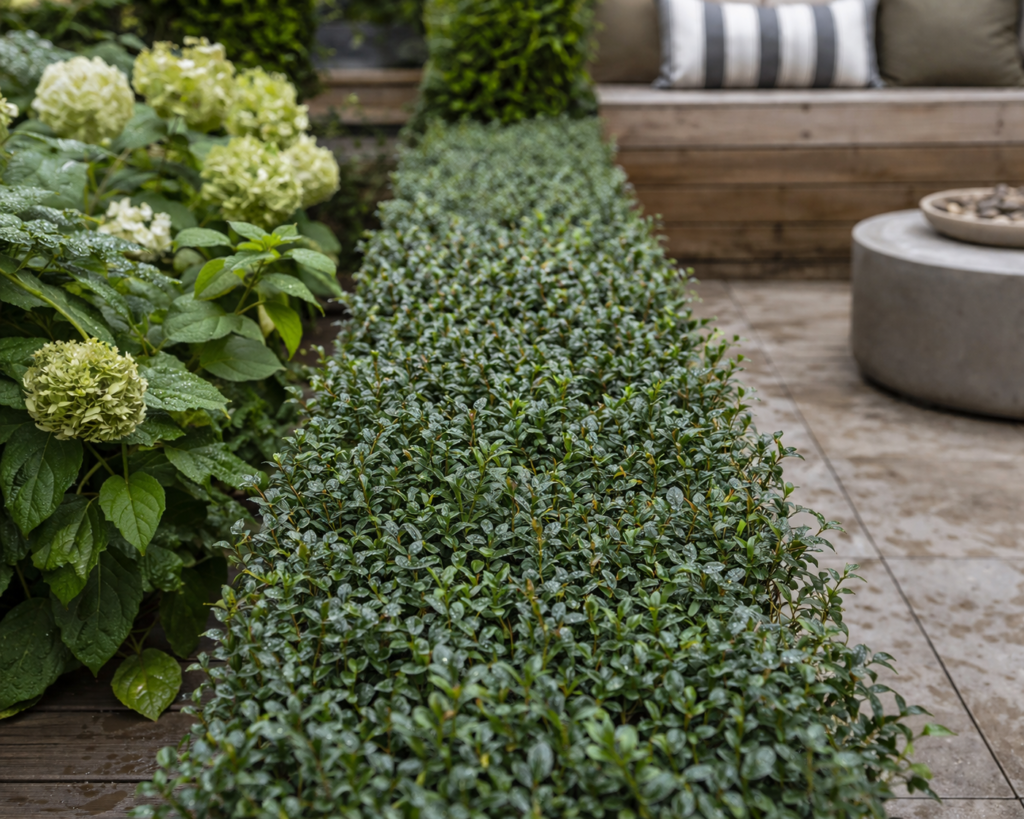
Architectural perennials play a role too. Agapanthus in pots alongside a seating zone, acanthus in a shady corner, or the dramatic vertical presence of verbascum in a display zone all add structure with seasonal interest on top.
Repeating Elements for Visual Cohesion
One of the things that makes a bento box look beautiful rather than cluttered is that the compartments relate to each other visually. In garden terms, this is achieved through repetition: using the same container across zones, repeating a key plant in different areas, or maintaining a consistent colour palette throughout.
A simple approach is to pick one or two accent colours and use them across every zone — perhaps the warm orange of Echinacea with the soft purple of salvia appearing in both the display zone and the wildlife zone. Another is to use the same pot material throughout: terracotta works well because it weathers uniformly and suits almost any planting style.
Planting by Zone
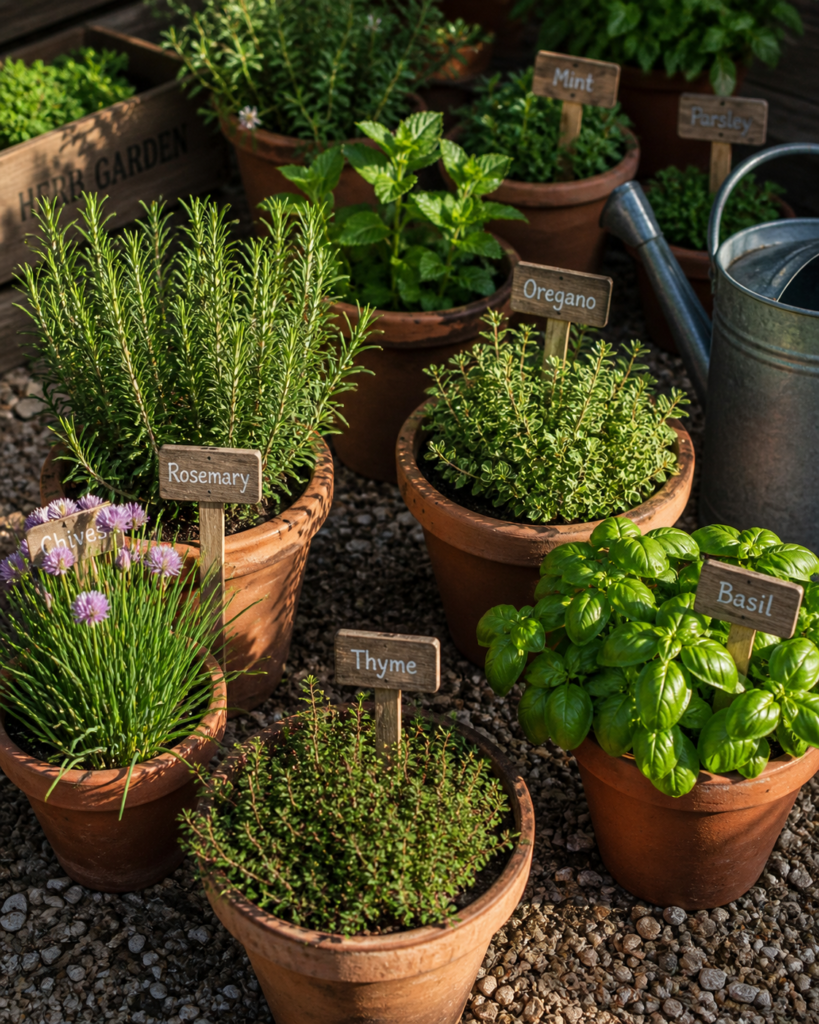
In the productive zone, think small and high-yield: cut-and-come-again salads, a compact collection of culinary herbs, cherry tomatoes in grow bags, or a raised bed of French beans. If you’ve been inspired to grow your own herbs this feels like the perfect framework for giving them their own dedicated space. A structured herb garden — even a small one — is one of the most satisfying of all the bento compartments, because it rewards regular visiting.
The wildlife zone wants to feel a little more relaxed, even within the botanical bento framework. Native wildflowers, a patch of long grass, a bird bath, or a hedgehog highway cut in the fence base — these things don’t need to look manicured to be effective. The contrast with the more structured zones around them is actually part of the appeal.
The seating and dining zones are where you can bring in more decorative planting — something fragrant (lavender, jasmine, sweet peas on a trellis), something with seasonal drama (an allium succession, a rose trained against the fence), and whatever your container garden looks like at its best. If you’re working with a patio space more broadly, thinking about patio planting and design can help you layer in those finishing touches.
Materials and Structure
The hardscaping choices in a botanical bento garden matter because they’re what makes the zones feel permanent and intentional rather than provisional. This doesn’t mean expensive — it means consistent and thought-through.
Surfaces That Define Space
The most effective botanical bento gardens use surface changes as zone boundaries. Porcelain paving in a muted tone (warm grey, charcoal, or a sandstone effect) works extremely well for dining and seating zones because it reads as refined and is genuinely practical year-round in the UK. Gravel is a less expensive option that can look excellent in productive or display zones, and it handles the British tendency toward unplanned moisture quite graciously.
Timber decking, while not always the most durable option in our climate, creates a distinctly warm and inviting atmosphere in a seating zone if properly treated and maintained. The contrast between decking and a paved or gravelled adjacent zone is immediately readable as a transition from one compartment to another.
Furniture and Garden Structures
The furniture choices within each zone matter for both practicality and aesthetics. A seating zone that’s meant to be a genuine retreat benefits from comfortable, all-weather furniture with a settled, permanent feel — cast aluminium or treated hardwood in particular. Choosing the right material for outdoor furniture is worth doing carefully if you’re investing properly in your zones, because the right choice should look good and last well.
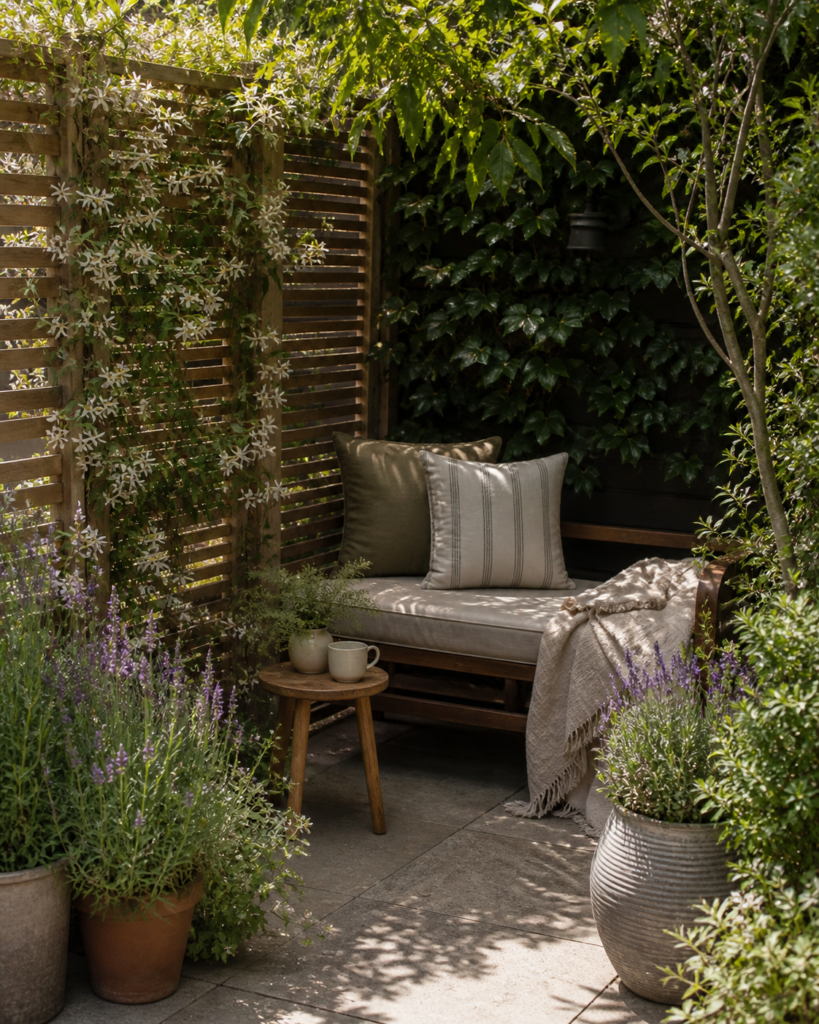
Garden rooms and structures — log stores, small sheds, pergolas — function beautifully within the botanical bento framework because they can act as one of the compartments themselves. A well-positioned garden room becomes the reading or working zone; a pergola defines the dining area; a simple wooden screen creates the walls of a seating nook. Most garden rooms and structures still fall under permitted development rights in England if they meet standard height and footprint criteria, though if you’re in a conservation area or a listed building it’s always worth checking with your local planning authority first.
Botanical Bento for Small Spaces: Making It Work
The most common hesitation is that the garden isn’t big enough. In reality, the smaller the garden, the more botanical bento helps. When every square metre needs to justify its existence, having a clear design framework is the difference between a space that works and one that doesn’t.
Patios and Courtyards
A paved courtyard garden is probably the most natural fit for this approach. Even a space of four by five metres can hold three zones: a small dining area, a container growing station, and a relaxation corner with comfortable seating and some vertical planting. The key is that each zone is sized for its purpose rather than for the theoretical idea of a garden — you don’t need eight dining chairs; two or four is fine.
Walls are your best friend in a courtyard setting, because they allow you to use vertical space as part of each zone’s character. A productive zone can run up a south-facing wall on a trellis; a display zone can feature a dramatic wall-mounted planter; a seating nook can be made private by a screen of trained evergreen. The essentials of indoor-style thinking applied outdoors — layering, using height, maximising available light — translate directly here.
Balconies
Yes, you can do botanical bento on a balcony. The zones here are necessarily contained in planters, but the principle holds: one area for something productive (herbs in a window box or tiered planter), one for relaxation (comfortable seating with cushions), one for beauty (a statement plant or a collection of seasonal flowers). The balcony that has a considered reason for every element feels immeasurably more pleasant than the one that’s accumulated a random assortment of pots.
Long, Narrow Gardens
The traditional British long-thin garden plot is almost a bento box already — it just needs acknowledging. Rather than fighting the layout by trying to make it feel like a single space, lean into the zonation: different flooring, different planting styles, perhaps a screen between zones to give each one its own sense of enclosure. A seating area near the house, a productive growing zone in the middle where light is best, and a more naturalistic wildflower or woodland area at the far end is a combination that many UK gardeners find works beautifully and practically.
The Sustainability Angle
The botanical bento trend fits neatly with the broader move in UK gardening towards sustainability, natural materials, and ecological awareness — partly because it encourages a more deliberate relationship with your outdoor space, and partly because the zone-based structure makes it easy to dedicate a corner explicitly to wildlife.
Including a dedicated wildlife zone isn’t just ecologically responsible; it’s genuinely good design. A patch that does something for bees, birds, or hedgehogs gives your garden a layer of purpose that goes beyond aesthetics, and it requires almost no maintenance once established. Structural native planting — hawthorn, field maple, wild garlic under a small tree — or a simple wildflower area sown with a UK-native mix creates the kind of habitat that supports local ecosystems.
The productive zone is another sustainability win: even a modest herb and salad growing area reduces food miles and gets you outside more. Starting a vegetable garden doesn’t need to mean rows of brassicas across a large plot — a well-designed botanical bento productive zone can fit into the corner of a small patio and still provide a genuine, useful harvest across the season.
Putting It Together: Your Botanical Bento Plan
The best way to start is to spend some time in your garden at different times of day and observe where the light falls, where you naturally congregate, and which parts of the space you currently ignore. Those ignored patches are often where the wildlife zone wants to go; the naturally sunny congregating point is almost certainly where the dining or seating zone belongs.
Once you have a rough sense of where your zones might sit, sketch them out and think about how they’ll be delineated — a change of surface, a low hedge, a screen or a row of pots. Then consider what each zone needs in terms of planting and structure, always keeping an eye on coherence across the whole space. Repeat a colour, repeat a pot material, repeat a plant in different zones — these echoes are what make the compartments read as a single, harmonious garden rather than a collection of unrelated ideas.
The great thing about botanical bento is that it doesn’t demand perfection or significant expense. You can implement it incrementally — start with the zone you use most, get that right, then develop the others over time. The framework is what matters: a clear sense of what each part of your garden is for, and a commitment to honouring that intention with the choices you make.
It’s a way of gardening that rewards small, thoughtful decisions far more than large, impulsive ones — which makes it, perhaps, perfectly suited to the British approach to outdoor space.
Continue Your Journey
- Patio Design Ideas for UK Gardens — inspiration for surfaces, structures, and styling your outdoor zones
- Choosing the Best Material for Outdoor Furniture — a practical guide to making the right call for the UK climate
- Growing Herbs in Your Outdoor Garden — creating a productive herb zone that earns its place
- Starting a Vegetable Garden — for gardeners ready to make their productive zone do some real work
- Edible Flowers to Grow Indoors — a beautiful addition to a display or productive bento zone
Have you tried zoning your garden? Which compartments would you prioritise in a botanical bento layout? Share your thoughts in the comments below — I’d love to hear how you’re thinking about your outdoor space this year.
Enjoyed this? Subscribe to the Crafting Her Blooms newsletter for seasonal gardening ideas, UK growing guides, and inspiration delivered straight to your inbox.