
Winter Lawn Care UK: The Complete Guide to Protecting Your Lawn Through the Coldest Months

I sometimes use affiliate links in content. This doesn’t cost you anything but I may make a commission payment from anything you buy through these links. As an Amazon Associate I earn from qualifying purchases. All opinions remain my own.
Most UK gardeners write their lawn off the moment the clocks go back. It goes quiet, it goes soggy, and it gets ignored until March rolls around and reveals exactly how much damage those months of neglect actually did. That’s the wrong approach, and it’s an expensive one if you end up reseeding bare patches every spring.
A British winter lawn doesn’t need constant attention. It needs the right attention, applied at the right moments, and mostly it needs you to leave it alone in the ways that matter. Get that balance right and you’ll walk into spring with grass that’s ready to grow rather than grass that’s recovering.
This guide covers what your lawn actually needs between now and the first proper mow of spring, why so much conventional lawn care advice backfires in our climate, and the handful of jobs that genuinely make a difference.
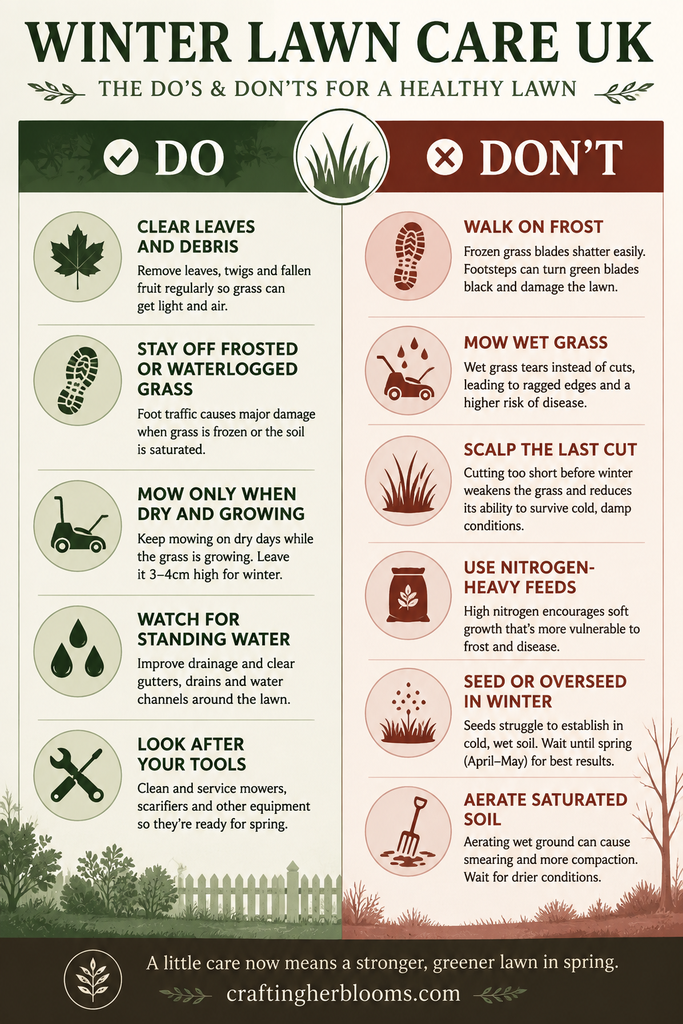
Why UK Winters Are Uniquely Hard on Lawns
Grass doesn’t struggle with cold in the way you might expect. Most of the turf grown in British gardens is perfectly capable of surviving frost, and some varieties barely slow down until temperatures drop well below zero. What actually damages a UK lawn through winter is rarely the cold itself.
Forged & Grown
Garden pieces, printed to order
3D printed planters and garden accessories, made in the UK. Self-watering designs, sculptural shapes, colour options — each one made when you order it.


It’s the wet. Britain’s winters combine low light, mild-but-damp air, and repeated freeze-thaw cycles in a way that few other climates experience. That combination is why moss explodes in December and January, why waterlogged patches turn to mud instead of drying out, and why compacted soil suffocates roots that would otherwise be fine.
Understanding this changes what you should actually be doing. Winter lawn care in the UK is less about protecting grass from cold and much more about managing moisture, light, and the physical structure of the soil underneath it.
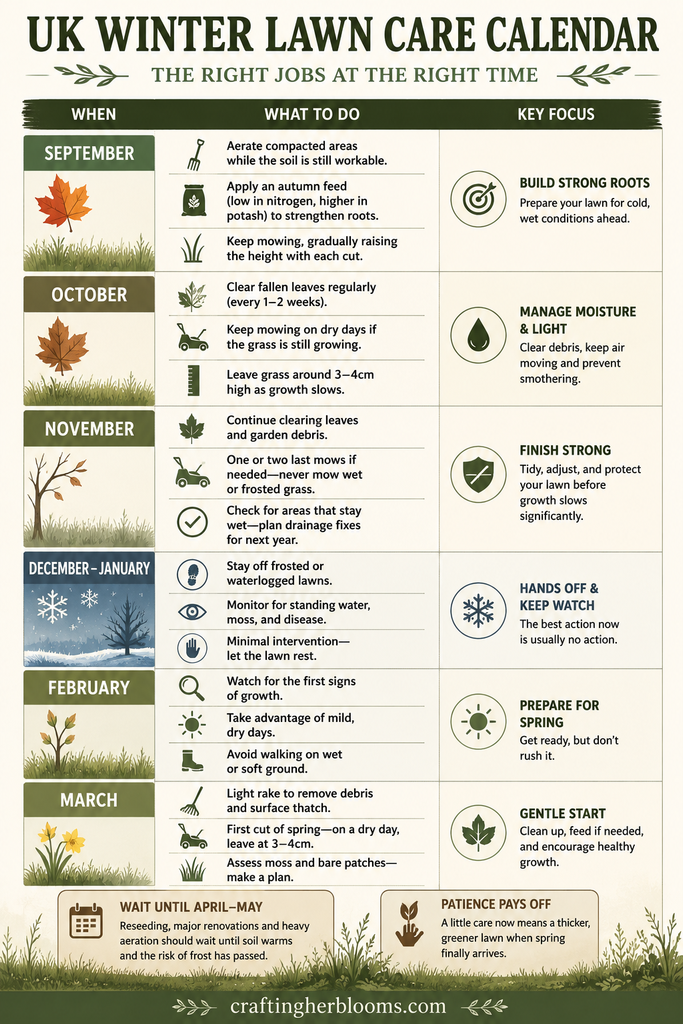
The Golden Rule: Stay Off a Frosted or Waterlogged Lawn
If you take away one piece of advice from this entire guide, make it this one. Walking on grass when it’s frozen or sitting in standing water causes far more damage than almost anything else you could do wrong this winter.
Frozen grass blades are rigid and brittle. Footsteps crush the cell walls inside each blade, and once the frost lifts, those crushed areas turn black or brown and take weeks to grow out. The same goes for waterlogged turf, where foot traffic squeezes air out of the soil and compacts it into a dense, oxygen-starved layer that roots struggle to push through.
Practically, this means checking the ground before you cross it on a frosty morning, and routing dog walks or garden access around obviously soggy areas rather than straight through them. If you need to reach a shed or washing line regularly, consider laying stepping stones or a short path so the same strip of grass isn’t taking repeated damage all winter.
Mowing: When to Stop and How to Finish the Season
Most UK lawns need one or two more cuts after the traditional “last mow of the year” myth suggests you should have already stopped. Growth slows dramatically once soil temperatures drop below about 10°C, but it rarely halts completely, especially in milder southern and coastal areas.
Keep mowing on dry, still days for as long as the grass is visibly growing, raising the blade height slightly with each cut through late autumn. By the time you do stop, aim to leave the lawn a little longer than your summer height, somewhere around 3-4cm, rather than scalping it short.
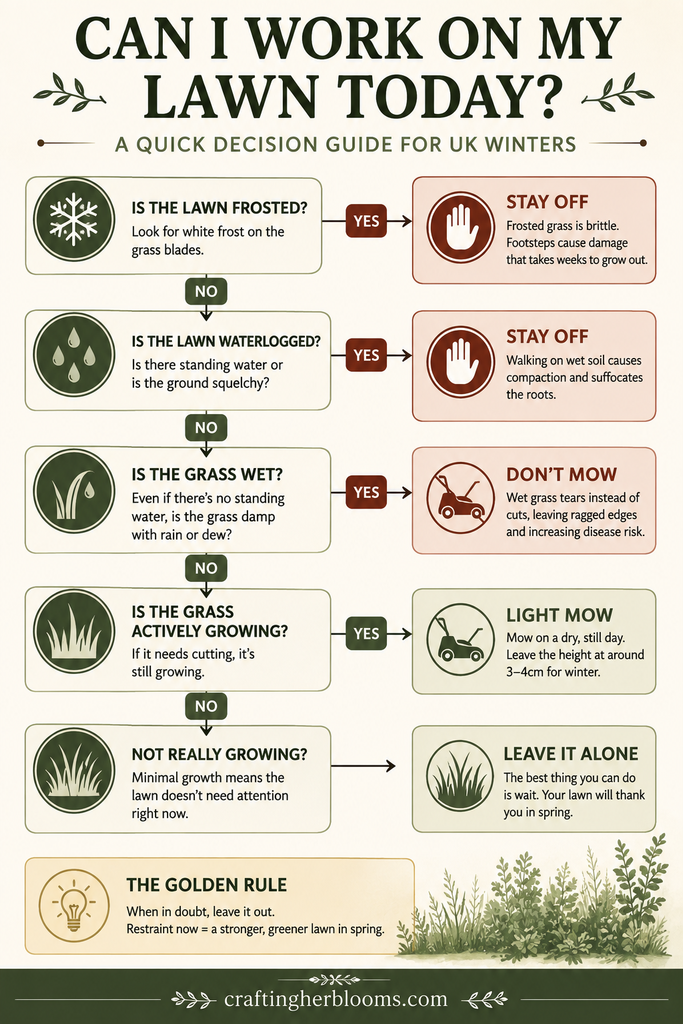
Longer grass over winter photosynthesises more effectively during short, low-light days, and it insulates the crown of each plant against frost. Cutting too short going into winter is one of the most common causes of thin, patchy lawns come spring, so resist the urge for one final tidy-up cut.
Never mow when the grass is wet or frosted. Both conditions tear rather than cut cleanly, leaving ragged wounds that are far more vulnerable to fungal disease than a clean cut made in dry conditions.
Clearing Leaves and Debris
Fallen leaves left sitting on grass through autumn and winter block light and trap moisture against the leaf blades underneath. Within a couple of weeks, that combination is enough to kill grass outright in patches, leaving pale or yellow marks that take a full growing season to fill back in.
Rake or blow leaves off the lawn regularly rather than waiting for one big autumn clear-up. A light, frequent approach every week or two through October and November keeps on top of things far better than an occasional marathon session, particularly under trees that shed over an extended period.
Don’t throw those leaves away. Piled into a simple wire cage or black bin bags with a few holes punched in, they rot down into leaf mould over twelve to eighteen months, which is one of the best free soil conditioners available to any UK garden.
Twigs, fallen fruit, and general garden debris deserve the same treatment. Anything left sitting on the grass surface for an extended period creates a shaded, damp patch underneath, and those patches are exactly where moss and disease get their first foothold.
Dealing With Compaction: When Aeration Actually Helps
Compacted soil is one of the biggest hidden problems in British lawns, and it’s made considerably worse by our wet winters. When soil particles get pressed together, whether from foot traffic, mowing, or simply heavy clay settling under its own weight, air pockets disappear and water starts sitting on the surface instead of draining through.
Early to mid-autumn is the ideal aeration window, before the ground gets too wet and before growth slows completely. If you missed that window, a dry spell in late winter or very early spring is a reasonable second chance, but avoid aerating waterlogged or frozen ground, since spiking already-saturated soil does very little good and risks smearing rather than opening it up.
For most domestic lawns, a simple garden fork pushed in every 10-15cm and rocked gently back and forth does the job perfectly well. Hollow-tine aerators, which physically remove small plugs of soil rather than just making holes, are worth considering on lawns with a genuine compaction problem, particularly heavy clay gardens common across much of the Midlands and southeast England.
Brushing a light top dressing of sharp sand into the aeration holes afterwards helps keep them open for longer and gradually improves drainage over several seasons. This is a long game rather than a quick fix, and most lawns need two or three consecutive years of autumn aeration before you see a real difference in how quickly the surface drains.
Moss: Why Winter Makes Everything Worse
If your lawn is prone to moss, winter is when you’ll see the problem at its absolute worst. Low light, consistently damp soil, and the slightly acidic conditions common in many British gardens are close to perfect growing conditions for moss, while grass itself is barely growing at all and can’t compete.
Treating moss chemically in the depths of winter generally isn’t worth the effort. Most moss killers work far more effectively when applied during a period of active grass growth, typically early autumn or spring, so the grass can recolonise the gaps moss leaves behind once it dies back.
What you can do through winter is manage the conditions that let moss establish in the first place. That means keeping leaves and debris off the surface, avoiding compaction through the tips above, and improving drainage in the wettest, shadiest corners of the garden where moss tends to concentrate first.
For a full breakdown of why UK lawns are so moss-prone and a complete removal and prevention plan, our dedicated guide to lawn moss control covers everything from scarifying technique to the underlying soil chemistry that invites moss back year after year.
Feeding Your Lawn: The Winter Feed Myth
A surprising amount of general lawn care advice recommends feeding through winter, and for UK lawns, that’s usually a mistake. Standard nitrogen-heavy feeds push soft, leafy growth that’s far more vulnerable to frost damage and disease than grass left to slow down naturally.
Skip conventional spring or summer lawn feed entirely from around October through to February. If you want to support the lawn through the dormant months, a specifically formulated autumn or winter lawn feed, higher in potassium and phosphorus rather than nitrogen, strengthens roots and improves resilience without forcing the kind of soft top growth that frost punishes.
Timing matters more than the product itself. Apply any winter-specific feed while the soil is still workable and grass is still actively growing, generally September into early October, rather than reaching for it once the coldest months have properly set in.
For a deeper look at how different fertiliser types actually behave in UK soil and weather, our guide to organic versus non-organic fertiliser breaks down which approach suits different lawn and garden situations.
Managing Waterlogging and Drainage
Standing water is arguably the single biggest threat to a UK lawn through winter, and it’s a problem that’s only becoming more common as our winters trend wetter. Grass roots need oxygen, and saturated soil simply doesn’t have any to offer, which is why waterlogged lawns often show yellowing or dying patches that look confusingly similar to drought stress.
Check your lawn after heavy rain for areas where water pools and takes more than a few hours to disappear. Those spots are telling you something about the soil structure underneath, usually compaction, poor natural drainage, or a low point where water naturally collects.
Aeration, covered above, is the first line of defence for mild waterlogging. For more persistent problem areas, digging in horticultural grit or coarse sand when conditions allow, improving surface levels so water runs toward a border rather than pooling centrally, or installing simple soakaway drainage are all worth investigating if the same patch floods every year.
Good general watering and drainage habits matter here too, even outside the growing season. Our guide to climate-friendly garden watering covers water management principles that apply just as much to keeping a lawn healthy through a wet winter as they do to conserving water in a dry summer.
Protecting Pots, Furniture, and Lawn Edges
If your lawn borders a patio or shares space with containers, winter brings a second set of considerations beyond the grass itself. Pots left directly on grass through a wet winter create dead, yellow rings underneath as light and airflow get blocked for months at a time.
Lift containers onto pot feet or bricks where possible, both to protect the lawn beneath them and to stop the pots themselves sitting in cold, waterlogged compost. If you’re building out a container display for winter interest, our guide to container gardening has useful groundwork on positioning and drainage that applies just as well in December as it does in June.
Garden furniture left out over winter causes the same shading problem on a larger scale. Where possible, move furniture off the lawn entirely for the darkest months, or rotate its position every few weeks if that’s not practical, so no single patch of grass goes without light for the whole season.
Repairing Bare Patches: Why Winter Isn’t the Time
It’s tempting to throw grass seed at a bare or thin patch the moment you notice it, but winter sowing is almost always wasted effort in the UK. Grass seed needs consistent soil temperatures above roughly 8-10°C to germinate reliably, conditions that simply don’t exist across most of the country from November through to March.
Seed sown into cold, wet winter soil tends to either rot before it germinates or gets washed away, lifted by birds, or smothered by moss before it has any real chance to establish. Worse, a patch of bare, disturbed soil sitting exposed through a wet winter is itself an open invitation for moss to move in first.
Make a note of problem areas now, ideally with a photo on your phone, so you remember exactly where repairs are needed once proper overseeding conditions return in April or September. Those two windows, either side of the summer heat, give new grass the best possible start in UK growing conditions.
Winter Lawn Care and Garden Wildlife
A lawn managed with a slightly lighter touch through winter does more than just protect the grass. Longer, undisturbed grass, leaf litter left in borders rather than obsessively cleared, and reduced foot traffic all create shelter for overwintering insects, frogs, and the invertebrates that garden birds rely on through the leanest months of the year.
If you have the space, leaving one edge or corner of the lawn slightly longer and less managed through winter costs you almost nothing in appearance while offering genuine value to garden wildlife. It’s a small adjustment that sits well alongside the wider case for wildlife-friendly gardening, where even minor changes to how a lawn is managed can noticeably shift what turns up in the garden through the year.
Worth noting too that a lawn and a wildflower meadow are fundamentally different things, built on opposite soil philosophies, so don’t mistake “leaving a patch long” for meadow-making. If a proper wildflower area interests you longer term, our guide to creating a UK wildflower meadow explains why that’s a deliberate, low-fertility project rather than simply grass left to grow.
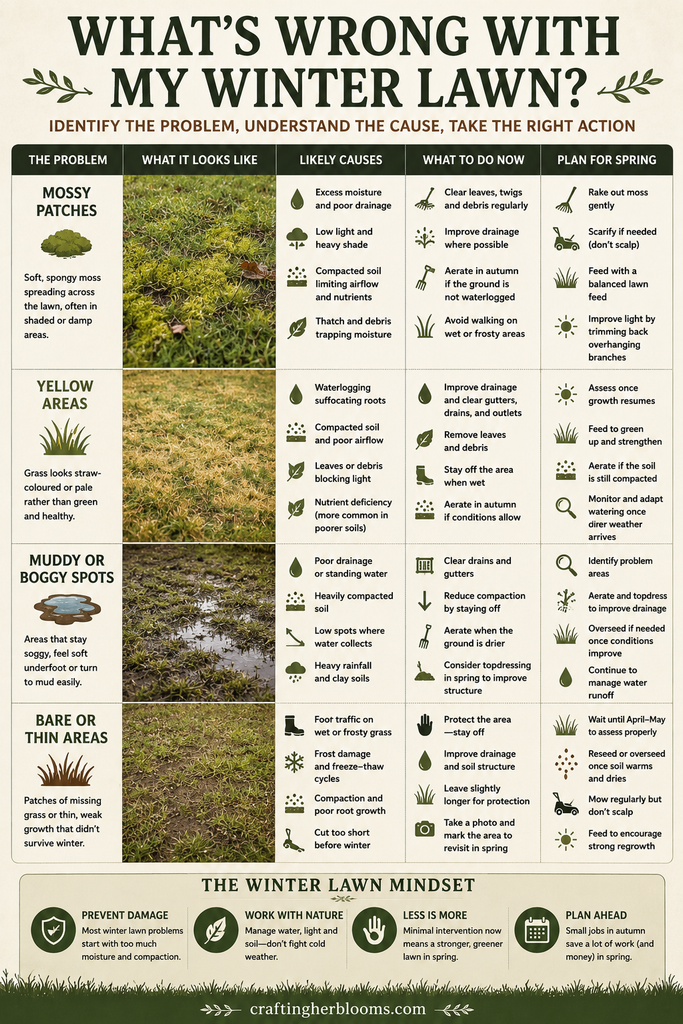
Common Winter Lawn Care Mistakes to Avoid
A handful of habits show up again and again in lawns that struggle every spring, and most of them come from good intentions applied at the wrong moment. Recognising these early saves a lot of repair work later.
Scalping the final cut of the year. Cutting unusually short for one last “tidy” mow strips away the insulation grass needs against frost, and it’s one of the most common causes of thin, patchy growth the following spring.
Feeding on the same schedule as summer. Nitrogen-heavy summer feed pushes soft growth that frost cuts straight through, undoing months of otherwise careful management in a single cold snap.
Ignoring small waterlogged patches until they’re large ones. A boggy corner in November is far easier to address than the same problem after three months of repeated saturation and compaction, so tackling drainage issues as soon as they appear pays off.
Raking or scarifying on wet or frozen ground. Both jobs need dry, workable soil to actually achieve anything. Doing them at the wrong moment either damages the lawn further or simply wastes the effort.
Panicking over slow winter growth. A lawn that looks dull, patchy, or generally unimpressive through December and January is usually just dormant, not dying, and most of that appearance resolves naturally once growth resumes.
Looking After Your Lawn Care Tools Over Winter
Winter is the ideal window to service the tools that will matter most come spring, precisely because they’re not in daily use. A mower left dirty, blunt, or unmaintained over several cold months is far more likely to struggle, or need an expensive repair, the first time it’s needed again.
Clean grass clippings and debris from underneath the mower deck before storing it, since damp clippings left in place encourage rust on the blade and housing. A light oil on any exposed metal parts, and a fully charged battery for cordless models kept somewhere frost-free, both make a noticeable difference to reliability in spring.
Blade sharpening is worth doing now rather than waiting until the first cut of the season reveals a ragged, torn finish across the lawn. A garden centre or small engine specialist can usually turn this around within a few days, well ahead of the rush that hits every workshop the moment spring officially arrives.
Rakes, forks, and aerating tools benefit from the same basic care. A wipe-down to remove soil, a check for loose handles or rust spots, and storage somewhere dry all extend the working life of equipment that otherwise gets left leaning in a shed corner from November to March.
A Note on Regional Timing
UK gardens don’t all experience winter the same way, and lawn care timing should shift accordingly. Gardens across Scotland and the north of England typically see frozen, dormant ground for longer stretches, which means the “stay off it” rule applies over a longer window, but also that moss and waterlogging problems, ironically, are sometimes slightly less severe simply because growth stops so completely that fungal and moss pressure eases too.
Southern England and milder coastal gardens rarely get a true prolonged freeze, so grass keeps growing, however slowly, right through winter in most years. That means the mowing guidance above applies for longer into December, and moss and waterlogging pressure tends to be the bigger concern rather than frost damage itself.
Whichever part of the country your garden is in, the underlying principles here don’t change. Only the calendar dates you apply them against shift by a few weeks in either direction.
Getting a Head Start on Spring
The jobs that make the biggest difference to how your lawn looks in April are almost all things you do in February and early March, not big dramatic winter interventions. Keep an eye on the weather for the first mild, dry spell, since that’s your cue to begin easing the lawn back into its growing season.
A light rake to lift any remaining flattened or matted areas, a first gentle mow once growth visibly restarts, and a proper scarify if moss has built up over winter are the natural next steps once temperatures start climbing consistently. According to the Royal Horticultural Society, most UK lawns benefit from this kind of gradual spring reawakening rather than an abrupt return to full summer maintenance.
Treat the coldest months as preparation rather than dead time, and the transition into spring becomes far smoother, with far less repair work needed once the growing season properly begins.
Frequently Asked Questions
Should I walk on my lawn in winter?
Avoid walking on grass when it’s frosted or waterlogged, since both conditions make the blades and soil far more vulnerable to damage. Light, occasional foot traffic on dry winter days causes minimal harm, but repeated use of the same route is worth avoiding with a stepping-stone path or similar.
Do I need to mow my lawn in winter?
Most UK lawns need one or two mows in late autumn as growth genuinely slows, then nothing further until growth resumes in spring. Only mow on dry, unfrozen days, and never cut the grass shorter than around 3-4cm going into the coldest months.
Should I fertilise my lawn in winter?
Standard nitrogen-based lawn feed should be avoided from roughly October through February, as it encourages soft growth that frost easily damages. A specific autumn or winter lawn feed, applied earlier in autumn while the soil is still workable, is a better option if feeding is needed at all.
Why is my lawn covered in moss in winter?
Low light, consistent dampness, and slightly acidic soil conditions common across the UK combine to make winter the peak season for moss growth, while grass itself is too dormant to compete effectively. Managing drainage, clearing debris, and avoiding compaction through winter all help limit how much moss establishes before proper treatment is possible in spring or autumn.
Can I lay new turf in winter?
Turf can technically be laid through mild winter weather as long as the ground isn’t frozen or waterlogged, since dormant turf still roots slowly even in cold conditions. That said, most professional landscapers still prefer fully avoiding periods of hard frost or heavy rain, so a settled, mild spell is always the safer choice if timing allows.
Is it too late to aerate my lawn if I missed autumn?
A dry spell in very late winter or early spring is a reasonable second opportunity if autumn aeration wasn’t possible. Avoid aerating when the ground is either frozen solid or fully waterlogged, since neither condition allows the soil structure to actually improve.
Why does my lawn look yellow after winter?
Yellowing after winter is most commonly caused by waterlogging, compaction, or leaves and debris left sitting on the surface for extended periods, all of which block light and starve the roots of oxygen. Most winter yellowing recovers on its own once growth resumes in spring, provided the underlying drainage or debris issue is addressed.
When should I reseed bare patches?
Wait for either April to May or early September, when UK soil temperatures are reliably above 8-10°C and consistent enough for grass seed to germinate properly. Seed sown through winter typically rots, washes away, or gets lifted by birds before it has a real chance to establish.
Do I need to protect my lawn from frost?
Established UK lawn grasses are naturally frost-hardy and don’t need physical protection from cold itself. The real risk from frost comes from foot traffic on frozen blades, which is why staying off a frosted lawn matters far more than any covering or treatment would.
What’s the single most important winter lawn job?
Keeping the surface clear of leaves and debris while staying off frozen or waterlogged ground consistently makes the biggest difference to lawn health by spring. Everything else in this guide, from aeration to feeding, matters, but those two habits alone prevent the majority of common winter lawn problems.
The Bottom Line
Winter lawn care in the UK isn’t about fighting the cold. It’s about managing wet, low-light conditions with a light touch, staying off the grass when it’s vulnerable, and doing the groundwork now that pays off the moment growth restarts.
Get the basics right through the coming months, mow sensibly while growth allows, keep leaves off the surface, protect against compaction and waterlogging, and hold off on feed and seed until conditions genuinely suit them, and you’ll walk into spring with a lawn that’s ready to grow rather than one that needs rescuing first.
Continue Your Journey
Ready to tackle more of your winter garden? Explore our guide to winter bedding plants for UK gardens for colour through the coldest months, get ahead with our complete UK vegetable growing guide, check what winter pruning your soft fruit needs in our raspberry growing guide, protect tender perennials properly with our geranium care guide, and start planning ahead with our spring citrus tree care guide.
Enjoyed this guide? Subscribe below for seasonal UK gardening tips delivered straight to your inbox, so you never miss the right moment for the next garden job.


