
Lawn Moss Control UK: How to Get Rid of Moss and Stop It Coming Back

I sometimes use affiliate links in content. This doesn’t cost you anything but I may make a commission payment from anything you buy through these links. As an Amazon Associate I earn from qualifying purchases. All opinions remain my own.
Moss in a UK lawn is one of those problems that sneaks up on you. One autumn it’s a few green patches near the fence, and by February the whole lawn has turned into a soft, spongy carpet that looks more like a forest floor than a garden feature. Sound familiar? You’re certainly not alone — moss is one of the most common lawn complaints in Britain, and for good reason. Our damp winters, mild temperatures, and often acidic soils create almost perfect conditions for moss to thrive.
The good news is that moss is entirely manageable, and with the right approach you can reclaim a healthy, grass-dominant lawn. But here’s the thing most people miss: killing moss is only half the job. If you don’t deal with the underlying conditions that invited it in the first place, it will be back before the year is out. This guide covers everything you need — from understanding why moss appears in British gardens to choosing the best removal methods and, crucially, keeping it away for good.
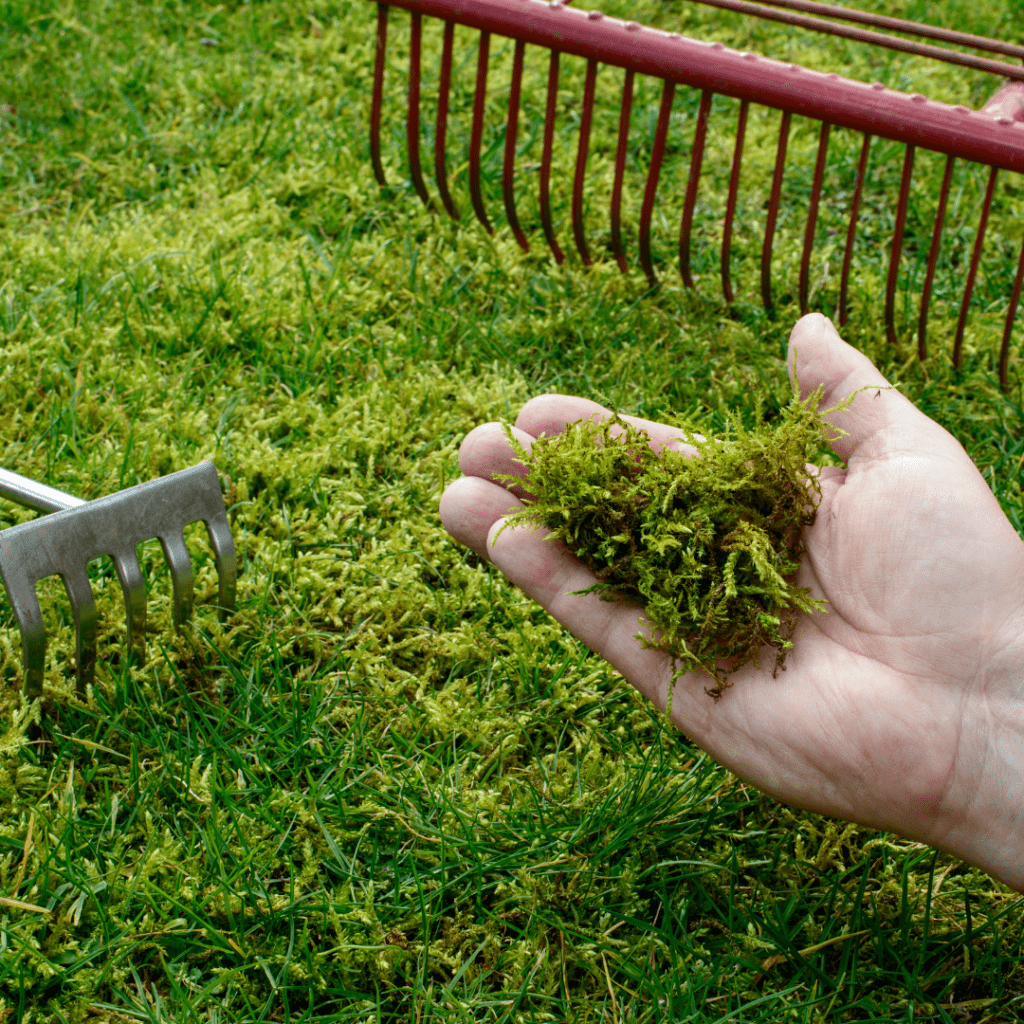
Why Does Moss Grow in UK Lawns?
Before you reach for the lawn sand or the scarifier, it’s worth taking a moment to understand what moss actually is and why it’s colonising your lawn in the first place. Moss isn’t a weed in the conventional sense. It’s a remarkably ancient plant — mosses have existed for around 450 million years and haven’t changed much since. Unlike grasses, mosses don’t have proper roots, vascular tissue, or seeds. They reproduce via spores and absorb water and nutrients directly through their leaves, which means they’re highly adaptable to conditions that grass finds difficult.
This is the core of the problem: moss doesn’t invade healthy, vigorous lawns. It fills gaps left by weak, struggling grass. That means a mossy lawn is usually symptomatic of something else going on beneath the surface.
Forged & Grown
Garden pieces, printed to order
3D printed planters and garden accessories, made in the UK. Self-watering designs, sculptural shapes, colour options — each one made when you order it.


Compacted, Poorly Drained Soil
Compaction is probably the single most common cause of moss in UK gardens, particularly in clay-heavy soils across the Midlands, much of the North, and large parts of the South East. When soil particles are pressed tightly together — by regular foot traffic, heavy machinery, or simply years of neglect — water can’t drain away freely. It pools near the surface, creating exactly the persistently damp conditions that moss loves. Grass, by contrast, needs oxygen around its roots to thrive, and in compacted soil it simply can’t compete.
Acidic Soil pH
Mosses tend to prefer slightly acidic conditions, and British soils often oblige. The ideal pH for lawn grasses is between 6.0 and 7.0, but many UK gardens sit below this range, especially in areas with high rainfall or where conifers have previously grown. A quick soil pH test — available from any garden centre for a few pounds — can tell you where you stand. If your lawn’s pH is below 6.0, moss will always have an advantage until you address it. You can read more about how soil type affects your garden and what you can do to improve it.
Shade and Poor Air Circulation
Grass needs light. Most lawn grasses need at least four to six hours of direct sunlight each day to grow vigorously, and in shaded spots — under trees, along north-facing fences, or beside tall hedges — the grass thins out and moss moves in to fill the void. Poor air circulation compounds the problem: areas where air doesn’t circulate freely stay damper for longer, giving moss the moist environment it needs to flourish.
Scalping the Lawn When Mowing
Many gardeners inadvertently encourage moss by cutting their grass too short, especially in autumn and winter. When lawn grass is mown too low, it becomes stressed and weak, allowing moss spores — which are present in virtually every garden — to germinate and establish in the thinning sward. In the UK, the general rule is never to remove more than a third of the grass blade at any one time, and winter mowing heights should be considerably higher than summer cuts.
Nutrient Deficiency
Grass that’s running low on key nutrients — particularly nitrogen — becomes pale, patchy, and slow-growing. In this weakened state it can’t compete with the opportunistic moss. Many lawns haven’t been fed in years, and the soil has become genuinely impoverished. Understanding the difference between organic and non-organic fertilisers and how to feed your lawn appropriately is an important part of long-term moss prevention.
The UK Climate Advantage — For Moss
It’s worth acknowledging that moss in British lawns isn’t purely a sign of neglect. Our climate — mild, damp, and overcast for much of the year — genuinely does favour moss over grass in a way that gardeners in drier climates simply don’t contend with. The Atlantic weather systems that sweep in from October to March bring persistent low light and wet conditions that stress lawn grasses and allow moss to spread rapidly. Understanding this means giving your lawn the extra support it needs through the winter months rather than waiting until spring to notice the damage.
Lawn Moss Diagnosis Tool
Answer five quick questions to find your most likely cause — and what to do about it.
1. Where is the moss worst?
2. How does the lawn feel underfoot?
3. When did you last feed your lawn?
4. How short do you cut the grass?
5. What’s your soil like?
How to Identify the Type of Moss in Your Lawn
Not all lawn moss is the same, and while it doesn’t change the removal strategy dramatically, knowing what you’re dealing with is useful. In UK lawns, the most common culprits are:
Cushion moss (Leucobryum glaucum): Appears as pale, greyish-green hummocks, often found in dry, acidic, shaded spots. It’s a reliable indicator of low soil fertility.
Feather moss (Kindbergia praelonga): The most common lawn moss in the UK, forming flat, spreading mats with a distinctive feathery appearance. Associated with damp, compacted soil.
Upright moss (Polytrichum commune): Stands more erect than other varieties, with a darker green colour. Often found in very acidic, boggy areas.
The presence of any of these tells you something useful about your lawn’s conditions. Cushion moss in a shaded corner calls for different action than feather moss across a large, open lawn area.
When Is the Best Time to Treat Lawn Moss in the UK?
Timing matters enormously with moss control. The general rule in the UK is that the ideal window for treating and scarifying is late summer to early autumn — typically late August through to October — or early spring, from March into April.
- Autumn treatment (August–October): This is often the preferred window because grass is still actively growing and can recover from scarification before the cold sets in. Treating in early autumn gives the lawn time to thicken up before winter.
- Spring treatment (March–April): Spring is also effective, particularly for applying lawn sand or iron sulphate and following up with scarification. Growth is vigorous at this time, which aids recovery.
- Avoid mid-winter: Treating moss with chemical controls during very cold or frosty periods is generally ineffective, as the moss needs to be actively growing to absorb the treatment.
- Avoid midsummer: High temperatures and dry conditions stress the lawn immediately after scarification.
Planning your treatment around the UK gardening calendar — rather than simply reacting to the problem when you notice it — gives you considerably better results.
Getting Rid of Moss in Your Lawn: Your Options
There’s no single approach to moss removal, and the right method depends on the severity of the problem, the size of your lawn, and your preferences around chemical use. Most gardeners will find that a combination of approaches works best.
UK Lawn Moss Treatments Compared
Click any treatment to see full details, pros, cons, and best use case.
| Treatment | Type | Effectiveness | Effort | Best Timing | Cost |
|---|---|---|---|---|---|
| Lawn Sand | Chemical | ⭐⭐⭐⭐⭐ | Medium | Mar–Apr, Sep–Oct | ££ |
| Iron Sulphate | Chemical | ⭐⭐⭐⭐⭐ | Low–Medium | Mar–Apr, Sep–Oct | £ |
| Scarification | Mechanical | ⭐⭐⭐⭐ | High | Apr, Sep–Oct | £–£££ |
| Aeration | Mechanical | ⭐⭐⭐ | Medium | Aug–Oct | £ |
| Hand Raking | Natural | ⭐⭐ | High | Any time | £ |
| Baking Soda | Natural | ⭐ | Low | Spring, Autumn | £ |
| Dish Soap Solution | Natural | ⭐ | Low | Small patches only | £ |
Click any row for full details
Lawn Sand: The Traditional British Approach
Lawn sand is the time-honoured British solution to lawn moss, and it remains one of the most effective treatments available. It’s a mixture of sharp sand, sulphate of ammonia (nitrogen), and ferrous sulphate (iron), which acts as the active moss-killing ingredient. The iron sulphate turns moss black and kills it within a week or two, while the nitrogen feeds the grass, and the sand helps to open up the soil surface.
Apply lawn sand in early spring when moss is actively growing, ideally when rain is expected within 48 hours to water it in. Avoid applying in hot, dry weather, as it can scorch the lawn. After two to three weeks, once the moss has blackened and died, it needs to be raked out — leaving dead moss in place will simply create a thatch layer.
Lawn sand is widely available at UK garden centres and online, with brands including Westland Lawn Sand, Vitax Lawn Sand, and Miracle-Gro Evergreen products being popular choices.
Iron Sulphate: The Standalone Option
If you’d prefer not to apply sand to your lawn, iron sulphate (ferrous sulphate) can be applied on its own as a liquid or granular treatment. It’s less likely to cause sand build-up in heavy clay soils. Dilute it carefully according to the packet instructions — it will stain paving, fencing, and clothing a rusty brown colour that’s difficult to remove, so apply carefully. As with lawn sand, you’ll need to scarify out the dead moss after two to three weeks.
Scarification: The Essential Follow-Up
Scarification — the process of mechanically removing thatch and dead moss from the lawn surface — is non-negotiable if you want lasting results. You can scarify by hand with a spring-tine rake, or use a powered scarifier for larger lawns. The latter makes the job considerably more manageable.
The process looks alarming. Your lawn will look terrible immediately afterwards — thin, patchy, and somewhat traumatised. This is normal. Push through it, overseed any bare patches, feed with a lawn fertiliser, and keep the area watered. Within four to six weeks the lawn typically recovers and looks considerably better than before.
A good approach is:
- Apply lawn sand or iron sulphate and wait two to three weeks for moss to die
- Scarify thoroughly to remove dead moss and excess thatch
- Apply a lawn top dressing if the surface is uneven
- Overseed bare patches with a grass seed appropriate for your lawn conditions
- Feed with an autumn lawn fertiliser if treating in September/October, or a spring/summer formula if treating in April/May

Natural and Low-Chemical Methods
If you prefer to avoid iron sulphate and lawn sand, there are some lower-intervention options worth trying, though they tend to be less dramatically effective.
Raking regularly: Regular raking in autumn and early spring removes moss before it gets established and improves air circulation. It won’t eliminate moss but will help keep it in check alongside other improvements.
Baking soda solution: Some gardeners have success with dilute baking soda (sodium bicarbonate) applied to mossy areas. It raises the pH slightly, making conditions less favourable for moss. Results vary and it needs repeated application.
Dish soap solution: A dilute mixture of washing-up liquid and water, applied to damp moss, can kill it over several days. It’s best suited to small, isolated patches rather than widespread moss problems.
None of these natural methods address the underlying conditions that caused the moss in the first place. They’re most useful as part of a broader programme that includes improving drainage, aerating, and adjusting pH.
Aeration: The Unsung Hero
Lawn aeration is often overlooked in the moss-control conversation, but it’s one of the most important tools available. Aerating — either with a garden fork pushed repeatedly into the lawn surface, hollow-tine aerating forks, or powered aerators — breaks up compaction, improves drainage, and gets oxygen down to the grass roots. All of these things directly counteract the conditions that allow moss to thrive.
Aim to aerate in autumn, ideally before or alongside your moss treatment. For heavily compacted lawns, an annual aeration programme will transform the lawn’s health over two to three years. You can top dress the holes with horticultural sand after aerating to keep them open and further improve drainage — this is particularly valuable in clay-heavy soils.
Overseeding and Lawn Renovation
A key principle of long-term moss control is this: bare soil is an invitation for moss. Wherever grass is thin, patchy, or absent, moss will move in. After scarification, overseed generously with a grass seed mix appropriate to your conditions — shaded areas need shade-tolerant mixes, while high-traffic areas need hard-wearing varieties. Ryegrass-dominant mixes are widely available and well-suited to the UK climate.
Keep overseeded areas consistently moist until germination — typically 10–14 days — before gradually reducing watering. For guidance on getting watering right during establishment, see our article on how often to water new grass seed.
How to Prevent Moss Coming Back
This is where many lawn care programmes fall short. Treating moss is relatively straightforward; keeping it away requires addressing the root causes and maintaining a consistently healthy lawn.
Correct Soil pH with Lime
If your soil test reveals a pH below 6.0, applying garden lime (calcium carbonate) will raise the pH over time, making the soil less hospitable to moss and more favourable for grass. Apply in autumn at the rates recommended on the packaging. Do not apply lime and fertiliser at the same time — leave at least four weeks between applications. Repeat as needed each year until your pH reaches the 6.5 target.
Note that lime takes several months to work through the soil, so this is a long-term correction rather than a quick fix.
Improve Drainage Permanently
If your lawn sits in a hollow, is on heavy clay soil, or receives runoff from hard surfaces, improving drainage is essential. Options include:
- Annual hollow-tine aeration followed by sand top dressing
- Installing a French drain at the lawn’s lowest point
- Replacing particularly boggy areas with raised beds, gravel, or hard landscaping
- Improving the soil structure over time by incorporating organic matter at the edges and through top dressing
Healthy soil is the foundation of a healthy lawn. The same principles that underpin eco-friendly kitchen gardening — building soil life, improving structure, reducing compaction — apply equally to lawns. For more on sustainable approaches to soil improvement, our guide to eco-friendly gardening ideas is worth a read.
Feed Your Lawn Regularly
A well-fed lawn is a competitive lawn. Grass that’s receiving adequate nitrogen, potassium, and phosphorus grows vigorously enough to crowd out moss before it can establish. A basic UK lawn feeding programme might look like this:
- Spring (March–April): High-nitrogen lawn fertiliser to stimulate growth
- Summer (June–July): Balanced liquid feed if growth is strong
- Autumn (September–October): Low-nitrogen, high-potassium autumn fertiliser to strengthen roots before winter
Avoid feeding in late autumn and winter, when grass is dormant or semi-dormant. Feeding at the wrong time promotes soft, sappy growth that’s vulnerable to frost damage and disease.
Raise Your Mowing Height
Cutting grass too short is one of the simplest and most common mistakes that encourages moss. In Britain, most lawn grasses do best at a height of 25–50mm (about an inch to two inches) during the growing season, with cuts being raised to the higher end of that range in autumn and spring. In winter, only cut in dry conditions when the grass is actively growing, and raise the mowing height further still.
Higher grass shades the soil surface, reducing moisture loss and making it harder for moss spores to germinate. It also means individual grass plants are less stressed, and robust grass is your best long-term defence against moss.
Address Shading
If your moss problem is concentrated in a shaded area — under a tree, near a fence or wall — the practical options are:
- Selectively prune overhanging branches to increase light levels
- Replace the grass in deeply shaded areas with shade-tolerant ground cover plants such as ajuga, epimedium, or pachysandra
- Use a specialist shade-tolerant grass seed mix for partial shade areas
- Accept that some level of moss in deep shade is practically inevitable and manage it through regular raking rather than attempting full eradication
A Seasonal Lawn Moss Control Calendar for UK Gardeners
Staying on top of moss is much easier with a seasonal routine. Here’s a simple framework built around the UK gardening calendar:
UK Lawn Moss Control Calendar
Select a month to see what to do — and what to avoid — for a moss-free lawn.
January–February: Avoid treating moss in frosty conditions. Keep off the lawn when the ground is frozen or waterlogged. If it’s mild and dry, a light rake will help prevent the moss mat thickening further.
March–April: Prime time for spring treatment. Apply lawn sand or iron sulphate as temperatures rise above 5°C. Scarify two to three weeks later, overseed bare patches, and feed with a spring lawn fertiliser.
May–August: Regular mowing at the correct height. Watch for thinning patches and overseed as needed. Apply a summer feed in June if growth is strong. Aerate any compacted areas in late summer.
September–October: The best window for major lawn renovation. Apply moss killer, scarify, aerate, top dress, overseed, and apply an autumn feed. This sets the lawn up to resist moss through winter.
November–December: Light maintenance only. Leaf clearance is important — a layer of decomposing leaves creates perfect moss conditions. Reduce mowing frequency and raise the cutting height.
Is It Worth Keeping a Lawn in a Moss-Prone Garden?
This is a question more UK gardeners are asking, and it’s a fair one. If your garden is heavily shaded, your soil is persistently waterlogged, or you’re simply not enjoying the ongoing effort of lawn maintenance, there are some excellent alternatives.
A clover lawn or a wildflower meadow patch requires far less maintenance, tolerates a wider range of conditions, and provides far more benefit to pollinators and wildlife. Alternatively, areas prone to deep shade can be transformed into productive growing spaces — raised beds for vegetables can work well in partially shaded spots, and there’s something satisfying about replacing a patchy, moss-ridden corner with something productive. Our guide to starting a vegetable garden covers how to plan and make the most of those awkward garden spaces.
If you do want to keep a lawn, go in with realistic expectations. In a genuinely challenging site — heavy shade, poor drainage, high rainfall — you’re aiming for a lawn that’s predominantly grass with some moss tolerated, not a bowling-green perfection. And that’s absolutely fine. Many of the most beautiful British gardens have a patch of moss creeping in somewhere.
Frequently Asked Questions About Lawn Moss in the UK
Why does my lawn get moss every year even after treating it? Recurring moss almost always means the underlying conditions haven’t been addressed. Killing existing moss with iron sulphate or lawn sand is a treatment, not a cure. You need to identify and fix the root cause — compaction, low pH, shade, poor drainage, or thin grass — to break the cycle.
Can I use moss killer and fertiliser at the same time? Lawn sand contains both, so in that sense yes. But if you’re applying separate products, follow the instructions carefully — some combinations can damage the lawn. Leave at least a few weeks between applying lime and any fertiliser.
Is moss harmful to my lawn grass? Moss doesn’t directly damage grass — it’s not a parasite. But it competes for space and can smother grass if left unchecked. Where moss establishes thickly, grass underneath it may die back simply from lack of light and air.
How long does it take to get rid of lawn moss for good? Realistically, a full programme of treatment, scarification, pH adjustment, and improved management takes two to three growing seasons to show lasting results. You’ll see significant improvement after the first year’s work, but consistency is what makes the difference.
Does scarifying damage the lawn? Scarification looks destructive and the lawn will look rough immediately afterwards. But carried out at the right time of year — late summer or early spring when grass is growing — the lawn recovers well and typically looks better than before within four to six weeks.
What’s the best moss killer for UK lawns? Iron sulphate (ferrous sulphate) is the most widely used and respected option for UK lawns, either as a standalone product or as part of lawn sand. Products containing iron sulphate include Westland Lawn Sand, Miracle-Gro EverGreen Autumn, and various own-brand garden centre products. Always read the label and follow application rates carefully.
Taking the Long View on Lawn Moss
A healthy, largely moss-free lawn is entirely achievable in the UK, but it requires a shift in thinking from reactive to proactive. The gardeners who have the best-looking lawns aren’t necessarily treating moss more aggressively — they’re creating conditions where grass thrives and moss simply doesn’t get a foothold. Good mowing practice, regular feeding, seasonal aeration, appropriate watering, and soil pH management, done consistently over two to three years, will transform even a badly mossed lawn.
Start with a soil pH test and a good look at your drainage. These two factors account for the majority of persistent moss problems in British gardens. Address them, maintain the basics through the seasons, and the need for dramatic moss treatments becomes significantly less frequent.
There’s real satisfaction in turning around a neglected, moss-covered lawn — not least because the same basic principles of soil health and consistent care that apply here apply across everything you grow. A garden in good condition looks after itself far more than one that’s struggling. And that’s a principle worth building everything on.
Continue Your Journey
If you enjoyed this guide, you might also find these helpful:
- Understanding Soil Types in Your Garden — discover how your soil type influences everything from drainage to pH, and how to work with it rather than against it.
- How Often to Water New Grass Seed — essential guidance for establishing new grass after overseeding your lawn.
- Organic vs Non-Organic Fertiliser — understanding the difference and choosing the right approach for your lawn and garden.
- Eco-Friendly Garden Ideas for UK Gardens — sustainable approaches to garden management that work with nature rather than against it.
- How to Start a Composting System — homemade compost is one of the best tools you have for improving soil structure and long-term lawn health.
Have you won the battle against lawn moss in your garden? What worked best for you — scarification, lawn sand, or improving drainage? Share your experience in the comments below — your tips could really help a fellow gardener.
Want more UK gardening guides delivered straight to your inbox? Sign up to the Crafting Her Blooms newsletter for seasonal advice, planting guides, and garden inspiration tailored to British gardeners.


