
Sowing from Seed vs. Buying Plug Plants: What’s Better for UK Gardeners?
I sometimes use affiliate links in content. This doesn’t cost you anything but I may make a commission payment from anything you buy through these links. As an Amazon Associate I earn from qualifying purchases. All opinions remain my own.
Every January the same dilemma lands on the doormat. The seed catalogues are full of promise at £2 or £3 a packet, while the plug plant pages offer a tray of ready-started tomatoes with none of the fuss. Which one actually gives you more for your money?
The honest answer is that it depends on the crop. Seeds win for some plants by a mile, and plugs win for others, so a blanket rule will cost you either cash or time. This guide gives you a verdict for each crop, with real UK cost-per-plant maths and a look at when each route pays off.
If you want the full month-by-month sowing windows, our UK vegetable growing calendar has them. Here we are focused on one question: sow it or buy it?
🌱 What Is a Plug Plant, Exactly?
A plug plant is a young seedling grown on by a nursery in a small cell of compost. It arrives with a tiny root ball, ready to pot on or plant out. Sizes vary a great deal, from mini plugs a few centimetres tall to jumbo plugs that are almost a finished plant.
Forged & Grown
Garden pieces, printed to order
3D printed planters and garden accessories, made in the UK. Self-watering designs, sculptural shapes, colour options — each one made when you order it.


Suppliers describe their sizes differently, so always check the listing. One UK supplier’s size guide runs from “Pro” plugs of 4 to 6cm up to jumbo plugs of 10 to 20cm. A bigger plug costs more, but it also saves you more weeks.
You will often see plugs sold in the same catalogues as seed. The decision is rarely about quality. It is about what you are growing, how much of it you want, and what you have at home to look after seedlings.
💷 The Cost Per Plant: Worked Examples
Prices below were checked on UK supplier pages on 26 October 2026. They change with the season, so treat them as a snapshot and check the live listing before you order.
Tomatoes
A packet of tomato seed is cheap. ‘Gardener’s Delight’ was listed at £2.45 for around 50 seeds at one UK seed supplier, and £3.29 for 50 at another. Most of us do not need 50 tomato plants, but even if you sow six, the seed cost is roughly 41p to 55p a plant.
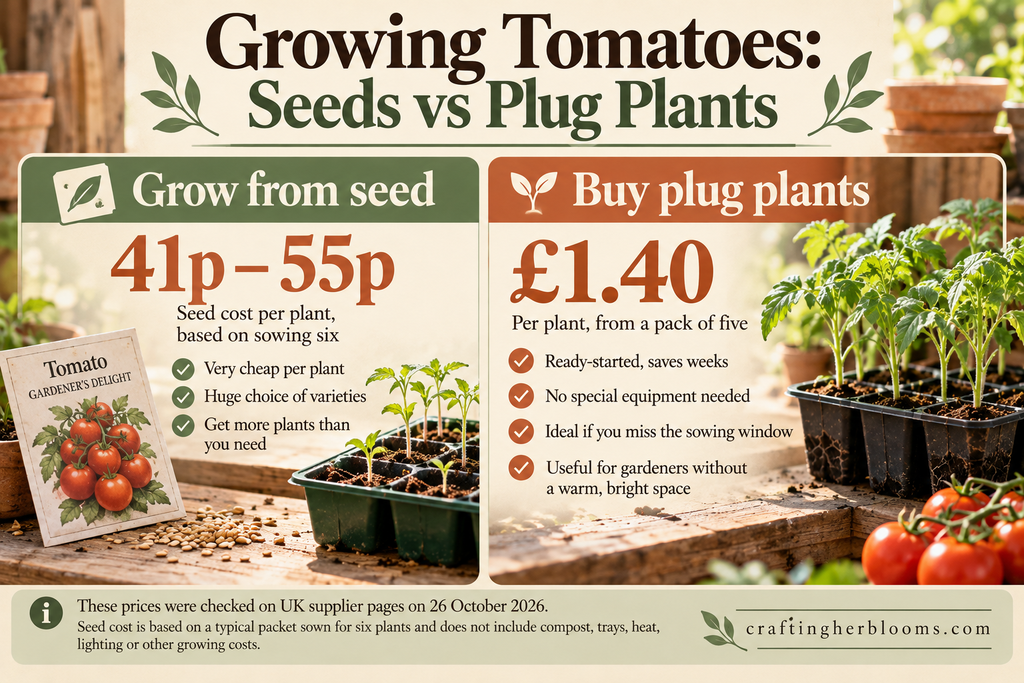
Plug plants for the same variety were listed at £6.99 for five, which works out at about £1.40 each. So on paper, seed is around a third of the price.
Carrots
A packet of ‘Early Nantes 2’ was listed at £1.55 for roughly 500 seeds. Even if you sow only a fraction of the packet, a plug of carrots would never come close on price. Carrots are rarely sold as plugs at all, and there is a good reason for that.
Bedding plants
Petunias and similar bedding are where plugs make a real case. One UK supplier sells petunia plugs by the tray of 40, around 6cm tall. Seed is dust-fine, slow to germinate and needs warmth and light, so the saving on paper disappears once you count the effort.
🧾 The Hidden Costs of Sowing
Seed is cheap, but the kit around it is not free. Before you decide that sowing is always the thrifty choice, add up the extras.
- Seed compost: a bag of peat-free seed compost is a real cost, and quality varies. Ursula Buchan, writing in The Field, describes the quality of peat-free seed compost as “way too variable” for her liking.
- Trays and modules: reusable, but you need them. A budget set of modular seed trays is a sensible one-off purchase if you sow every year.
- Heat and light: tomatoes and peppers want warmth to germinate, and a south-facing windowsill in February rarely gives enough light. A heated propagator or grow light adds to the bill, plus the electricity to run it.
- Space: a windowsill full of trays is a fine thing in March and a nuisance by April.
- Waste: a packet holds more seed than most gardeners need, and some seed does not keep. Parsnip seed in particular is not worth saving to a second year.
This post contains an affiliate link. If you buy through it, we may earn a small commission at no extra cost to you.
⏱️ Timing: When Each Route Pays Off
Sowing and buying plugs happen at different points in the year, and that changes what you get.
For tender crops such as tomatoes, seed is usually sown indoors from February to April. That is early enough to give a long season, but it needs a warm, bright spot for weeks. Plug plants, by contrast, tend to be dispatched from spring, ready to pot on or plant out once frost has passed. Planting out between April and June is typical, depending on where you live.
If you miss the sowing window, plugs rescue the season. If you hit it, seed gets you the same result for less. For a slow, fussy plant that needs months of indoor care, a plug can put you several weeks ahead.
Hardy crops are different. Many can be sown straight into the ground from spring, with no head start needed. That is why we do not recommend buying plugs of carrots, beans or sunflowers at all.
🥕 Best Crops to Grow from Seed
These plants are cheap, fast and easy from seed, and several actively dislike being moved.
Carrots and other roots. Roots hate disturbance, and a damaged root tends to fork. Sow thinly where they will grow. Seed will not germinate in cold soil, so wait until the ground has warmed, or use a cloche for an early start. Our guide to growing carrots covers spacing and carrot fly.
Beans and peas. They germinate readily and grow quickly. Outdoor sowings can be raided by mice, so sow a few extra or start some in pots.
Courgettes and squash. A single packet gives you far more plants than a household can eat. Sow indoors in April or direct in late May. Our guide to growing courgettes explains how many plants you really need.
Sunflowers. Big seeds, big germination, almost no skill needed. They are one of the best seed bargains you can grow, and children love them. Read more in how to grow sunflowers.
Salad leaves and other quick crops. Sown little and often, they beat anything a plug can offer on price. Slugs love young lettuce, so protect early sowings.
🍅 Best Crops to Buy as Plugs
Plugs earn their keep when a crop is slow, fussy or needs to start in the depths of winter.
Tomatoes, if you have no warm bright spot. Sowing in February on a dim windowsill produces tall, leggy seedlings that struggle. If you have a greenhouse or conservatory, seed is cheaper. If you do not, plugs are a sound choice. Our tomato growing guide covers varieties and feeding.
Chillies and peppers. They need a long season and plenty of heat, so they start in late winter. A few plugs bought in spring can give a better crop than a poor windowsill start.
Petunias and other bedding. The seed is tiny, slow and unforgiving. Plugs are a better route to a window box full of colour, and you can pot them on at your own pace. Our petunia growing guide shows what to do next.
Anything you want only a few of. If you want three plants of a variety, a plug pack beats a packet of fifty seeds you will never sow.
📦 Buying Plug Plants: Supplier Types and What to Check
In the UK, plug plants come from two main places. Seed houses such as Suttons, Thompson & Morgan and Dobies sell plugs alongside their seed range. Specialist plug nurseries focus on plants only, often with wider choice in bedding.
Garden centres sell plugs and young plants too, and these have one big advantage. You can see what you are buying before you pay. Mail-order plants can arrive stressed, with pale leaves or a dried root ball, because couriers vary.
When your order arrives, open the box straight away. Here is a quick checklist:
- Water: check the root ball. If it is dry, soak it gently.
- Leaves: a little pallor after travel is normal. Mushy stems or blackened tissue are not.
- Pot on: most plugs need potting into 9cm pots before planting out, so have compost and pots ready.
- Delivery windows: most suppliers avoid dispatch in extreme frost or heat, so keep a flexible plan.
Always check dispatch terms and delivery charges on the live page. These vary by supplier and by season, and we do not list them here.
🪟 Effort, Space and Failure Rates
Sowing is a small daily commitment for a few weeks. Seedlings need checking, watering gently and turning towards the light, and a missed weekend can mean a collapsed tray.
Damping off, where seedlings rot at the base, is the classic beginner loss. Clean trays, fresh compost and good airflow help a great deal. Plugs sidestep much of this, because the nursery has already carried the plants through the riskiest stage.
Outdoor sowings carry their own risks. Mice take beans and peas, flea beetle pecks at brassicas, and slugs can clear a row of seedlings overnight, so our guide to protecting plants from slugs and snails is worth a read before you sow.
Plugs are not risk free either. A tray that arrives while you are away for a week will suffer. Be honest about your own routine before you choose.
🌤️ Hardening Off Either Way
Whether you sowed it or bought it, a young plant raised indoors needs acclimatising before it goes outside. We cover this in detail in our gentle guide to hardening off, so we will not repeat it here. In short, give it a week or two of gradual exposure, and never rush it on a cold night.
🌸 A Simple Verdict, Crop by Crop
Here is the quick version, if you want to decide in a minute.
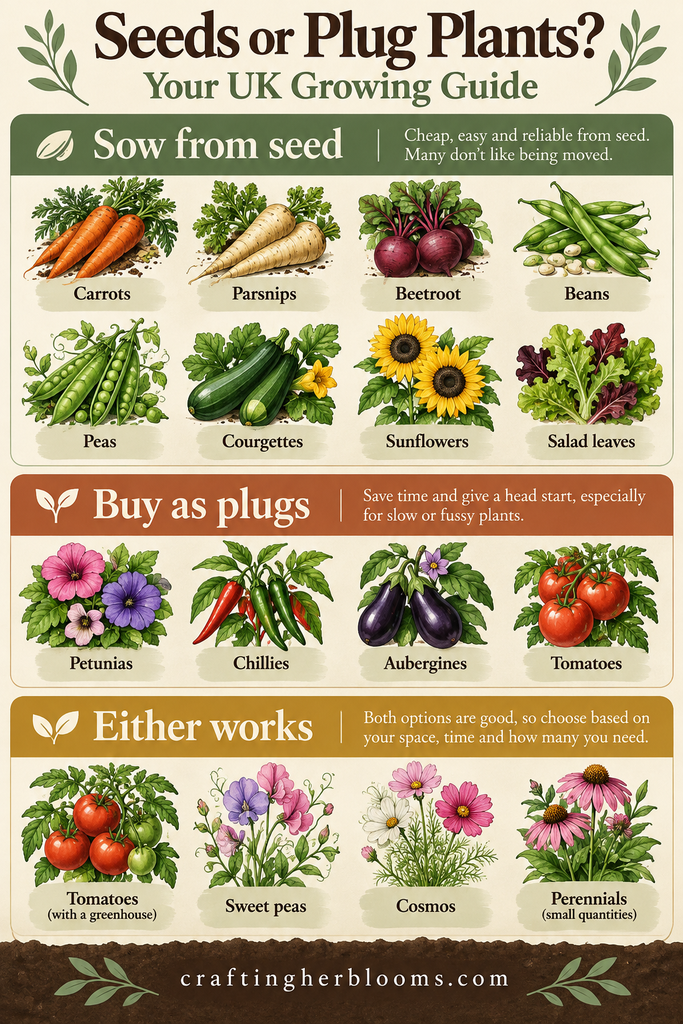
- Sow from seed: carrots, parsnips, beetroot, beans, peas, courgettes, sunflowers, salad leaves, hardy annual flowers.
- Buy as plugs: petunias and other bedding, chillies, aubergines, and tomatoes if you lack a warm, bright spot.
- Either works: tomatoes with a greenhouse, sweet peas, cosmos, perennials you only want a few of.
If you are on a tight budget, sow the cheap and easy crops from seed and spend your plug money on the two or three plants that need the most help. That mix usually gives the best result per pound.
❓ Quick Questions
Are plug plants more expensive than seed? Per plant, yes. The saving from seed is real, but it depends on what you already own and how many plants you actually need.
Can I save leftover seed for next year? Many seeds keep for a year or more if stored airtight in a cool, dry, dark place. Parsnip seed is the exception, so buy it fresh each year.
Do plugs crop earlier than seed? Usually, for slow or tender crops, because they have a head start. For hardy crops sown outdoors, the difference is small.
Which is better for beginners? Plugs are more forgiving for the first year, especially for tomatoes and bedding. Sow carrots, sunflowers and beans from seed, which are some of the easiest wins.


