
Edible Flowers to Grow Indoors in the UK: Varieties, Sowing Times and How to Use Them
I sometimes use affiliate links in content. This doesn’t cost you anything but I may make a commission payment from anything you buy through these links. As an Amazon Associate I earn from qualifying purchases. All opinions remain my own.
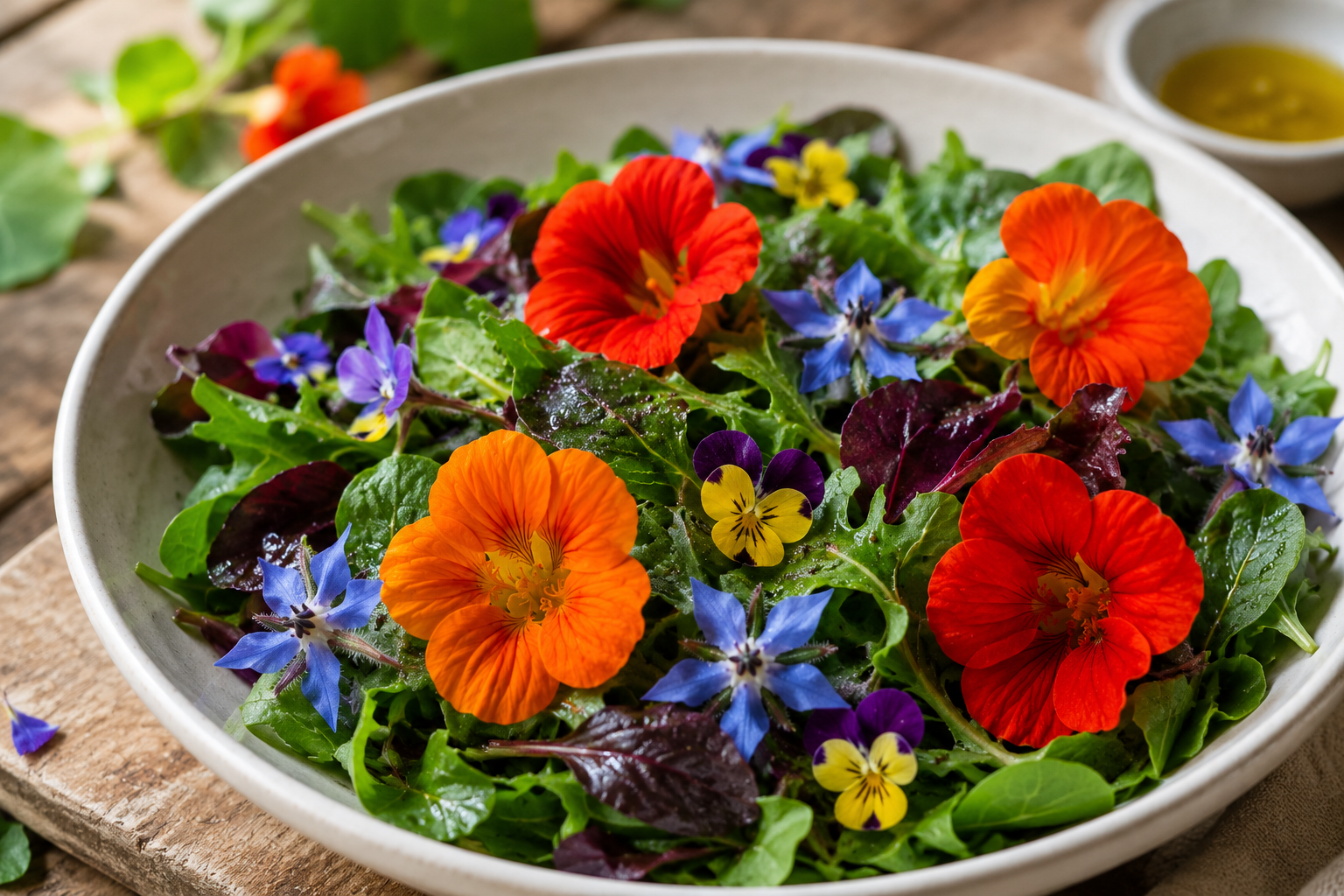
There is something quietly radical about growing edible flowers on a windowsill. The idea that a pot of nasturtiums on a kitchen ledge can produce blooms that go straight into a salad — or that the chive flowers shooting up beside your herbs are just as edible as the leaves — feels like a secret most people haven’t been told. Yet edible flowers have been part of British culinary tradition for centuries, from crystallised violets in Victorian confectionery to borage floating in a Pimm’s jug at a summer garden party.
The good news for UK gardeners with limited space is that several of the most rewarding edible flowers are perfectly suited to indoor growing. A south- or west-facing windowsill, a bright conservatory shelf, or a spot near a patio door can all become productive little flower gardens — delivering both colour and flavour through seasons when outdoor growing has stalled. This guide covers the best varieties to try, when to sow them in the UK, how to grow them well indoors, and — perhaps most importantly — what to actually do with them once you’ve picked them.
Getting Started: What You Need to Know First
Before diving into individual varieties, a few principles are worth setting out clearly, because edible flowers sit in genuinely important safety territory.
Not All Pretty Flowers Are Safe to Eat
This bears repeating: many flowers that are common in UK gardens are toxic to humans, and some are seriously so. Foxglove, monkshood, lily of the valley, daffodil, sweet pea, and delphinium are all dangerous. The fact that something is growing in a garden centre doesn’t make it edible. Always make a positive identification before eating any flower, and if you are buying plug plants or seeds specifically to eat, buy from a reputable supplier and check that the variety is explicitly listed as edible.
Forged & Grown
Garden pieces, printed to order
3D printed planters and garden accessories, made in the UK. Self-watering designs, sculptural shapes, colour options — each one made when you order it.


If you have a strong pollen allergy, approach edible flowers with caution — especially chrysanthemums and other members of the daisy family, which can cause reactions. Washing flowers before eating is also essential, even for plants grown indoors, to remove any dust or insects.
What Makes a Flower Good for Indoor Growing?
Not every edible flower thrives away from a garden bed. For indoor success in a UK home, you want varieties that can tolerate lower light levels than they’d get outside (particularly important through our grey autumn and winter months), don’t mind the relatively low humidity of centrally heated rooms, and can produce flowers in pots rather than requiring the root run of an open border. The flowers in this guide have all been chosen with those constraints in mind.
Crafting Her Blooms
Which Edible Flower Should You Grow Indoors?
Answer four quick questions to find your perfect match.
Question 1 of 4
How much light does your windowsill get?
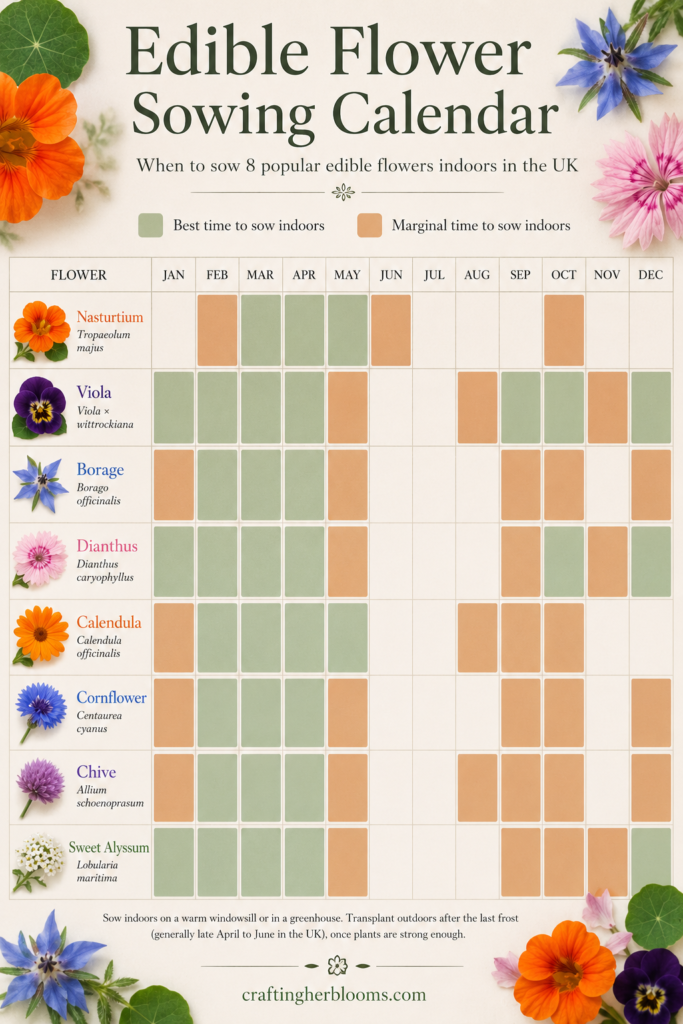
When to Sow: UK Timings
Indoor growing frees you from some of the constraints of outdoor seasonality, but most edible flowers still respond to day length and temperature. The sowing windows below are calibrated for UK conditions — expect slower germination and growth through the shortest days of December and January, and more vigorous progress from February onwards as light levels begin to recover.
The Best Edible Flowers to Grow Indoors in the UK
Nasturtiums: The Easiest Starting Point
If you have never grown edible flowers before, start with nasturtiums. They are forgiving to the point of stubbornness, germinate quickly, and produce cheerful blooms in shades of red, orange, and yellow that taste exactly as they look — warm, slightly peppery, with a flavour reminiscent of watercress. Both the flowers and the leaves are edible, which gives you a much longer productive window than flowers-only plants.

For indoor growing, choose a compact or trailing variety rather than a vigorous climbing type. 'Tom Thumb Mixed', 'Alaska' (which has attractive variegated foliage), and 'Jewel of Africa' are all well-suited to pots. Sow seeds directly into a 15–20cm pot from March to June, pressing them about 1cm deep into a good multipurpose compost. They don't like being transplanted, so sow where they'll stay. Keep the soil on the dry side rather than wet — nasturtiums actually flower more freely in less fertile, slightly stressed conditions, so resist the urge to feed.
In a bright indoor spot, you can expect flowers within six to eight weeks of sowing. Pick individual blooms as they open and scatter them over salads, use them to garnish savoury tarts and soups, or stuff them with cream cheese for an elegant canapé. A note on pets: nasturtiums are mildly toxic to cats and dogs, so position them out of reach if you have four-legged residents.
Calendula: The UK Kitchen Garden Classic
Calendula — the pot marigold — has been grown in British kitchen gardens for hundreds of years, and for good reason. It is easy, productive, and genuinely useful: the petals have a slightly bitter, peppery flavour with a faint saffron quality, and they were historically used to colour rice, butter, and cheese in the days before commercial food dyes. They still do the same job beautifully today.
The species to grow is Calendula officinalis, not French or African marigolds (Tagetes), which are in a different genus entirely and not edible in the same way. Good varieties for indoor pots include 'Sherbet Fizz', which stays relatively compact, and the classic 'Radio' with its quilled petals. Sow from February to May in small pots and pot on as seedlings grow. Calendula genuinely thrives on a bright windowsill and will flower for months if you deadhead regularly — once a plant sets seed, it stops producing new blooms.
Use the petals scattered into rice dishes, stirred into soft butter, folded through scrambled eggs for colour, or floated in a broth. They are also an excellent garnish for cheese platters. Remove the central disc and use only the petals, as the disc can be quite bitter. Keep them away from cats.
Chives: Double Value from One Plant
Most UK gardeners grow chives for the leaves, but the flowers — produced in late spring and early summer — are equally edible and have a milder, sweeter onion flavour. If you already grow chives on a windowsill as part of your indoor herb garden (and if you don't, growing herbs on a balcony or indoors is well worth exploring), you are already set up for edible flowers at very little extra effort.

The blooms are large, globe-shaped clusters in a soft lilac-purple, and they break apart into dozens of individual florets that scatter beautifully across a dish. Use them in salads, folded through creamy pasta, scattered over a potato dish, or anywhere you'd use fresh chives for flavour. Chives are extremely low-maintenance as indoor plants — they prefer a bright spot but tolerate partial shade, need very little feeding, and can be divided and repotted every year or two to keep them productive. The 27 Best Grow Your Own Herb Plants guide has more detail on keeping a productive indoor herb collection alongside your edible flowers.
Violas and Pansies: Year-Round Colour
Violas and pansies are closely related — violas are the smaller-flowered species, pansies the larger — and both produce edible flowers with a delicately sweet, slightly floral flavour. The colour range is extraordinary, from deep purple-black through violet, yellow, and white, often in striking combinations, which makes them particularly useful as a visual garnish.
The important distinction for indoor growing is to choose violas over standard pansies where possible. Violas are more compact, more heat-tolerant (important in warm indoor conditions), and tend to flower more prolifically and for longer. 'Bowles's Black', 'Etain', and 'Sorbet' series are excellent choices. Standard garden pansies can become leggy and floppy indoors unless they have very good light. Both groups do best in a cool-ish room — a north-facing kitchen windowsill that isn't above a radiator, or a cool conservatory, suits them beautifully.
Sow from July to September for winter and spring flowers, or February to April for summer flowers. Prick out carefully and pot into 10–12cm pots. Deadhead obsessively to keep them producing. Use the flowers as a garnish for desserts, pressed into icing, floated in gin and tonic, or scattered over a cheese board.
Borage: The Bees' Favourite That Works Indoors Too
Borage is perhaps best known as the traditional garnish for Pimm's, but its vivid star-shaped flowers in intense sky blue have a much wider range of uses. The flavour is mild and fresh — often described as cucumber-like — which makes them a particularly versatile culinary flower.
It's a slightly more challenging indoor plant than nasturtiums or violas because borage grows vigorously and prefers its roots to have some room. Use a pot at least 25–30cm wide and position it in your brightest spot. Sow direct from March to May — borage dislikes transplanting, just as nasturtiums do — and it will grow quickly. Deadhead or pick regularly. You can also freeze individual flowers in ice cubes for drinks, which makes them look spectacular at summer gatherings.
As an added bonus, borage is a genuinely excellent companion plant — if you're growing tomatoes or peppers indoors, borage planted alongside them is thought to deter aphids and attract beneficial insects through any open windows or doors in summer. The companion planting guide has more on how to put this into practice across your indoor and outdoor growing.
Lavender: The Fragrant Option
Lavender flowers are edible and have a distinctive floral, slightly sweet, herbal flavour — but they need to be used with a light hand. A small amount adds something genuinely special to shortbread, lemon drizzle cake, ice cream, or a simple syrup for cocktails. Too much and the dish takes on a slightly soapy quality that most people find unpleasant.

For indoor growing, choose English lavender (Lavandula angustifolia) rather than the less hardy French or Spanish types, and select a compact variety. 'Hidcote' and 'Munstead' are both reliable. Lavender needs a very bright, sunny windowsill — south-facing is ideal — and extremely well-draining compost. Adding grit or perlite to your potting mix is essential; lavender will quickly rot in heavy, moisture-retentive compost. Water sparingly and allow the compost to dry out almost completely between waterings. It's not the easiest indoor edible flower, but it's entirely achievable in a sunny UK kitchen or conservatory, and the growing lavender guide covers all the UK variety and care details you'll need.
Hibiscus: Bold and Beautiful
Hibiscus (Hibiscus rosa-sinensis, or the edible Hibiscus sabdariffa for the strongest flavour) produces striking tropical-looking flowers in deep crimson, pink, and yellow. The flavour is tart and fruity — hibiscus is the source of the flavour in many herbal teas, cordials, and cocktails. The calyces of H. sabdariffa (the base of the flower) are particularly prized for making syrups and jams.
Hibiscus can be grown as a houseplant in the UK, but it needs warmth, humidity, and very good light. A south-facing windowsill or a conservatory is ideal. It won't tolerate temperatures below around 10°C, which means a cool spare room is not suitable. Water regularly through summer but much more sparingly in winter. It is significantly toxic to cats and dogs, so it should only be grown in households where pets cannot access it.
Pinks (Dianthus): Clove-Scented and Pretty
The cottage garden pinks — Dianthus species, not to be confused with carnations, though those are in the same genus — produce small, frilly flowers with a pronounced clove-like scent and flavour. They have been used in British cooking since Elizabethan times, when they were known as "sops in wine" for the practice of steeping them in wine or ale to add flavour.
For indoor growing, choose smaller alpine or dwarf varieties. They need good light and well-drained compost, and they prefer cooler conditions — a cold windowsill suits them better than a warm, centrally heated room. Use the petals (remove the bitter white base of each petal) in fruit salads, to flavour sugar, added to biscuit dough, or crystallised for cake decoration.
Growing Conditions: Making a Success of It Indoors in the UK
Light: The Critical Factor
Light is the primary limiting factor for indoor edible flower growing in the UK. Our latitude means that between October and February, even a south-facing windowsill offers relatively low light levels — and if your windows face east or north, you'll find most of these plants struggle to flower well in the darkest months. This is not a reason to give up; it's a reason to manage expectations and plan your sowing accordingly.
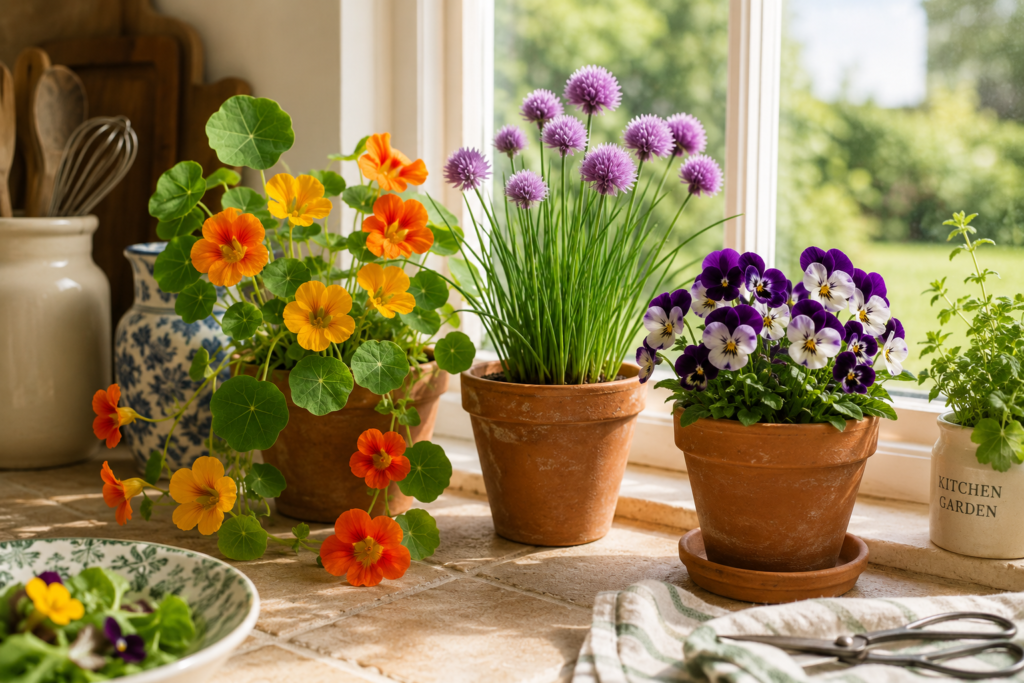
If you want winter-flowering indoor plants, focus on violas (sown in late summer), pansies, and overwintered calendula. If you want the full range, concentrate your main sowing effort from February to May, when improving light levels mean you'll get much better germination and plant development. Supplementary grow lights — even a basic LED grow strip — can make a significant difference from November to February if you want to push the season.
Compost, Watering and Feeding
Most edible flowers do best in a good-quality multipurpose compost. The one exception is lavender, which needs added grit. Avoid the temptation to use garden soil in pots — it compacts too readily and often introduces pests and diseases.
Overwatering is the most common mistake with indoor edible flower growing. Most of these plants prefer their compost to approach dryness between waterings rather than sitting constantly moist. Ensure all pots have drainage holes and empty saucers after watering so roots don't sit in water. For feeding, a half-strength liquid feed every two to three weeks through the growing season is sufficient — avoid high-nitrogen feeds, which push leafy growth at the expense of flowers.
Picking and Using Your Flowers
Pick edible flowers on a dry morning when they are fully open but still fresh, ideally before the hottest part of the day. Use them immediately or store them in a single layer between damp kitchen paper in a sealed container in the fridge for up to two days. Wash them gently under cold water and pat dry before use.
The stamen and pistil of some flowers can be bitter, so with larger blooms it's worth removing everything except the petals. For small flowers like violas and borage, the whole flower is usually used. Most edible flowers are best used raw as a garnish — heat destroys both their colour and their delicate flavour — though calendula petals hold up to gentle cooking reasonably well. If you want to preserve them, crystallising with egg white and caster sugar is a beautiful option for violas and pinks in particular.
For anyone wanting to explore edible flowers growing beyond the windowsill, the 17 examples of growing edible flowers for your garden post covers a wider range of outdoor options that complement an indoor collection beautifully.
A Quick Reference: Edible Flowers at a Glance
To make planning easier, here's how the flowers in this guide compare across the key growing factors.
| Flower | Best UK Sow Window | Light Needs | Difficulty | Pet Safe? | Best Culinary Use |
|---|---|---|---|---|---|
| Nasturtium | March–June | Bright, indirect | Very easy | No | Salads, garnish, stuffed petals |
| Calendula | February–May | Full sun | Easy | No (cats) | Rice, butter, broths, garnish |
| Chives | Ongoing (divide) | Partial–bright | Very easy | Yes | Salads, pasta, potato dishes |
| Viola/Pansy | July–Sept / Feb–April | Moderate–bright | Easy | Yes | Desserts, drinks, cheese boards |
| Borage | March–May | Full sun | Easy | Yes | Drinks, salads, ice cubes |
| Lavender | Feb–April (or buy plants) | Full sun | Moderate | Yes | Baking, syrups, cocktails |
| Hibiscus | Ongoing (houseplant) | Full sun, warm | Moderate | No | Teas, syrups, jams |
| Pinks (Dianthus) | March–May | Bright | Easy–moderate | Yes | Baking, sugar, crystallising |
Making the Most of Your Indoor Edible Flower Garden
An indoor edible flower collection doesn't need to be complicated to be rewarding. Even two or three pots — a compact nasturtium, a pot of chives, and a tray of violas — will give you a regular supply of something that genuinely elevates a simple meal. The satisfaction of scattering your own home-grown petals across a bowl of soup or a summer salad is disproportionate to the effort involved.
The key to keeping the harvest going is picking regularly and deadheading anything you don't eat. Once a plant is allowed to set seed, it stops putting energy into producing new flowers — so the more you pick, the more you get. Start small, get to know which varieties suit your particular growing conditions, and expand your collection from there.
And do explore what works beyond the windowsill too. If you have any outdoor space, even a small balcony, many of these flowers will perform even better in containers outside through the warmer months, and you can bring them in or start new plants to bridge the gap indoors through winter. The beginner's guide to container gardening is a good starting point for thinking about how to combine your indoor and outdoor growing into a cohesive whole.
Edible flowers have a way of making ordinary cooking feel like a little bit of an occasion. Once you've grown your first windowsill nasturtium and picked your first bloom straight into a salad bowl, you'll wonder why it took you so long to start.
Continue Your Journey
- 17 Different Examples of Growing Edible Flowers for Your Garden — expand your edible flower growing outdoors with a wider range of varieties and ideas
- How to Grow Herbs on a Balcony in the UK: The Complete Guide — combine your edible flowers with a productive herb collection in any outdoor space
- 27 of the Best Grow Your Own Herb Plants — build out your indoor edible growing beyond flowers
- 7 Essential Beginners Tips for Indoor Gardening — the foundational guide to getting your indoor growing environment right
- How to Grow Blueberries Indoors — another productive indoor growing project worth exploring alongside edible flowers
Enjoyed this guide? Subscribe to Crafting Her Blooms for more UK-focused growing advice delivered straight to your inbox.
Have you tried growing edible flowers on your windowsill? I'd love to know which varieties you've had the most success with — drop a comment below!




One Comment