In-and-Out Plants: The Best Houseplants for a Summer Holiday Outside
I sometimes use affiliate links in content. This doesn’t cost you anything but I may make a commission payment from anything you buy through these links. As an Amazon Associate I earn from qualifying purchases. All opinions remain my own.
There’s a moment every May when UK gardeners start eyeing the windowsills differently. The spider plant that’s been trailing across the mantelpiece since October suddenly looks a little cramped. The tradescantia cascading from its shelf seems restless. And if you’ve managed to overwinter a lantana indoors, it’s practically pressing itself against the glass, desperate for sun.
This is the season of the in-and-out plant — the houseplant that earns a summer holiday outside and comes back in come autumn transformed: fuller, more vigorous, and better for the adventure. It’s one of the most rewarding tricks in the UK gardener’s toolkit, and it costs almost nothing if you already have the plants. A patio pot or hanging basket filled with a spider plant, a trailing tradescantia, or a sun-loving lantana can look as polished as any summer display — while the plants themselves get exactly the conditions they need to thrive.
This post covers everything you need to know: which houseplants make the transition best, when to move them out safely in the UK, how to place them for the right light, and how to care for them through the summer so they come back indoors in great shape. It’s a practice that rewards a little planning, and once you’ve tried it, you’ll wonder why you ever bought annual bedding at all.
What Are In-and-Out Plants?
The term “in-and-out plant” describes any houseplant that can spend part of the year outdoors, taking advantage of the warmer growing season, and then return inside when temperatures drop. In the UK, that outdoor window typically runs from mid-May to early October — roughly from when the last frost risk has passed to when overnight temperatures start to fall reliably below 10°C.
Forged & Grown
Garden pieces, printed to order
3D printed planters and garden accessories, made in the UK. Self-watering designs, sculptural shapes, colour options — each one made when you order it.


The logic is simple but the benefits are significant. Most popular houseplants originate from tropical or subtropical climates where they experience stronger light, higher humidity, and more consistent warmth than a British living room can typically offer. A summer spell outside — in a sheltered patio spot, a hanging basket, or a large container — gives them access to brighter natural light, fresh air circulation, and the kind of moisture balance that indoor environments rarely achieve. The result is noticeably stronger growth, richer colour in foliage plants, and much better flowering in blooming varieties.
Why UK Gardens Are Ideal for This Approach
The UK’s temperate climate, which can frustrate vegetable growers with its unpredictability, actually works well for in-and-out plants. Our summers are rarely hot enough to scorch the shade-lovers, and even our sunniest patios tend to be more sheltered than Mediterranean conditions that would stress a spider plant. Rain does some of the watering work for you. And the long, gradual evenings of British summer give plants extended light without the intensity of direct midday sun in hotter climates.
The key is matching the plant to the right position — and understanding that not all houseplants want the same outdoor conditions. A spider plant in full afternoon sun will scorch. A lantana in the shade will sulk and refuse to flower. Getting this right is what separates a successful summer display from a disappointing one.
When to Move Houseplants Outside in the UK
Timing is the single most important factor in the success of any in-and-out plant. Moving too early — before nights are consistently warm enough — risks cold shock or frost damage that can set a plant back weeks. Moving too late wastes the best of the growing season.
In the UK, the general guidance is to wait until overnight temperatures are reliably above 10–12°C before moving tropical houseplants outdoors. For the most tender plants, including lantana, you want nights that are consistently warmer still, ideally above 13–15°C. Practically speaking, this translates to:
- Mid-May onwards for most houseplants in southern England and the Midlands
- Late May to early June for Scotland, northern England, and exposed coastal areas
- Earlier in sheltered urban gardens in London and the South West, where heat retention can push the safe window back by a week or two
Don’t be rushed by a warm spell in April. A single cold night after a houseplant has been moved outside can cause far more harm than the benefit of a few extra days of outdoor light. Watch the forecast for a sustained settled period — at least five to seven days without frost risk — before making the move.
Hardening Off: Don’t Skip This Step
Even if conditions are warm enough, moving a houseplant directly from an indoor environment to full outdoor exposure can cause stress. The process of hardening off — gradually acclimatising a plant to outdoor conditions over one to two weeks — makes the transition much smoother.
Start by placing the plant in a sheltered outdoor spot for a few hours during the warmest part of the day, bringing it back inside at night. Gradually extend the outdoor time and introduce it to slightly more exposure over ten to fourteen days. By the end of this process, it should be ready to stay outside overnight and will settle into its summer position without complaint.
This is especially important for plants that have spent the winter on a warm windowsill with consistently dry air — the jump to outdoor humidity, wind, and variable temperature is significant, even in May.
Spider Plants: The Easiest In-and-Out Choice
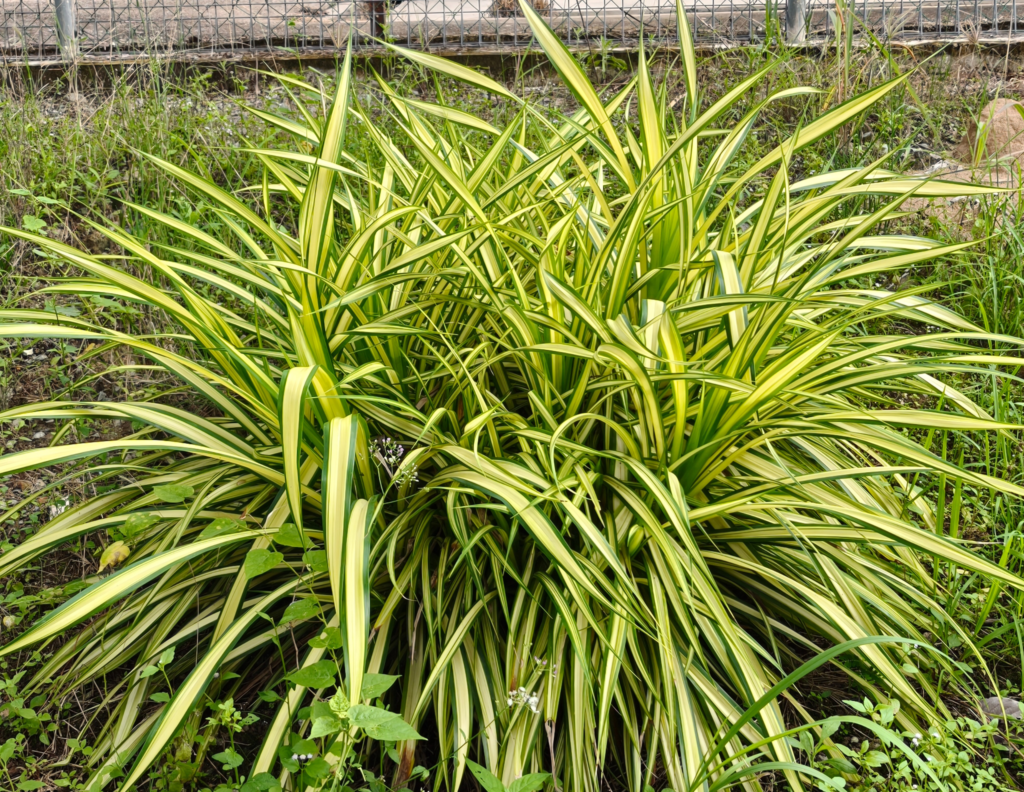
If you’re new to this practice, start with a spider plant (Chlorophytum comosum). Few houseplants are as forgiving, as adaptable, or as genuinely impressive in a hanging basket. Those long, arching leaves — typically green with a cream or white central stripe — spill beautifully over the edge of a basket, and by midsummer the plant will often be producing cascades of plantlets on long runners that look spectacular in any outdoor display.
Spider plants do well in a sheltered outdoor position with bright indirect light rather than harsh direct sun. In practice, this means a spot that gets morning light or dappled shade through the afternoon — under the overhang of a pergola, beside a north-facing fence that receives reflected light, or on a shaded patio where direct sun is limited to a couple of hours a day. In hotter summers, even a spot that feels moderately bright indoors can translate to enough light for strong growth outside.
Spider Plant Care in the Garden
Outdoors, spider plants dry out more quickly than they do inside, because wind and sun accelerate moisture loss from both the soil and the leaves. Check the compost every two to three days rather than once a week, and water when the top inch is dry rather than waiting for the whole pot to dry out completely.
This is also a good time to feed. A liquid balanced fertiliser applied every two to three weeks through June, July, and August will support the vigorous growth these plants are capable of in the right conditions. Don’t be surprised if a modest indoor spider plant doubles in size and produces a dozen plantlets by September — that’s exactly what you want.
When bringing spider plants back indoors in autumn, inspect the roots. If they’ve pushed to the edges of the basket liner or pot, use the opportunity to repot into fresh compost before returning to an indoor position. The plantlets can be potted separately as new plants, meaning your one original spider plant could furnish you with several new specimens by the end of each summer.
Tradescantia: Fast Colour and Movement
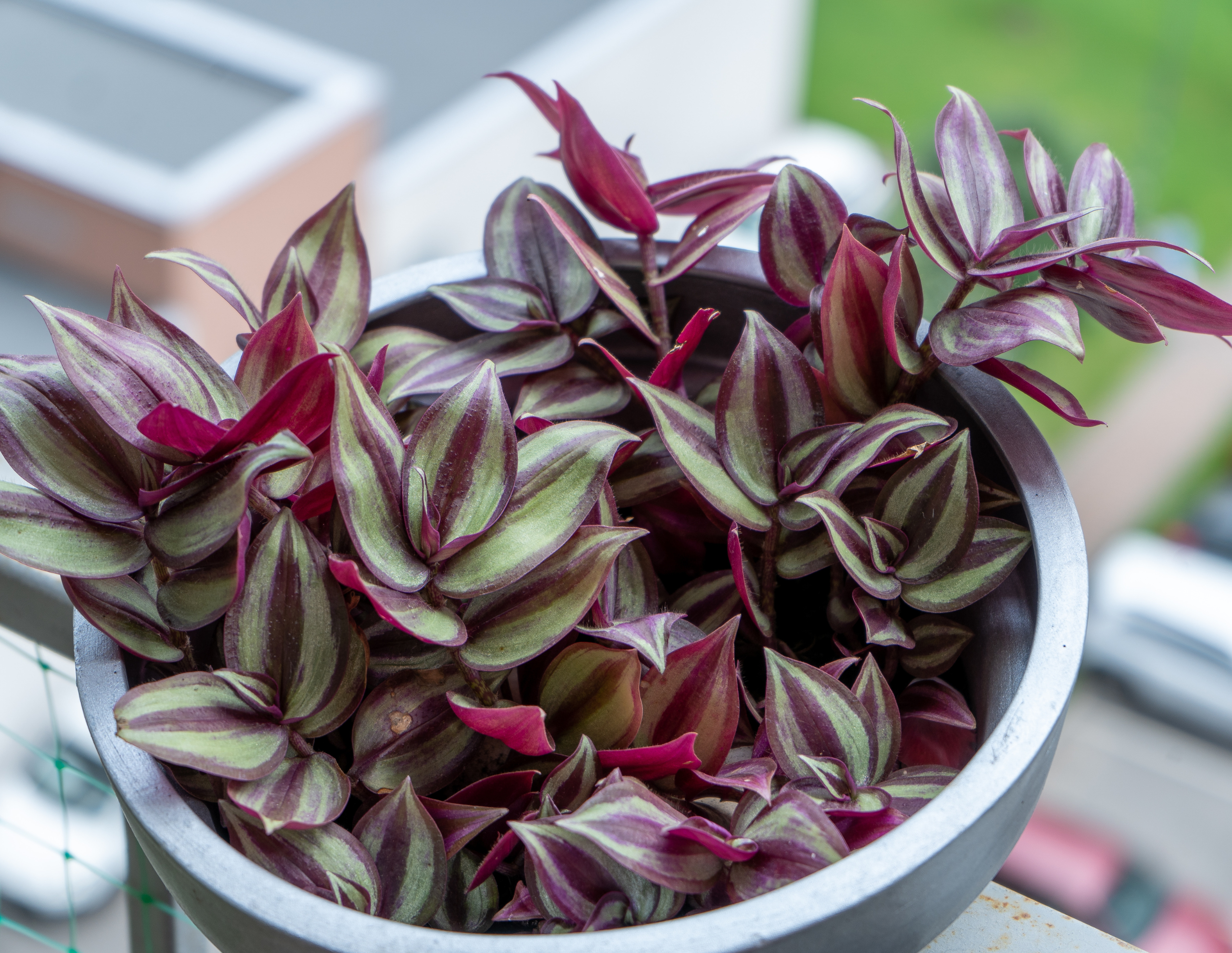
Tradescantia (often sold under common names including spiderwort or inch plant) is another outstanding in-and-out choice — particularly for gardeners who want vivid foliage colour rather than flowers. The varieties most commonly grown as houseplants in the UK include types with deep purple undersides, striking pink and green striping, and the classic Tradescantia zebrina with its silver-sheened, purple-backed leaves. All of them look extraordinary trailing over the edge of a hanging basket or spilling from a tall patio pot.

Like spider plants, tradescantia prefers bright indirect light outdoors rather than direct sun exposure. Strong midday sun can bleach the colours and scorch the leaf edges, especially on the more delicate variegated varieties. A position with morning sun and afternoon shade, or consistent bright diffused light, is ideal. The colours often intensify outdoors, particularly in varieties with purple pigmentation, which deepens noticeably with increased light levels.
Getting the Best from Tradescantia Outdoors
Tradescantia is a fast grower and benefits from regular pinching back outdoors — removing the growing tips every few weeks encourages branching and a more generous, trailing habit rather than the leggier growth it can produce if left unchecked. This pinching also keeps the plant looking tidy through the summer season and gives you plenty of cuttings to root and share.
Watering guidance is similar to spider plants: check regularly and water when the top few centimetres of compost dry out. Tradescantia is reasonably drought-tolerant for short periods but produces its best growth with consistent moisture, especially during warm spells. Monthly feeding with a liquid fertiliser through the main growing season keeps the foliage rich and vigorous.
The trailing, fast-growing nature of tradescantia makes it especially effective when combined with other plants in a mixed basket. Pair it with a more upright foliage plant or a compact flowering annual, and the tradescantia’s cascading stems provide a natural “spiller” that ties the whole display together.
Lantana: Sunshine in a Pot
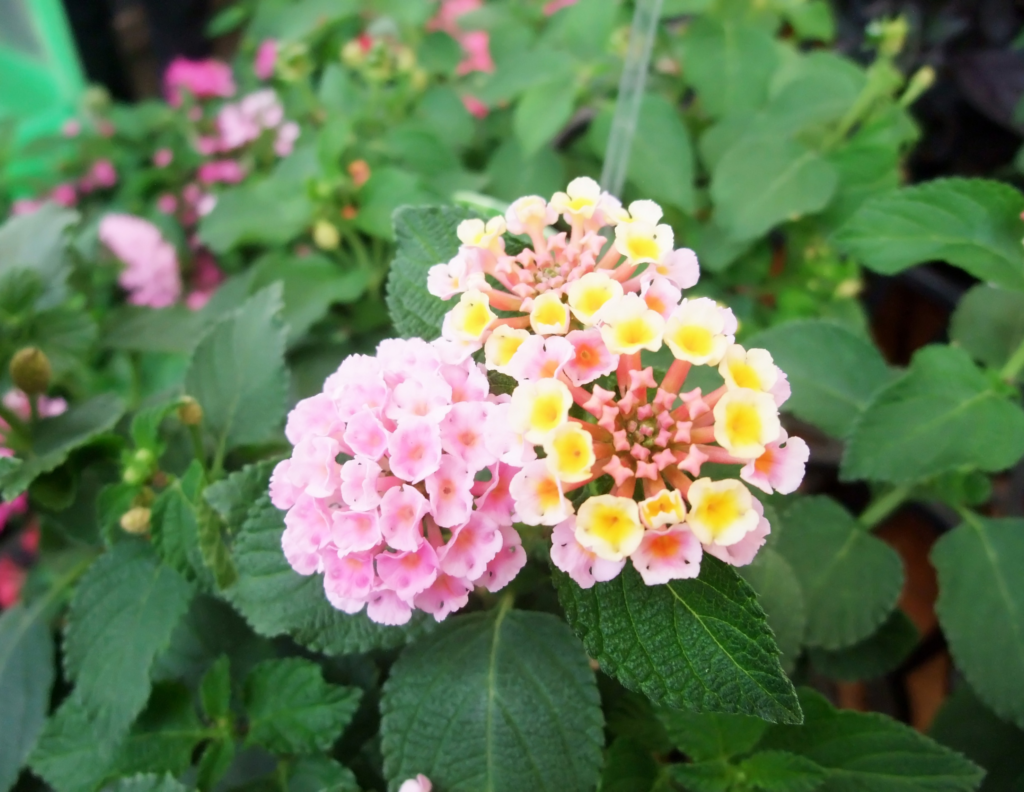
Lantana (Lantana camara) sits in a different category from spider plants and tradescantia: this is a sun-hungry, heat-loving flowering plant that genuinely thrives in the kind of warm, bright conditions a south-facing patio can offer in a good British summer. Where spider plants and tradescantia want dappled shelter, lantana wants full sun and as much warmth as it can get.
In warmer climates, lantana is a shrubby perennial grown in the ground. In the UK, it’s grown as a tender perennial — overwintered on a warm, bright windowsill or in a frost-free greenhouse, then brought out once temperatures are reliably above 13–15°C (typically late May to early June in most of England). The reward for this care is extraordinary: clusters of tiny flowers in combinations of yellow, orange, red, pink, and white that continue blooming from late spring well into autumn with the right care.
Lantana as a Statement Patio Plant
Lantana works best as a focal point plant in a large patio container rather than as a trailer in a hanging basket, though compact varieties bred for baskets do exist. A bushy plant in a terracotta pot, positioned where it will receive sun for the majority of the day, makes a bold centrepiece for any patio display — and the flower clusters are magnets for butterflies and bees throughout the summer.
The care requirements are straightforward but specific. Lantana needs consistent moisture at the roots but will not tolerate waterlogged compost, so good drainage is non-negotiable — always use containers with drainage holes, and consider adding extra grit to a standard peat-free compost. In hot, dry spells, daily watering may be necessary for plants in smaller pots.
Regular deadheading — removing spent flower clusters as they fade — encourages the plant to continue producing new blooms rather than setting seed. A light trim of any straggly stems during the summer keeps the plant shapely and promotes reblooming. Feed with a potassium-rich fertiliser (a tomato feed works well) every two weeks during the main flowering period to sustain the display.
Overwintering Lantana Successfully
The challenge with lantana in the UK is successfully bridging the gap between autumn and the following spring. Before the first frosts arrive — usually September in the north, October or November further south — the plant needs to come back inside to a frost-free position with as much light as possible. A south-facing windowsill, conservatory, or heated greenhouse are all suitable.
Trim the plant back by around a third before bringing it in, which reduces the transpiration demand on the root system and keeps the plant compact for indoor overwintering. Water sparingly through the cooler months — the plant effectively rests — and resume regular watering and feeding as the days lengthen in late February and March.
Designing with In-and-Out Plants: Hanging Baskets and Patio Pots
Part of the appeal of in-and-out plants is how well they adapt to container gardening — which is fortunate, since containers are exactly what they need for the easy in-and-out transition. A well-chosen hanging basket or patio pot filled with houseplants can be genuinely striking, and it has one significant advantage over annual planting schemes: the plants inside are getting stronger every year rather than starting from scratch each spring.
Building a Hanging Basket with Houseplants
A successful hanging basket, whether planted with houseplants or conventional bedding, relies on the same basic principles: a “thriller” for height or structure, a “filler” for bulk, and a “spiller” for trailing interest. Houseplants map beautifully onto these roles.
For a sheltered, bright-indirect-light position, consider:
- Spiller: Spider plant (Chlorophytum comosum) or trailing tradescantia — both cascade naturally and look spectacular in a basket
- Filler: A compact fern such as a Boston fern, or a trailing peperomia
- Thriller: An upright dracaena or peace lily placed at the centre for architectural interest
For a sunny, south-facing position:
- Spiller/trailer: Compact trailing lantana varieties, or a sprawling Plectranthus
- Filler: Creeping Jenny (Lysimachia nummularia ‘Aurea’) pairs well with flowering houseplants
- Thriller: A standard lantana trained as a central feature
Use a basket liner with good water retention — coco fibre or wool liners work well — and mix water-retaining granules into the compost. Baskets in full sun can dry out remarkably quickly in warm weather and may need watering once or even twice a day in a hot spell.
Container Size and Drainage
Both spider plants and tradescantia can thrive in relatively modest containers, but lantana does better with more root space — a pot of at least 30cm diameter allows the plant to build the root system it needs to support vigorous flowering growth. Whatever the size, drainage is critical. Houseplants that have adapted to indoor conditions can be susceptible to root rot if left sitting in waterlogged compost, and this risk increases outdoors where heavy rain can fill a poorly-draining pot quickly.
Elevating pots on pot feet to allow free drainage from the base, and checking that saucers are emptied after heavy rain, are simple habits that prevent the most common outdoor container problem.
Bringing Plants Back Indoors in Autumn
The return journey requires as much thought as the move outdoors. As UK temperatures begin to drop in September and October, watch the night forecast carefully — a single night below 5°C can damage tender houseplants significantly, and lantana will not survive frost at all.
Before bringing plants back inside:
- Inspect thoroughly for pests. Outdoor plants can host vine weevil grubs in the compost, spider mites, and various other insects that you don’t want importing into your home. Knock the root ball from the pot and check the compost, treat with an appropriate pesticide or nematodes if needed, and thoroughly check the undersides of leaves.
- Trim if necessary. Cutting back any overly long or straggly growth before bringing plants indoors reduces the shock of the transition and makes the plant easier to manage in a smaller indoor space.
- Repot if needed. If a plant has filled its container through the summer, autumn is a good time to move it into a slightly larger pot with fresh compost before overwintering.
- Harden off in reverse. Just as you acclimatised the plant to outdoor conditions in spring, ease it back indoors gradually — a few days in a porch or cool room before placing it back on a warm windowsill gives it time to adjust.
If you grow any of your herbs outdoors through summer, you may find similar transition principles apply — you can read more about growing herbs successfully in outdoor spaces in our guide to growing outdoor garden herbs.
Beyond the Big Three: Other Houseplants Worth Trying Outside
Spider plants, tradescantia, and lantana are reliable starting points, but they’re far from the only houseplants that benefit from a summer outside. Once you’re confident with the approach, these are worth experimenting with:
Boston ferns (Nephrolepis exaltata) genuinely thrive in a sheltered, humid outdoor position in summer — the natural humidity outdoors often suits them better than dry indoor air, and they can produce impressive growth in a single season. Keep them out of direct sun and wind, which will desiccate the fronds quickly.
Pelargoniums (commonly called geraniums) bridge the gap between houseplant and bedding plant naturally and are one of the most reliable in-and-out choices available. They flower prolifically outdoors, overwinter easily on a bright windowsill, and come back stronger each year. If you’ve been treating these as annuals, the in-and-out approach is well worth adopting.
Peace lilies (Spathiphyllum) can go outside in a very sheltered, shaded position — the deep shade of a north-facing patio or beneath tree canopy. The increased humidity often improves their health noticeably. They need to stay out of any wind, which damages the leaves, and should never be in direct sun.
Basil, while primarily a culinary herb, is technically a houseplant in the UK climate — a tender annual that struggles on cool windowsills. Moving basil outdoors in a warm, sheltered sunny spot for summer transforms its growth and flavour. Our guide to growing basil covers this and much more.
Troubleshooting Common Problems
Even with careful management, in-and-out plants can run into difficulties. These are the most common issues and how to address them.
Leaf Scorch
Yellow-brown patches or bleached areas on leaves, especially on the side facing the light source, indicate too much direct sun. Move the plant to a more sheltered position with less direct exposure. Spider plants and tradescantia are particularly prone to this if placed in full afternoon sun.
Sudden Leaf Drop
A plant suddenly dropping leaves after the outdoor transition usually indicates temperature shock — either cold nights or an unexpectedly cool period after a warm spell. Bring the plant indoors temporarily until temperatures stabilise, and harden it off more gradually when it goes back outside.
Failure to Flower (Lantana)
If lantana isn’t flowering, the most common causes are insufficient sun, inconsistent watering, or a lack of potassium in the feed. Move to a sunnier position, ensure the compost isn’t drying out completely between waterings, and switch to a tomato feed applied every two weeks.
Pests
Outdoor plants attract a different cast of pests than indoor ones. Watch for vine weevil notching on leaf edges (grubs in the compost), blackfly clusters on new growth, and spider mite damage in hot, dry weather. Most issues can be managed with an organic insecticidal soap spray; vine weevil is best addressed with nematodes applied to moist compost in summer.
Making the Most of the In-and-Out Season
The in-and-out approach is one of those gardening strategies that gets better the more you invest in it. Houseplants that summer outside reliably for three or four years build strength and resilience that makes them easier to keep indoors in winter too — they’re better rooted, better fed, and better adapted to the rhythms of the UK seasons. Over time, you build a collection of increasingly impressive plants that cost nothing beyond the initial purchase and a little seasonal effort.
It also changes the way you think about houseplants. Rather than viewing them purely as indoor décor, you start seeing them as year-round garden assets — players in the outdoor summer display as well as the indoor winter one. A collection of well-grown spider plants, a thriving tradescantia, and a lantana that comes back looking better every year is genuinely something to be proud of.
If you’re just getting started with outdoor container gardening, it’s worth reading through some common beginner gardening mistakes to avoid — many of the watering and positioning errors that affect outdoor plants apply equally to in-and-out houseplants. And if you’re thinking about herbs as part of your outdoor summer scheme, there are plenty of good reasons to grow your own herbs that make them natural companions to a patio display of in-and-out plants.
The in-and-out season is one of the most satisfying chapters of the UK gardening year. With a little planning and the right plant choices, it gives your houseplants the holiday they’ve been waiting for — and transforms your outdoor space in the process.
Continue Your Journey
More from Crafting Her Blooms:
- Growing Outdoor Garden Herbs — How to grow a thriving herb garden outside, with UK timing and variety guidance
- Growing Basil — Everything you need to know about growing basil in the UK, indoors and out
- Reasons to Grow Your Own Herbs — Why every UK gardener should be growing herbs at home
- Best Winter Windowsill Vegetables — What to grow on your windowsill once the in-and-out plants come back inside
Have you tried moving houseplants outside for summer? Which plants have worked best in your UK garden — and which ones didn’t survive the transition? Share your experience in the comments below.
Enjoyed this post? Subscribe to Crafting Her Blooms for seasonal UK gardening guides, practical growing tips, and ideas for making the most of your garden all year round.