
How to Grow Vegetables in Small Gardens and Containers
I sometimes use affiliate links in content. This doesn’t cost you anything but I may make a commission payment from anything you buy through these links. As an Amazon Associate I earn from qualifying purchases. All opinions remain my own.
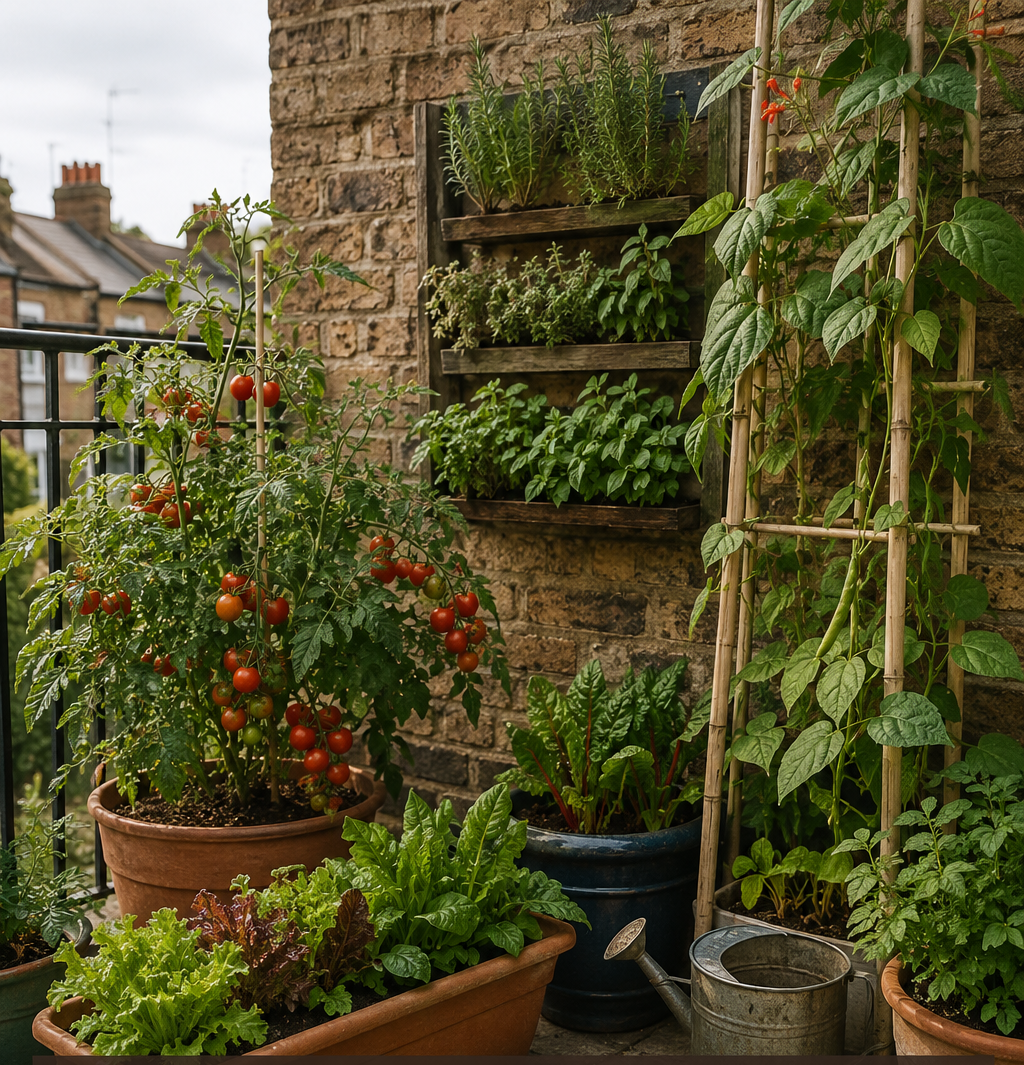
A balcony rail, a patio corner, or a cluster of pots by the back door is enough to grow a genuinely useful amount of food. No traditional garden and no open soil are needed. What matters is choosing the right containers, using height as well as floor space, and picking varieties bred to crop well when their roots are confined.
This guide is built specifically for UK growers working with balconies, patios, or pots only, covering container selection, vertical growing methods, the best compact varieties available here, and the watering and feeding routine that container vegetables need to actually perform.
🪴 Choosing the Right Containers
Depth and volume matter more than any other factor in container vegetable growing. A pot that’s too shallow will produce a stunted, thirsty plant no matter how well it’s fed, so it’s worth matching the container to the crop before buying compost.
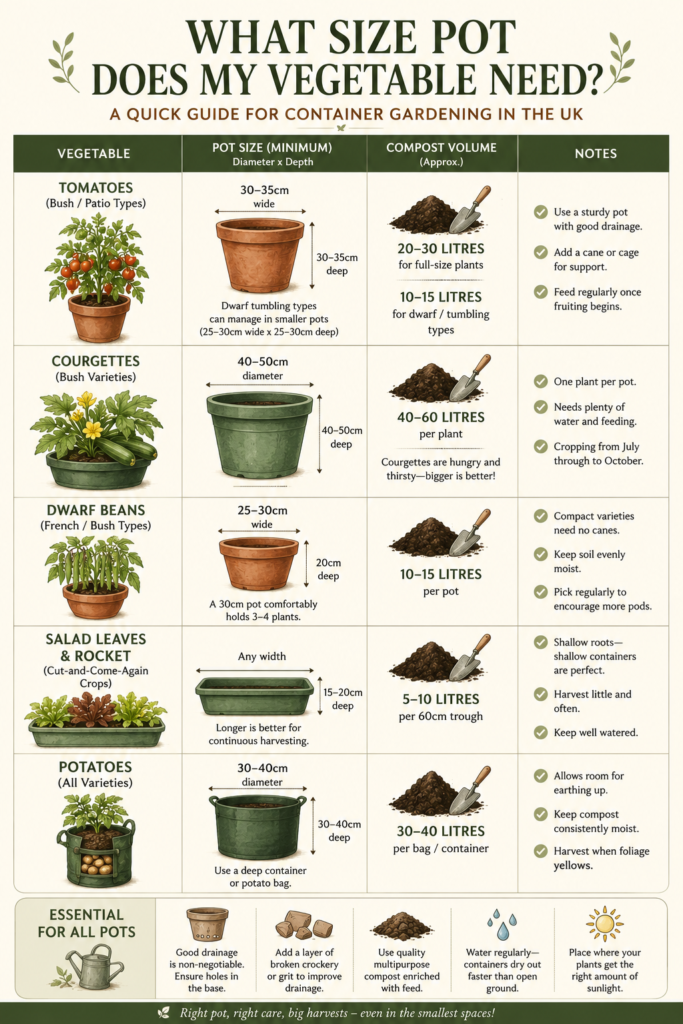
As a general guide for UK conditions:
Forged & Grown
Garden pieces, printed to order
3D printed planters and garden accessories, made in the UK. Self-watering designs, sculptural shapes, colour options — each one made when you order it.


- Tomatoes (bush or patio types): at least 30-35cm deep and wide, roughly 20-30 litres of compost for a full-size plant, though dwarf tumbling varieties can manage in 10-15 litre pots.
- Courgettes: a large container of 40-50cm diameter and depth, as courgettes are hungry, thirsty plants that exhaust a small pot within weeks.
- Dwarf French or bush beans: a minimum of 20cm deep and 25cm wide, with a 30cm pot comfortably holding three or four plants.
- Salad leaves, rocket, and cut-and-come-again crops: shallow trays or troughs from 15-20cm deep work well, since roots stay compact.
- Potatoes: a deep container or dedicated potato bag, at least 30-40cm deep, to allow enough room for earthing up.
Drainage is non-negotiable. Every container needs holes in the base, and a layer of broken crockery or coarse grit underneath helps prevent compost from washing out and roots from sitting in water. For a fuller rundown of pot types, materials, and set-up, this beginner’s guide to container gardening is a useful companion to this post.
Getting the potting mix right from the start makes a real difference too. Working in a good multipurpose compost enriched with rootgrow mycorrhizal fungi at planting time helps young roots establish faster in a confined space, which matters more in a pot than it does in open ground.
🧱 Growing Upward: Vertical Techniques for Balconies and Patios
When floor space is limited, height becomes the most valuable resource available. Three approaches cover most balcony and patio situations.
Trellises and canes suit climbing crops such as runner beans, climbing French beans, peas, and cucumbers. A sturdy wooden or metal frame anchored securely in a large, stable pot will support a full season’s growth without toppling in wind, which is a real risk on an exposed balcony.
Wall-mounted planters and pocket systems work well for shallow-rooted crops like salad leaves, herbs, and strawberries, since they don’t need much soil depth. These are ideal where floor space is tight but a fence, wall, or railing is available to mount them on.
Stacking planter towers build growing space upward from a small footprint, often fitting twenty or more plants into a floor circle of around 40cm. They suit strawberries, salad leaves, and trailing herbs particularly well, and are a practical option where drilling into walls isn’t possible, such as rented flats.
Repurposed materials also earn their keep here. Old pallets, tins, and reclaimed timber can be turned into tiered planters or wall-mounted troughs at a fraction of the cost of bought systems, and this guide to upcycled garden projects covers several sturdy, weatherproof builds worth trying. A dedicated vertical wall planter or stacking system is also worth considering for balconies with limited floor space, though it’s worth checking build quality and drainage before buying, since cheap versions can waterlog quickly.
🌱 Best UK Vegetable Varieties for Container Growing
Not every vegetable variety suits a pot. The ones that succeed on a balcony are almost always bred specifically to be compact, and UK seed suppliers now stock a wide range of dwarf and patio types.
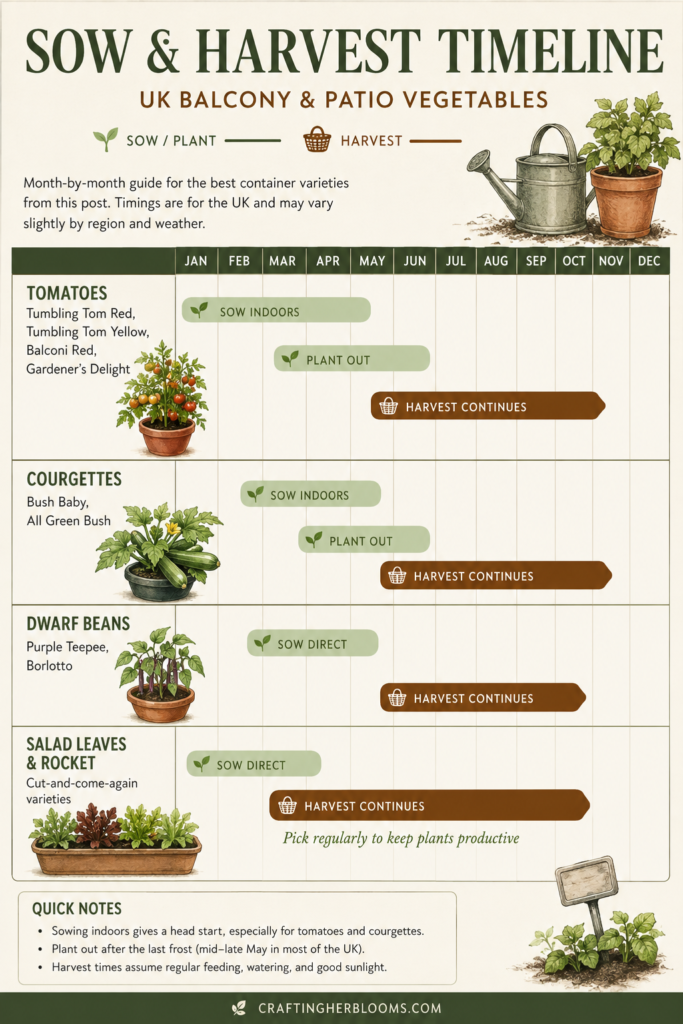
- Tomatoes: ‘Tumbling Tom Red’ and ‘Tumbling Tom Yellow’ are bred for hanging baskets and raised containers, cascading over the edge and cropping heavily. ‘Balconi Red’ and ‘Gardener’s Delight’ also perform reliably in pots.
- Courgettes: bush varieties such as ‘Bush Baby’ and ‘All Green Bush’ stay compact rather than sprawling, and a single plant in a 40-50cm pot will crop from July through to October. This complete guide to growing courgettes covers care and troubleshooting in more depth.
- Beans: dwarf French beans such as ‘Purple Teepee’ and ‘Borlotto’ have a compact bush habit, meaning no tall canes wobbling in a container.
- Salad leaves and rocket: almost any cut-and-come-again variety works in a shallow trough, and regular picking keeps plants productive for months. See this guide to growing salad leaves for the easiest varieties to start with.
- Peppers and chillies: compact patio varieties crop well in a sunny, sheltered spot and are well suited to a large pot against a warm wall.
- Herbs: basil, chives, and parsley are natural companions to container vegetables and take up very little extra space.
Starting varieties from seed rather than buying young plants also stretches a budget considerably further, particularly across a full growing season. A set of modular seed trays makes it much easier to raise strong seedlings on a windowsill before they’re potted on outdoors.
💧 Watering and Feeding Container Vegetables
Containers dry out far faster than open ground, and this is the single biggest difference between growing in pots and growing in a border. In hot summer weather, most containers need checking daily, and some, particularly hanging baskets and small pots, may need water twice a day.
A few practical habits make container watering more manageable:
- Water at the base of the plant rather than over the foliage, ideally in the early morning or evening to reduce evaporation loss.
- Use a moisture-retaining mulch, such as a layer of gravel or bark, on top of the compost to slow drying.
- Consider a self-watering or reservoir-style container for thirsty crops like tomatoes and courgettes, which reduces the risk of the compost drying out completely while at work or away.
- Group pots together where possible, since this creates a more humid microclimate and reduces water loss compared with isolated containers.
Feeding is equally important, because container compost has a finite supply of nutrients that gets used up or washed out within a matter of weeks. Once flowering and fruiting begins, a weekly liquid feed high in potassium keeps tomatoes, courgettes, and beans cropping steadily rather than stalling. Building healthier compost from the outset, using well-rotted organic matter or a peat-free mix with good structure, also reduces how often feeding is needed. This piece on creating living soil explains the principles behind healthier growing media, and this guide to saving water in the garden is worth reading alongside a container watering routine, since the same water-saving habits apply just as well to pots as to open beds.
☀️ Sunlight and Aspect on Balconies and Patios
Most fruiting vegetables, including tomatoes, courgettes, and beans, need a minimum of six hours of direct sun a day to crop well. Leafy crops like salad leaves and herbs are more forgiving and will tolerate partial shade, making them a sensible choice for north or east-facing spots.
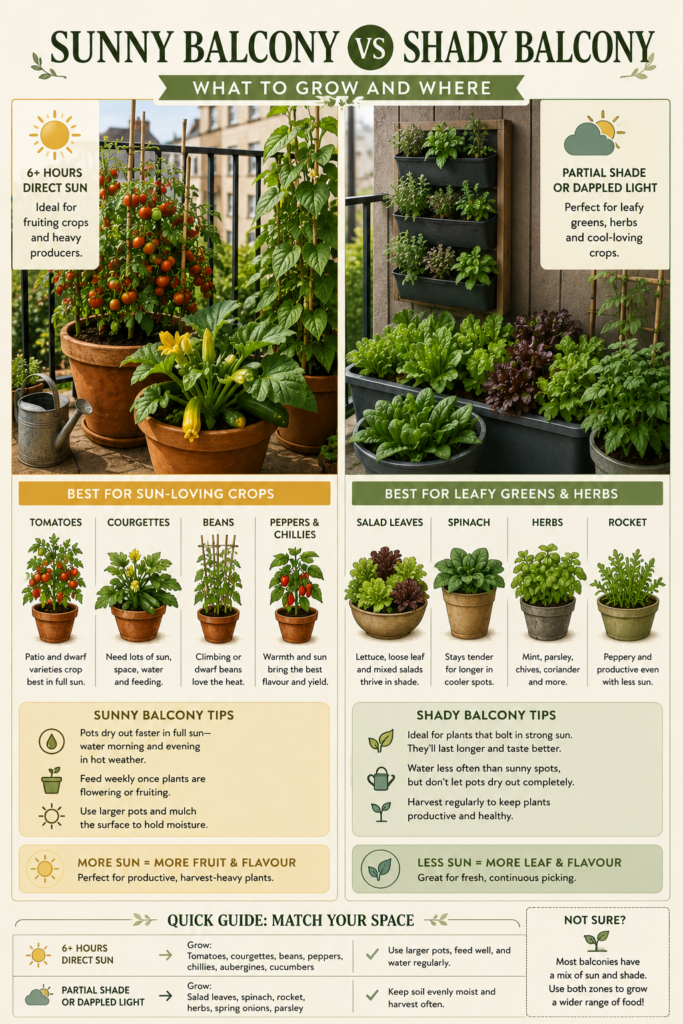
A south or west-facing balcony or patio offers the most reliable light and the added benefit of reflected warmth from a wall, which extends the growing season for heat-loving crops in the UK’s often unpredictable climate. Before committing to a planting plan, it’s worth tracking how light actually moves across the space over a full day, since balconies are frequently shaded by neighbouring buildings for part of the day even when they appear sunny at a glance.
Wind is the other factor that’s easy to underestimate on balconies, particularly at height. Exposed positions dry containers out faster and can damage tall or top-heavy plants such as climbing beans on a trellis, so a sheltered corner or a windbreak of some kind is worth prioritising for the more delicate crops.
🧺 A Starter Combination for a Small, Productive Setup
For a first productive season in a small space, a manageable combination might include one large pot of a bush tomato or tumbling variety, one container of a dwarf bean, a trough of mixed salad leaves for continuous picking, and a stacking planter or wall pocket system for herbs and strawberries.
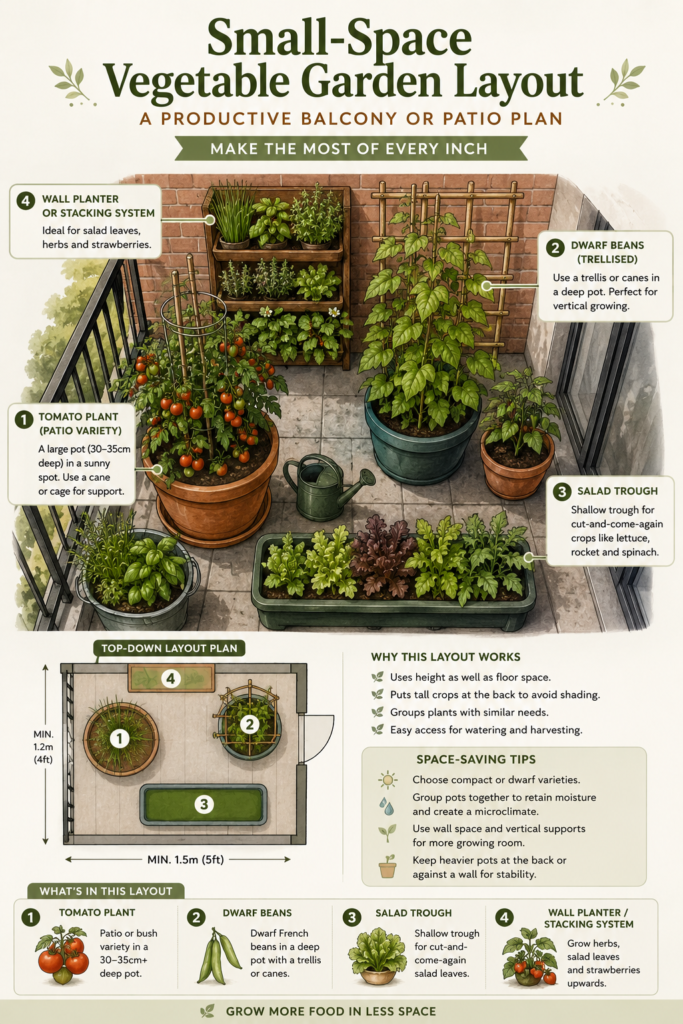
This spread keeps watering and feeding manageable while still delivering a genuinely useful harvest across the summer months, from cut-and-come-again leaves in early summer through to tomatoes and beans by late summer. Pairing compatible crops in the same container, such as basil alongside tomatoes, can also help with pest deterrence and make the most of limited space; this guide to companion planting covers which pairings genuinely work. For a month-by-month view of when to sow each of these, the UK vegetable growing calendar is worth bookmarking alongside this setup.
Growing food in containers on a balcony or patio will never replicate the scale of an allotment, but with the right pots, a bit of vertical thinking, and varieties chosen for the job, it produces a steady, worthwhile harvest from even the smallest UK outdoor space.


