Tabletop Vegetables: Growing Big Flavour in the Smallest Spaces

I sometimes use affiliate links in content. This doesn’t cost you anything but I may make a commission payment from anything you buy through these links. As an Amazon Associate I earn from qualifying purchases. All opinions remain my own.
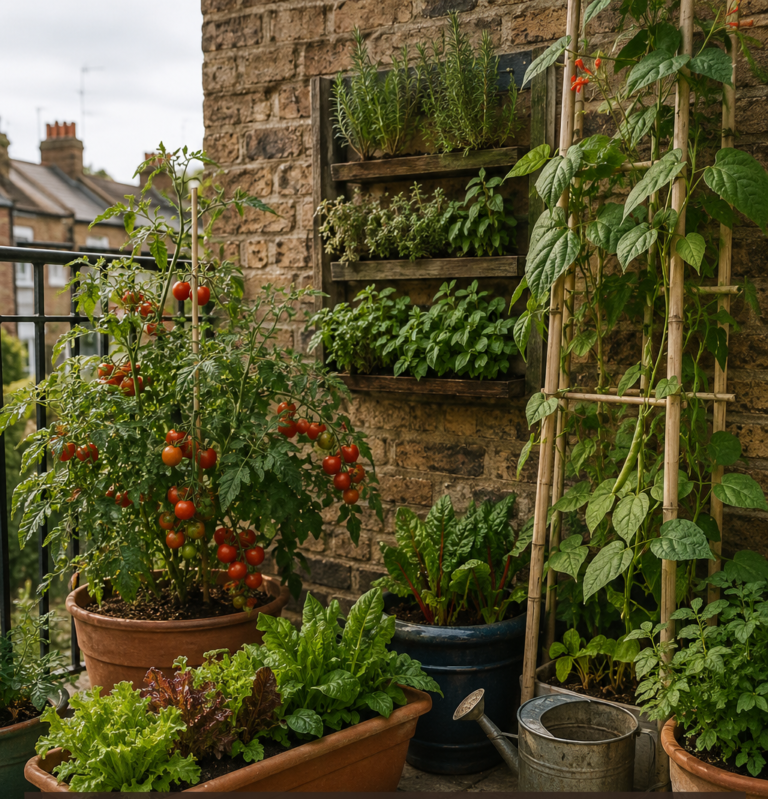
If you’ve ever looked at a patio bistro table and thought it was only good for a cup of tea and a book, think again. The RHS has named tabletop vegetables its top gardening trend for 2026, and the idea is exactly as brilliant as it sounds: compact, container-grown fruiting crops that earn their spot on a table, shelf, or balcony railing, producing real harvests from genuinely tiny spaces.
This isn’t a gimmick for social media. It’s a direct response to the way more of us live now — in flats, in terraces with pocket-sized yards, in rented homes where raised beds aren’t an option. If you have a south-facing windowsill, a doorstep in decent light, or even a balcony table, you have enough room to grow something worth eating this summer. The crops being championed as the stars of the tabletop trend — chillies, mini aubergines, hanging cucumbers, compact herbs — are genuinely suited to UK conditions when you give them the right setup, and the results are spectacular.
This guide walks you through everything you need to know to get started, from choosing the right crops for your space to keeping them thriving through a British summer (the unpredictable kind, yes, but manageable).
What Are Tabletop Vegetables, and Why Are They Having a Moment?
The term covers any compact, container-friendly fruiting crop or herb that’s been selected or bred to stay small enough to sit happily on a table, stand, window box, or hanging basket rather than sprawling across a bed or demanding a large raised planter. These aren’t just ordinary vegetables crammed into undersized pots — the best tabletop varieties are genuinely dwarf, producing their harvests in 5–10 litre containers without stress.
Forged & Grown
Garden pieces, printed to order
3D printed planters and garden accessories, made in the UK. Self-watering designs, sculptural shapes, colour options — each one made when you order it.


The timing of their rise makes complete sense. Rising food costs have pushed more UK households towards growing some of their own produce, and a generation of urban gardeners who’ve never had the luxury of a proper garden has been quietly working out how to grow food in impractical spaces for years. Tabletop vegetables meet that demand with style — these are plants that look as good as a pot of pelargoniums while producing fruit you’ll actually cook with.
The RHS Backing That Changes Everything
The RHS naming tabletop veg as its headline prediction for 2026 matters because it signals mainstream adoption. When the country’s leading horticultural authority puts its weight behind a growing method, it tends to accelerate everything from plant availability at garden centres to the breadth of dwarf varieties on the seed catalogues. If you’ve been waiting for the right moment to try container-grown chillies or a hanging cucumber, that moment has arrived.
The RHS has specifically highlighted chillies, compact aubergines, hanging-basket cucumbers, miniature grape vines, and potted herbs as the crops best suited to this approach. Each one has its own character and its own quirks in a British context, which we’ll work through in detail below.
Why This Works for UK Gardeners
Outdoor growing in the UK comes with a perennial challenge: we don’t get Mediterranean temperatures, and many of the most rewarding fruiting crops — chillies, aubergines, cucumbers — are warmth-lovers that struggle without help. The beauty of container growing on a patio or balcony is that you can position plants exactly where they’ll get maximum solar gain, move them under cover if the weather turns, and create a sheltered microclimate that simply doesn’t exist in an open garden bed.
A south-facing balcony in Leeds can be warmer than a north-facing garden in Devon. A terracotta pot against a sun-soaked brick wall in Manchester will hold heat through the night in a way that open soil never will. Tabletop growing turns UK microclimates into genuine assets rather than limitations to work around.
The Stars of the Tabletop: Which Crops to Grow
Not every vegetable suits life on a table, but the ones that do tend to be extraordinarily productive and decorative as a bonus. Here are the crops worth getting to know.
Chillies: One Plant, Months of Harvest
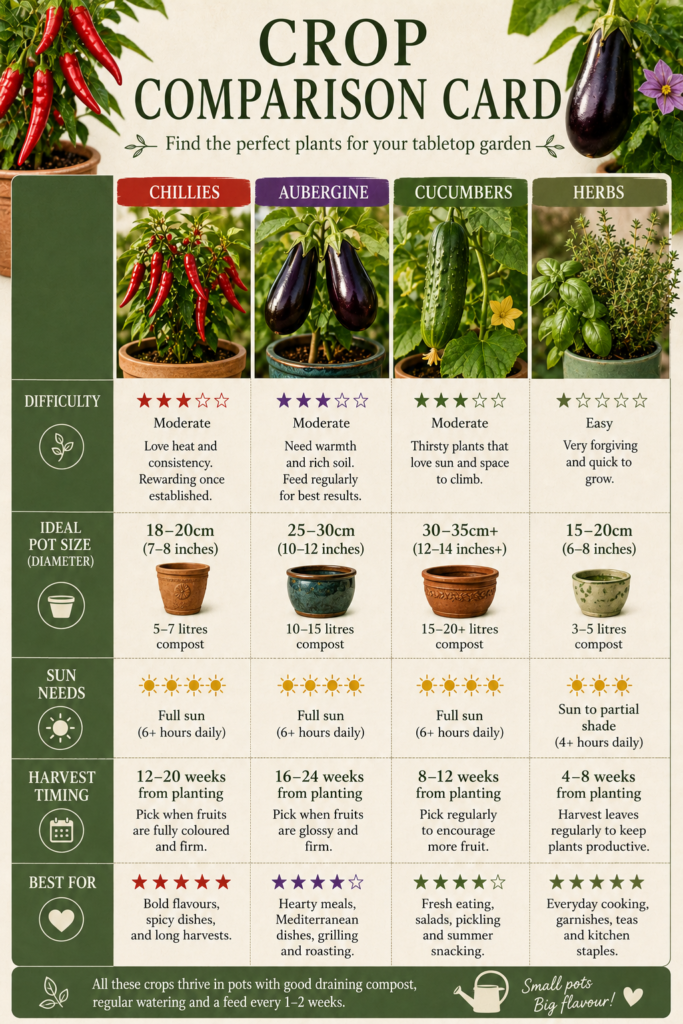
If you grow nothing else on your balcony or patio table this summer, grow a chilli. It is the single most rewarding container crop for UK small-space growers. Chilli plants thrive in the heat of a sun-baked pot, they’re genuinely compact in their dwarf forms, they look spectacular loaded with fruit, and a single plant on a 5-litre pot of peat-free multi-purpose compost can keep you in fresh chillies from July through to October.
The key to chilli success in the UK is starting early and keeping them warm. Sow seeds on a bright, warm windowsill or in a heated propagator from late January through to March — the longer growing season gives them time to develop before they need the outdoor warmth. Prick out into individual pots and harden off gradually once all risk of frost has passed, typically late May in the south and early to mid-June in Scotland and the north.
Dwarf varieties are specifically bred to stay compact and to fruit heavily in containers, so look for those on seed catalogues rather than standard-height types that will outgrow a pot quickly. The range of heat levels, colours, and fruit shapes available is enormous, and choosing a mix can turn a small table display into something genuinely beautiful — glossy reds, yellows, and purples all ripening at once.
Harvest chillies green for a fresher, grassier flavour, or leave them to ripen fully for deeper heat and sweetness. Either approach extends your harvesting window considerably.
Mini Aubergines: Mediterranean Drama in 30cm
Aubergines on a British patio might sound ambitious, but the dwarf varieties bred for container growing have made this genuinely achievable even in cooler parts of the UK — provided you choose your position carefully. The RHS specifically calls out compact aubergines as a tabletop trend highlight, and with good reason: the glossy, deep-purple fruits hanging from a small bushy plant are extraordinary-looking, and the flavour of a home-grown aubergine fresh from the patio is completely different from anything you’d buy in a supermarket.
Aubergines need warmth more than almost any other vegetable, and in the UK that means starting them under cover in February or March and keeping them protected until the temperatures are reliably settled. A south-facing balcony, a sheltered patio corner, or a position against a warm wall are all excellent. In Scotland, Northern England, and anywhere with an exposed aspect, a compact greenhouse or cold frame is a worthwhile investment if you want reliable results.
Container size matters more with aubergines than with most tabletop crops — aim for at least a 10-litre pot, use a rich peat-free compost topped up with slow-release granules, and water consistently. Inconsistent watering is the main cause of blossom drop and irregular fruiting in aubergines, so keep a watering can by the door and check pots on any warm day.
Pinching out the growing tip once the plant reaches about 30cm encourages branching and more fruiting stems. Each compact plant will typically produce several fruits per season — enough for a run of grilled aubergine dishes, curries, and dips through late summer.
Hanging Cucumbers: The Salad Bar in a Basket
The idea of a hanging-basket cucumber might make you smile, but mini cucumber varieties designed to trail from hanging baskets or containers are one of the most practical small-space vegetable crops available. They make clever use of vertical space on a balcony, can be trained up railings or a small trellis rather than sprawling across a bed, and they produce abundantly with very little fuss once established.
The RHS recommends a container at least 30cm wide and deep for cucumbers, which puts them just beyond the smallest window boxes but firmly within reach of a decent-sized patio pot or basket. The key advantage of the hanging form is that the fruits develop freely as they trail downward, which also makes harvesting straightforward — you can see exactly when they’re ready without pushing through foliage.
In the UK, cucumbers need to go outdoors after the last frost and appreciate as sheltered and sunny a position as you can give them. They’re thirsty plants that will need watering daily in warm weather and benefit from regular liquid feeding with a high-potassium fertiliser once they start flowering. Pick mini cucumbers when they’re small and firm — around 8 to 15cm depending on variety — checking the plant every few days during peak season, as cucumbers left to grow too large become bitter and signal the plant to slow down production.
Compact Herbs: The Supporting Cast That Earns Its Keep Daily
While chillies, aubergines, and cucumbers are the headline acts, a tabletop herb collection makes the most practical contribution to daily cooking and fills every gap in your display. Basil, thyme, rosemary, mint, and chives growing in a cluster around your fruiting crops look beautiful, attract pollinators, and mean you’re never more than a step from the kitchen with fresh herbs in hand.
If you want to deepen your knowledge of growing herbs in containers, the growing herbs outdoors guide covers the full range of what works in British conditions. For anyone new to herbs entirely, the guide to reasons to grow your own herbs is a good starting point — the case it makes for kitchen-door herb growing applies just as powerfully to a balcony setup as to any garden.
Basil deserves a special mention alongside the fruiting crops because it is genuinely one of the most rewarding tabletop plants, particularly for urban gardeners who cook Mediterranean food regularly. It needs warmth and sun, dislikes cold nights, and produces prolifically when grown in a bright, sheltered position — much the same conditions that suit your chillies and aubergines perfectly. The guide to growing basil has detailed variety information and care advice for British conditions.
Setting Up Your Tabletop Garden: A Practical Guide
The beauty of tabletop growing is that the setup is genuinely simple. You don’t need raised beds, access to good-quality garden soil, or a large outdoor area. Here’s how to get started.
Choosing Containers and Compost
For most tabletop crops, container size is the first decision and often the place where beginner growers go wrong — either too small, which stresses the plant and limits yield, or unnecessarily large, which makes pots heavy and difficult to move. A 5-litre pot is right for a single chilli or compact herb. A 10-litre pot suits a mini aubergine. A 10 to 15-litre container is needed for a trailing cucumber.
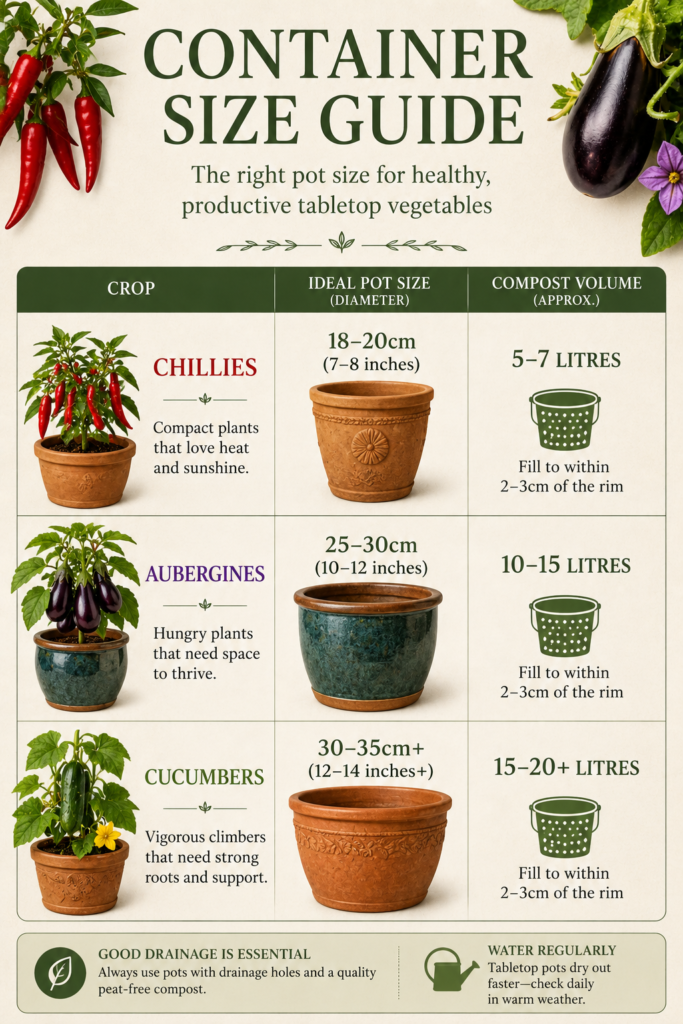
Terracotta is beautiful but dries out quickly on a sun-baked balcony — check moisture levels daily in warm weather and be prepared to water twice on very hot days. Plastic pots retain moisture better, which can be genuinely useful in the unpredictable UK summer. Wherever possible, choose containers with drainage holes and elevate them slightly to prevent waterlogging.
Peat-free multi-purpose compost works well as a base for all of these crops, supplemented with slow-release granules at planting time and topped up with liquid potassium-rich fertiliser — tomato feed works perfectly — once flowering begins. The compost in a container pot is a finite resource and needs replenishing through the season in a way that in-ground plants simply don’t.
Finding the Right Position in the UK
Every one of the flagship tabletop crops — chillies, aubergines, cucumbers — is a warmth-lover, and in the UK that means positioning is everything. South-facing is ideal. If you only have east or west-facing space, these crops become significantly more challenging, though chillies are the most forgiving and worth trying in a sheltered east-facing spot.
The warmth retention of urban environments is a genuine advantage here. Balconies in cities are typically warmer than suburban gardens by several degrees, particularly at night, and the brick and concrete surrounding many urban outdoor spaces hold and radiate heat well into the evening. A patio corner that gets direct sun from mid-morning to late afternoon in July is warm enough for excellent chilli and cucumber production even in northern England.
Regional Timing Across the UK
Getting the timing right is particularly important with these warmth-loving crops, and UK regional differences are significant enough to matter.
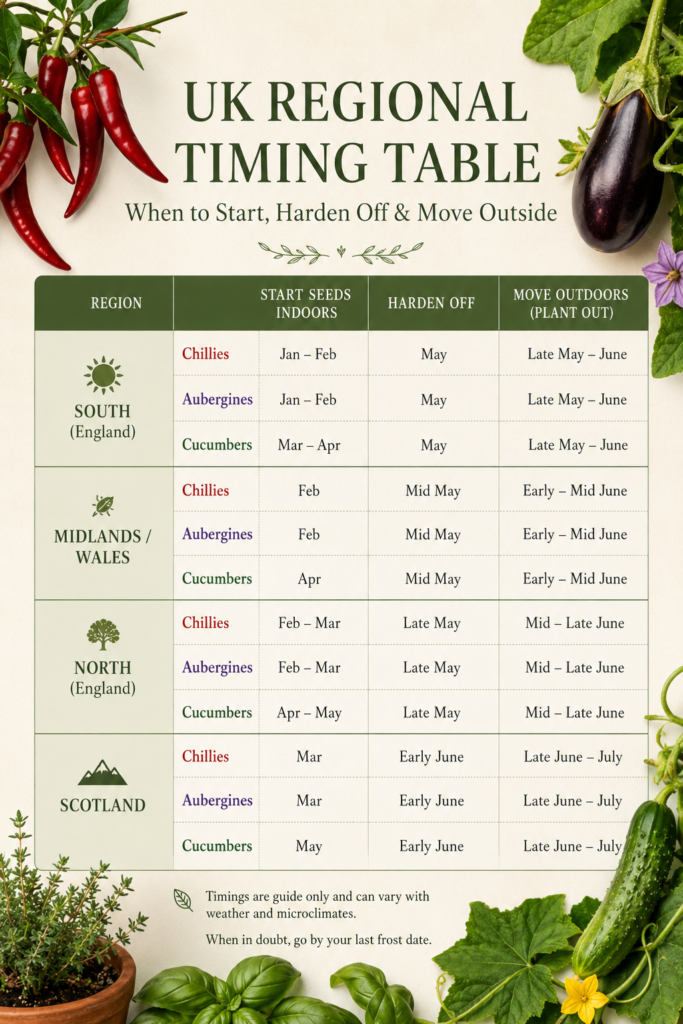
South of England and Cornwall can move plants outdoors from mid-May, and chillies and cucumbers will thrive from late May onwards. The longer warm season means you can start seeds a little later — February or early March — and still achieve excellent harvests.
Midlands and Wales should wait until the last week of May or early June to move tender plants outside, checking local frost dates carefully. The growing season is shorter but still productive, and a south-facing wall or balcony can add precious warmth.
Northern England benefits from hardening plants off carefully through late May and making the outdoor move in early June. Container-grown crops can be brought under cover on cold nights right through until the weather settles, which gives small-space growers a genuine advantage over those committed to a fixed raised bed.
Scotland has the most variable conditions of all four zones and the shortest warm season. South-facing balconies and patios in cities like Edinburgh and Glasgow are warmer than their latitude might suggest, but chillies and aubergines will need a greenhouse or polytunnel to fulfil their potential. Mini cucumbers in a sheltered patio position are more viable and can produce well in a good Scottish summer.
Keeping Your Tabletop Crops Thriving
Growing fruiting crops in containers demands a little more attention than simply planting and hoping, but the care routines are straightforward once you understand why they matter.
Watering: The Most Important Habit
Container-grown plants in a sunny position can dry out with alarming speed. In warm weather, a 5-litre pot of chillies on a south-facing balcony may need watering every single day; in a heatwave, twice a day is not an exaggeration. The compost should be consistently moist — never waterlogged, never bone dry. Both extremes cause problems: overwatering leads to root rot; underwatering causes blossom drop and poor fruit set.
The simplest advice is to keep a watering can by the back door and make checking your pots part of your daily routine. Push a finger into the compost to feel the moisture level rather than going purely by appearance — surface compost can look dry while the root zone is still adequately moist.
Feeding for Fruit Production
Once your plants begin to flower, they need more than compost can provide. A regular liquid feed high in potassium — tomato fertiliser is the standard recommendation and works perfectly for all these crops — applied weekly through the main growing season from June to September will make a visible difference to fruit set, size, and flavour.
Don’t feed young plants before they flower; a higher-nitrogen feed can encourage leafy growth at the expense of fruiting.
Support and Pruning
Even compact plants often appreciate a small cane for stability, particularly taller chilli varieties and aubergines in exposed positions. Cucumbers will need something to trail over or climb — balcony railings, a simple trellis leant against a wall, or a series of strings running from the base of the pot to an overhead anchor all work well.
Pinching out the growing tip of chillies and aubergines once they reach around 30cm encourages a bushier plant with more fruiting laterals. For cucumbers, removing the growing tip once the plant has reached its support structure encourages side shoots and more fruit. These are small interventions that take seconds and significantly increase your harvest.
What to Do When the Weather Turns
One of the biggest advantages of tabletop growing over fixed raised beds is the ability to move your plants. When a cold front threatens in June, bring your tender crops inside for the night. If August produces a cold, wet fortnight — as it so often does in the UK — push your pots under a canopy or into a greenhouse for the duration. This level of responsiveness simply isn’t possible with in-ground crops.
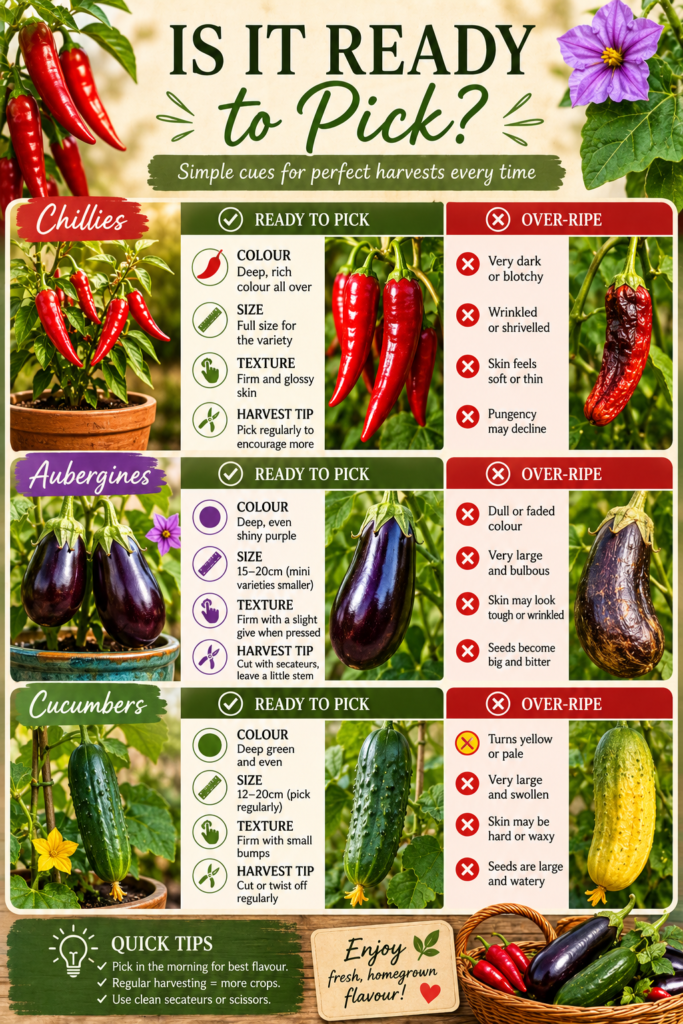
Harvesting: How to Know When It’s Ready
Chillies
Chillies change colour as they ripen, typically from green through to red, yellow, orange, or purple depending on variety. Green chillies are perfectly edible — they have a fresher, sharper heat — but allowing them to ripen fully produces deeper flavour and more intense colour. Harvesting regularly, even if you have more than you can use immediately, encourages the plant to produce more fruit. Surplus chillies dry beautifully in a warm kitchen or can be frozen whole.
Aubergines
Aubergines are ready when they reach the expected size for the variety and the skin is glossy and taut. A dull skin is a sign of over-ripeness. Cut rather than pull to avoid damaging the stem. Each dwarf plant will typically produce three to six fruits over the season.
Mini Cucumbers
Mini cucumbers are best picked small and firm — checking the plants every two to three days during peak season is the habit to build. Once fruits are left to grow too large they become seedy and slightly bitter, and the plant will reduce production in response. Regular picking actively encourages continued flowering and fruiting.
Your First Tabletop Garden: A Simple Starting Point
If you’re starting from scratch, the most effective approach is to resist the urge to plant everything at once. Choose one fruiting crop — a chilli is the most forgiving and the most rewarding for a first attempt — and pair it with two or three herbs that you actually use in cooking. Establish those well, learn what your space can do in terms of sun and shelter, and add more the following year.
The guide to best patio plants in pots is useful for thinking about how to combine edible and ornamental plants in a patio container display. The windowsill vegetables post covers the transition from indoor to outdoor growing in useful detail, and the starting a vegetable garden guide will help if you’re planning to grow more broadly than a single tabletop collection.
The joy of tabletop growing is that the scale is genuinely manageable. A few pots on a bistro table, watered and fed consistently, can produce a summer of home-grown chillies, cucumbers, and herbs from a space no bigger than a doorstep. The RHS has called it, the seed catalogues have responded, and the varieties are there waiting for you.
Start with one chilli. Add a pot of basil. Move things into the sun. The rest follows naturally.
Continue Your Journey
Best Patio Plants in Pots — How to create a beautiful and productive container display, combining edibles with ornamentals for a patio that works hard all season.
Growing Herbs Outdoors in the UK — The complete guide to growing herbs in British conditions, from choosing varieties to harvesting and drying.
Growing Basil in the UK — Everything you need to grow thriving basil outdoors or on a sunny patio, including the best varieties for British weather.
Best Winter Windowsill Vegetables — Extend your growing season indoors once the patio season ends, with the vegetables that genuinely thrive on a bright windowsill.
Starting a Vegetable Garden — Ready to go bigger? This beginner-friendly guide takes you through every step of setting up your first UK vegetable garden.
Are you planning a tabletop vegetable garden this summer? I’d love to know which crops you’re most excited to try — drop a comment below and let’s compare notes.
Enjoyed this guide? Sign up for the Crafting Her Blooms newsletter for seasonal growing tips, new posts, and UK-specific advice delivered straight to your inbox.