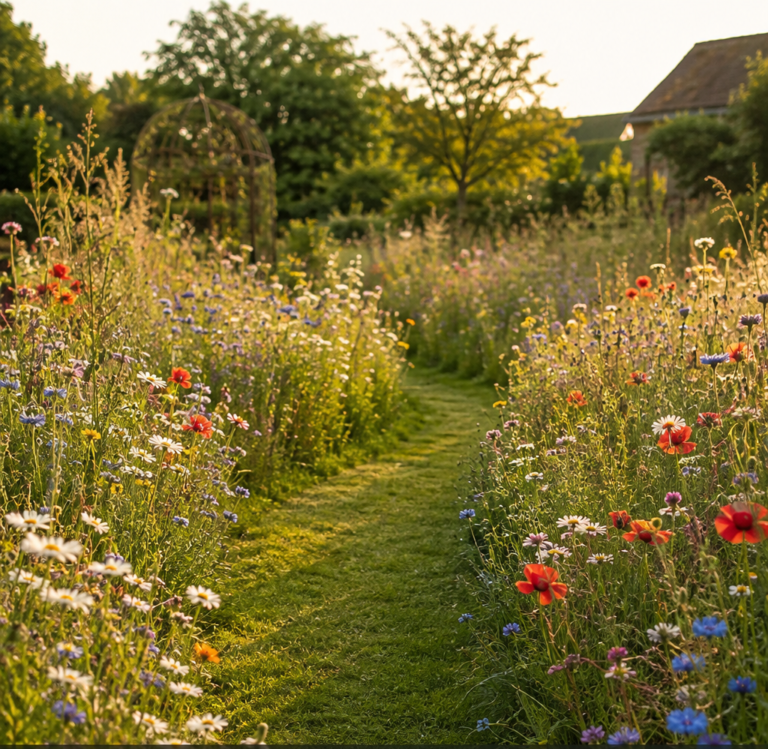
Herbs for Wildlife: The Best Bee and Butterfly Plants for a UK Herb Garden
I sometimes use affiliate links in content. This doesn’t cost you anything but I may make a commission payment from anything you buy through these links. As an Amazon Associate I earn from qualifying purchases. All opinions remain my own.
Most herb advice tells you to cut everything back before it flowers. That keeps the leaves tender, but it also switches off the best part of the plant for wildlife. A flowering herb is a free pollinator café, and the kitchen does not have to lose out.
This guide flips the usual rule. You will find which herbs earn their place for bees, butterflies and hoverflies, and how to harvest for the kitchen while leaving enough in flower for the insects. Everything here is written for UK gardens, with metric measurements and plants you can buy from British nurseries.
🐝 Why Herbs Suit Wildlife So Well
Herbs are quietly brilliant for pollinators. Many have small, open, single flowers that insects can reach easily, and plenty of them bloom for weeks.
Compare that with showy double-flowered bedding, where the petals are packed so tightly that nectar and pollen are out of reach. A thyme flower is simple, and that is exactly why a bee can use it.
Forged & Grown
Garden pieces, printed to order
3D printed planters and garden accessories, made in the UK. Self-watering designs, sculptural shapes, colour options — each one made when you order it.


Herbs also fit almost anywhere. They squeeze into the edge of a vegetable bed, spill out of a pot by the back door, or soften a path.
A quick note on terms. When people say “bees” they often mean honeybees, but the UK has roughly 270 bee species, including bumblebees and many solitary bees. Herbs feed all of them, though different flower shapes suit different tongues.
🌿 The Best Herbs for Bees
These are the herbs that bees return to again and again. Choose single-flowered forms, and skip any sterile or double cultivars sold for looks alone.
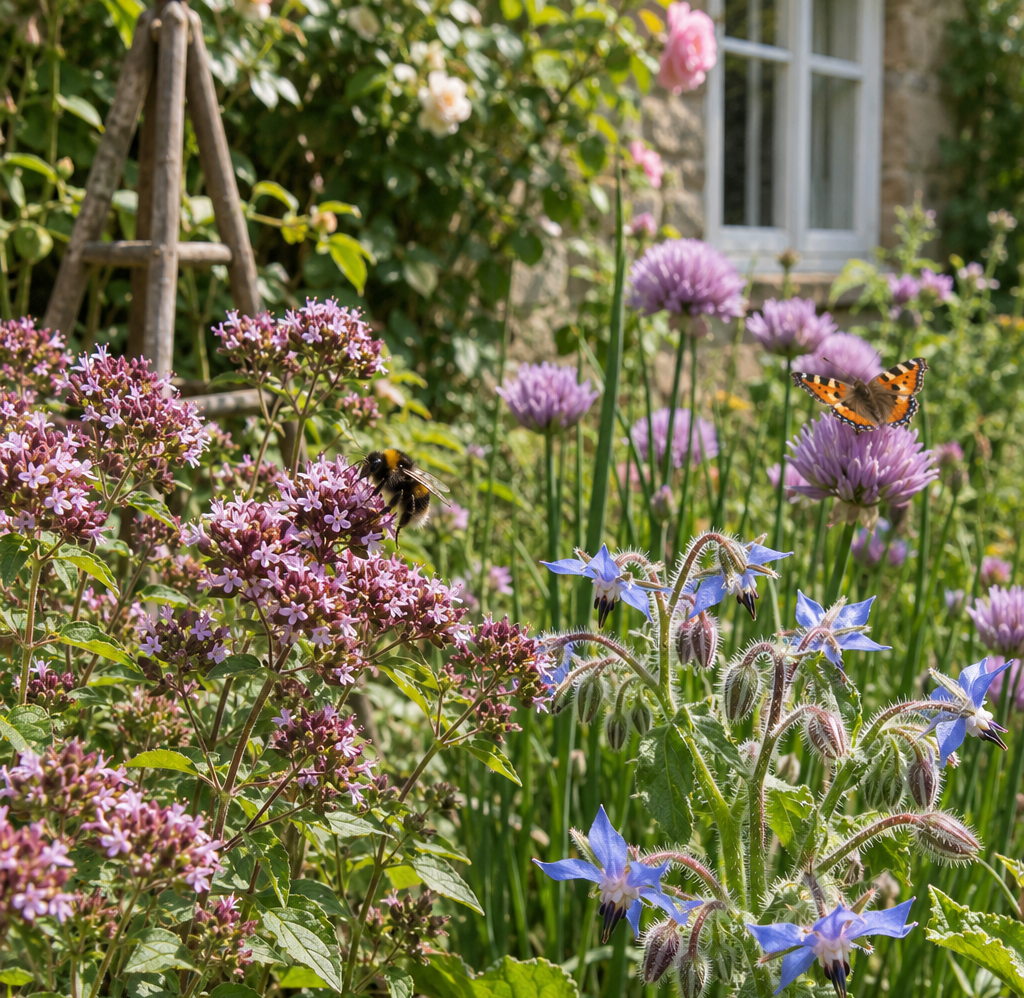
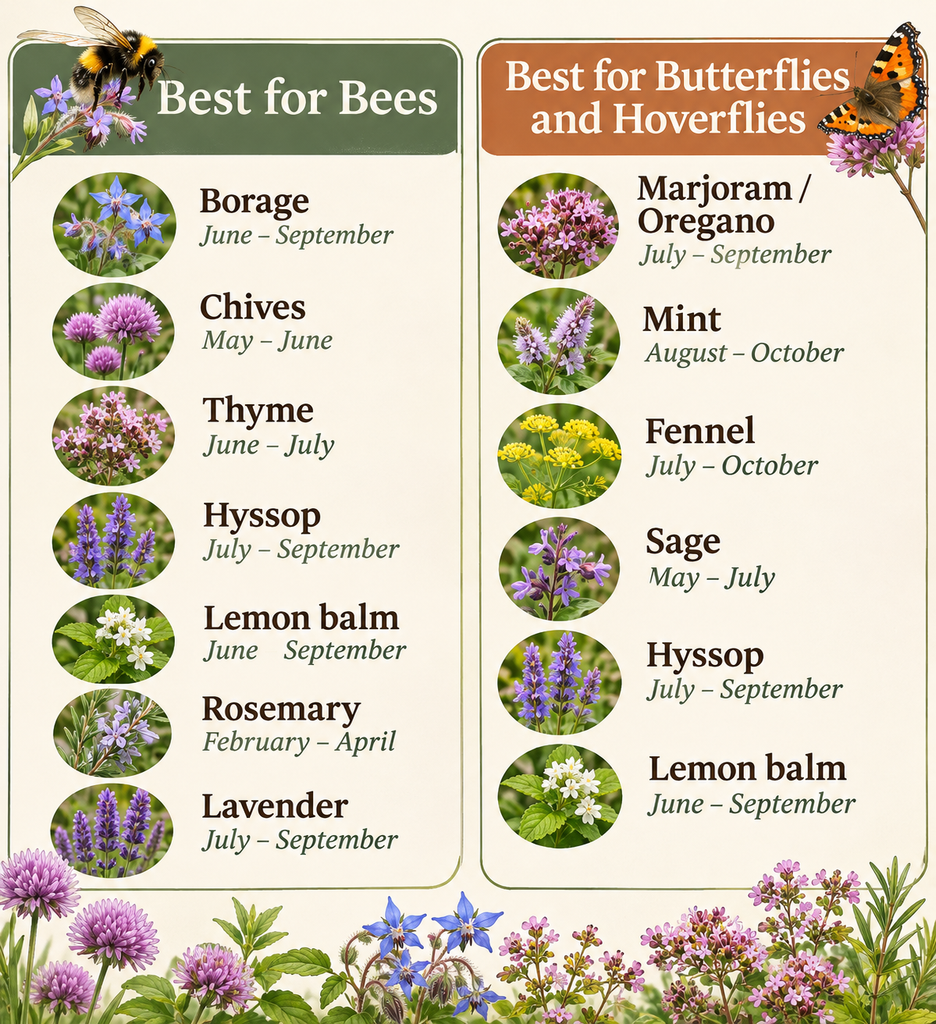
Borage is the star of the show. This hardy annual produces sky-blue, star-shaped flowers from roughly June to September, and bees visit constantly. It self-seeds freely, so you may only sow it once.
Chives flower in May and June with pink-purple pompoms that are a vital early food source. Garlic chives follow in late summer with white flowers, which extends the season nicely.
Thyme is a low-growing carpet of tiny flowers in early summer. Common thyme and creeping types both work, and they are happiest in a sunny spot with sharp drainage.
Hyssop is underrated in UK gardens. Its blue spikes open from July into September and draw bumblebees in numbers, at a time when many other flowers are fading.
Lemon balm carries small white flowers from June to September. Its Latin name, Melissa, comes from the Greek word for honeybee, which tells you how long gardeners have known its worth.
Rosemary deserves a special mention for the calendar. It can flower from late winter into spring, offering food to queen bumblebees emerging from hibernation when almost nothing else is open.
Lavender is the most famous bee herb of all. It has its own guide, so for varieties, pruning and care, see our complete guide to growing lavender in the UK.
🦋 The Best Herbs for Butterflies and Hoverflies
Butterflies and hoverflies like a slightly different menu. They favour flat or clustered flowers that make a handy landing pad.
Marjoram and oregano are the butterfly magnets. Wild marjoram (Origanum vulgare) flowers from July to September, and its pink-purple clusters attract small tortoiseshells, gatekeepers, meadow browns and plenty of hoverflies.
Mint is a surprise favourite once it is allowed to bloom in late summer. The flowers are tiny but plentiful, and a patch in bloom hums with hoverflies, bees and the occasional butterfly. If you have never grown it, our complete guide to growing mint explains how to keep it under control.
Fennel produces wide, flat umbels of yellow flowers from July to October. Hoverflies adore them, and their larvae eat aphids, so fennel works as a quiet pest-control ally too.
Sage flowers from May to July in spikes of purple-blue. Bumblebees with longer tongues work the flowers hard, and the plant is tough enough to last for years.
Hyssop and lemon balm appear in both lists. Bees love them, and butterflies will happily sip from them on a warm afternoon.
✂️ How to Harvest and Still Leave Flowers
This is where the real balance lives. You want leaves for the kitchen, and you want flowers for the insects. You can have both with a bit of planning.
Harvest in sections, not all at once. Take stems from one side or one third of a plant and leave the rest to grow on. Never strip a plant bare.
Let some plants bolt. Pick a couple of plants in each patch and give them a free pass to flower. Treat them as the wildlife plants, and treat their neighbours as the kitchen plants.
Stagger your cutting. If you have three clumps of marjoram, cut one hard in early summer, one in midsummer, and leave one alone. Each recovers at a different time, so flowers are always available somewhere.
Cut back after flowering, not before. Once chives, thyme or sage have finished blooming, trim them back to encourage fresh leafy growth. You still get a flush of tender leaves for cooking, and the insects have already had their feast.
Harvest in the morning. The oils are strongest once the dew has dried and before the midday heat. You will also avoid disturbing the busiest hours of insect activity.
If you dry any surplus, a hanging herb drying rack keeps bunches off the worktop and gives air plenty of room to circulate. Our guide to drying and preserving herbs covers the details.
📅 Plan Flowering Across the Season
The goal is a continuous supply of nectar, from the first warm days of spring to the last mild days of autumn. Think of the herb garden as a relay race, with each plant passing the baton on.
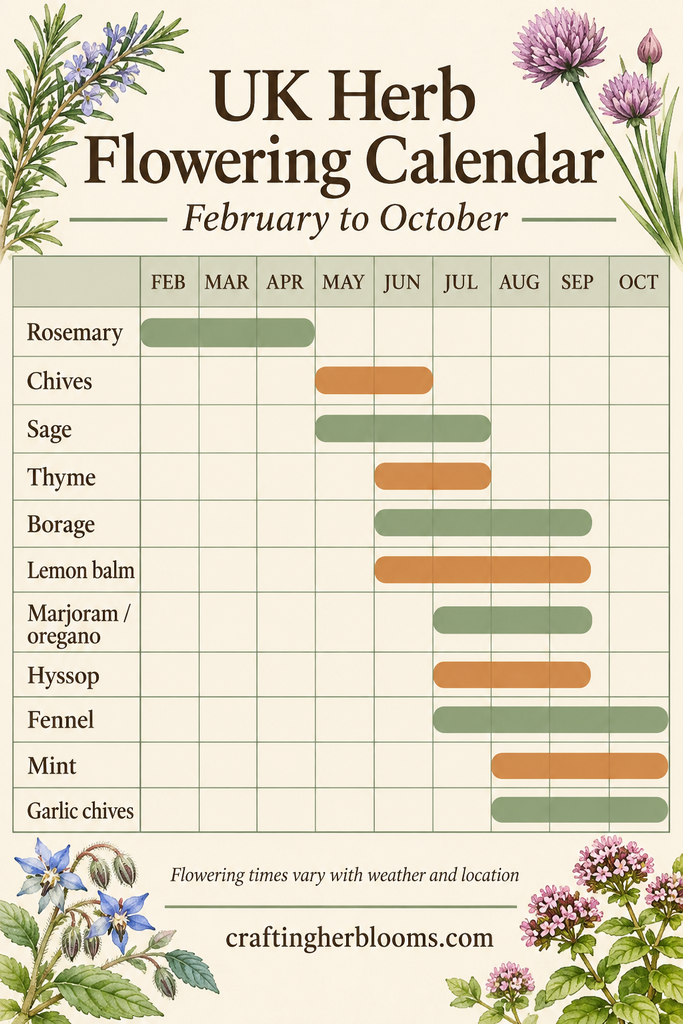
Here is a simple UK timeline to plan around:
- February to April: rosemary offers the first flowers for emerging queen bumblebees.
- April to June: chives open their pompoms, with sage following in May.
- June to July: thyme, borage and lemon balm are in full flower.
- July to September: marjoram, hyssop and fennel take over and keep butterflies and hoverflies fed.
- August to October: mint, garlic chives and any herbs left to bolt carry the season to its end.
If you want to go further than herbs, we have separate guides to the best plants for spring pollinators, the best plants for summer pollinators and the best plants for autumn pollinators. Use them to fill the gaps between your herbs.
🌞 Simple Growing Notes
You do not need to be an expert to get these herbs flowering. A few basics cover almost all of them.
Sun and drainage. Rosemary, thyme, sage, hyssop, lavender and marjoram come from sunny, free-draining places. Give them a bright spot and gritty soil, and they will reward you with more flowers and stronger scent. Heavy, wet clay is their enemy over winter.
Perennial or annual? Thyme, sage, rosemary, hyssop, marjoram, chives, lemon balm, mint and fennel are perennials, so they return each year. Borage is an annual, but it self-seeds so readily that it behaves like a perennial once established.
Keep mint in a pot. Mint spreads by underground runners and will take over a bed. Sink it in a large container, or grow it in a pot on the patio, and it will flower happily without invading.
Water sensibly. Most of these herbs prefer to be a little dry. Water young plants until established, then ease off, especially for the Mediterranean types.
Mind the spreaders. Fennel and borage self-seed with enthusiasm, and lemon balm can sprawl. Pull up unwanted seedlings in spring, or deadhead before the seed ripens if you want to keep things tidy.
If your space is small, our guide to growing herbs in pots in the UK shows how to make the most of containers.
🌼 Where to Put Them
Placement makes a big difference to how often insects visit. A few spots work especially well.
Border edges. Low, bushy herbs such as thyme, marjoram and chives are ideal along the front of a border. They soften hard edges, and you can reach them easily for picking.
Containers. Pots by the back door put herbs within arm’s reach of the kitchen, and a mixed container can double as a tiny pollinator patch. For inspiration, try our bee and butterfly buffet planters.
Among the vegetables. Herbs planted between rows or at the end of a raised bed help attract pollinators to your crops, so beans, courgettes and fruit set better. Our companion planting guide shows which pairings work well in UK gardens.
In drifts, not single plants. A clump of three or more plants of the same herb is easier for insects to find than one lonely specimen. Repeat the same herb in two or three spots, and the whole garden feels connected.
🔎 What to Watch For Once They Flower
Spend ten minutes beside your herbs on a warm, still afternoon, and you will start to notice who is visiting. Bumblebees tend to work the deeper, tubular flowers of sage and hyssop, while smaller solitary bees prefer the tiny open blooms of thyme and chives.
Hoverflies often hang in the air above fennel and marjoram before dropping onto a flower. They are easy to mistake for wasps, but they are harmless and many are useful garden allies.
Keep a simple notebook by the back door. Jot down the date, the herb and what you saw, and you will build a picture of which plants work hardest in your own plot.
🐛 A Few Gentle Cautions
A wildlife herb garden does not need to be perfect, but a few sensible choices help.
Avoid sterile or double-flowered varieties. They look pretty on the label, but the flowers can offer little or nothing to insects. Choose plants described as single-flowered or as the species form.
Be realistic about what herbs can do. Planting a pot of thyme will not rescue declining pollinators, and it is worth being honest about that. What it does is add a useful, reliable food source to your patch, and it joins up with what your neighbours are growing.
Finally, think about the whole garden. Leave a few stems standing over winter, keep a corner a little wild, and let some leaf litter lie. Herbs are a lovely starting point, but wildlife thrives on variety.
🌱 Your Wildlife Herb Plan in a Nutshell
Pick five or six herbs from the lists above, aiming for a spread of flowering months. Plant them in sun and good drainage, in groups rather than singly. Harvest a section at a time, and always leave a few plants to flower.
Do that, and your herb patch will serve the kitchen and the wildlife equally well. It is a small change, and it makes the garden noticeably busier from spring to autumn.
Which herb will you let flower first? Whatever you choose, you will probably be surprised by who turns up.
Continue Your Journey
- How to Create a Wildlife Garden from Scratch: The UK Beginner’s Guide
- How to Grow Your Own Herbs in the UK: The Complete Guide
- The Ultimate Guide to Creating a Wildflower Meadow in a UK Garden
- How to Garden for Wildlife in a Small Urban UK Garden
- Wildlife-Friendly Gardening in 2026: The UK Trends Every Gardener Needs to Know