
Chop and Drop: The No-Fuss Mulching Method That Mimics Nature
I sometimes use affiliate links in content. This doesn’t cost you anything but I may make a commission payment from anything you buy through these links. As an Amazon Associate I earn from qualifying purchases. All opinions remain my own.
Walk into any ancient woodland and you’ll notice something British gardeners spend a lot of energy fighting against: nobody tidies up. Leaves fall where they land, stems collapse into the undergrowth, and the forest floor quietly turns that mess into some of the richest soil on earth. Chop and drop borrows that exact principle for your own garden, and it might be the most under-rated technique in UK growing right now.
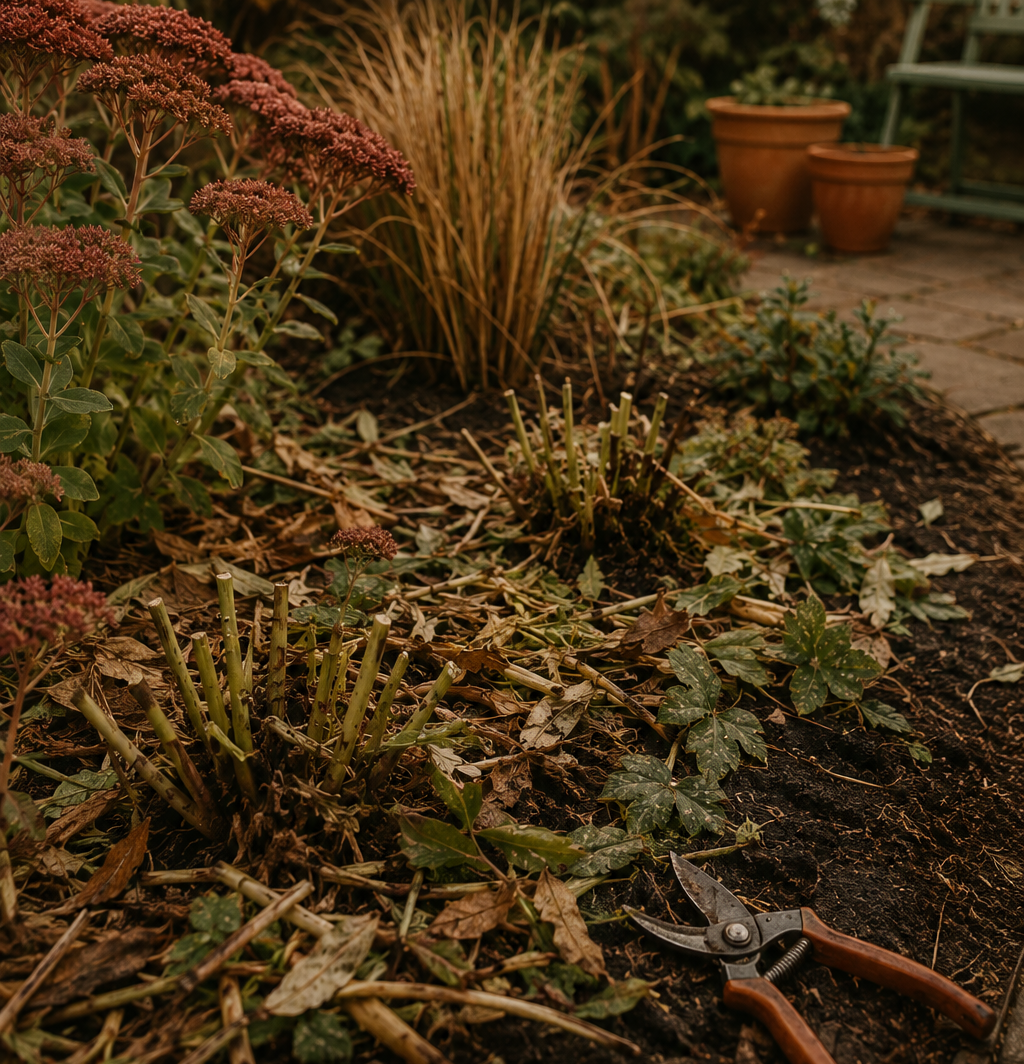
The idea is disarmingly simple. Instead of cutting back your perennials, herbs, or cover crops and carting the trimmings off to the compost heap, you chop them into shorter lengths and leave them exactly where they fall. No barrow trips. No turning. No waiting months for a heap to mature. Just cut, drop, and let the soil life underneath do what it’s been doing for millions of years.
This is an evergreen technique, not a seasonal trend, and once you understand the handful of rules that make it work, you can apply it across your whole garden, in every bed, in every season that calls for a cut-back.
What “Chop and Drop” Really Means
At its core, chop and drop is about recycling a plant’s growth back into the ground it came from, rather than exporting those nutrients somewhere else. When you cut back a spent perennial, prune a soft shrub, or clear a cover crop, you chop the material into manageable pieces and lay it directly on the soil surface around the plant’s base.
Forged & Grown
Garden pieces, printed to order
3D printed planters and garden accessories, made in the UK. Self-watering designs, sculptural shapes, colour options — each one made when you order it.


Those trimmings become a loose, living mulch. As they break down, they feed the roots beneath them, suppress weed germination, and hold moisture in the soil that would otherwise evaporate. It’s essentially closing the loop that most gardening habits break: grow, cut, remove, buy compost, repeat. Chop and drop keeps everything on site.
This differs from traditional mulching with bought-in bark chips or well-rotted manure in one important way. You’re not adding an external material to your beds; you’re redirecting material your garden already produced. The nutrients your plants pulled from the soil over the growing season go straight back into it, rather than travelling to a compost bin at the far end of the garden or, worse, into a green waste collection that leaves the property entirely.
Chop & Drop Checker
Tap what you’ve just cut back to see if it’s safe to chop and drop.
Select an item above to see its verdict.
The Woodland Floor as a Blueprint
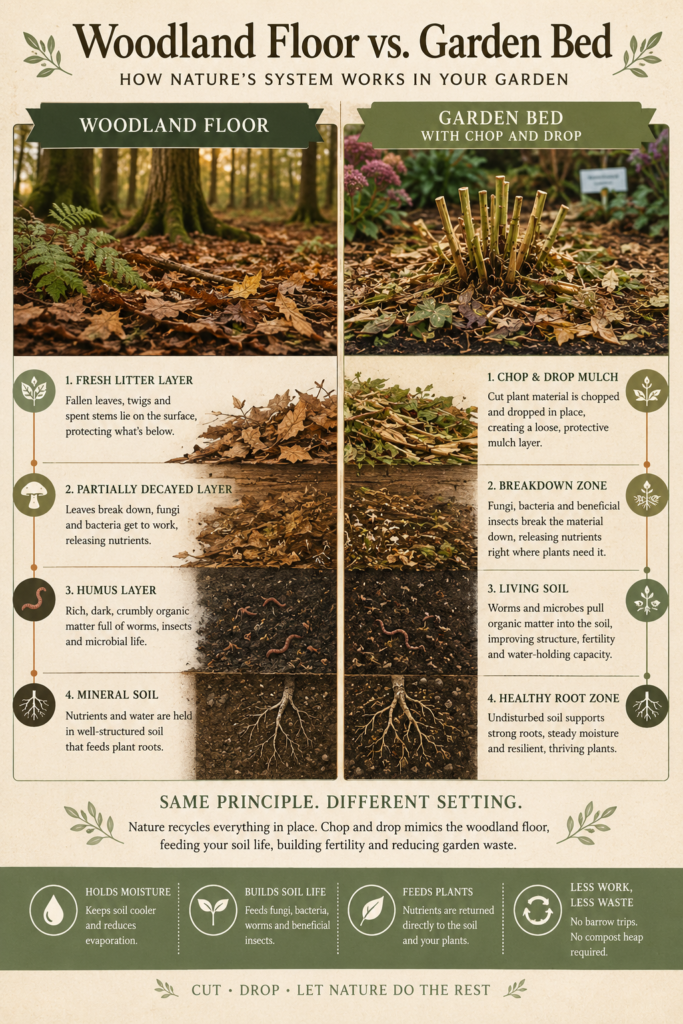
Every ancient woodland runs on this exact system without anyone managing it. Leaves, spent stems, and fallen branches carpet the ground and slowly decay into a soft, dark, crumbly layer that's teeming with fungi, worms, and beetles.
Chop and drop essentially borrows that script for cultivated ground. Your roots stay anchored in place, undisturbed, while the material that falls above them becomes both food and shelter for the same organisms that build long-term soil structure. Understanding what's actually happening in your soil types helps explain why this works so reliably across such different growing conditions.
Why the Method Works: The Science Beneath Your Boots
It's easy to dismiss "just leave it there" as gardening laziness dressed up in permaculture language, but the ecology behind chop and drop is genuinely well supported. RHS soil scientists have described the technique as more efficient than conventional composting precisely because nutrients and carbon are recycled directly back to the plants they came from, rather than being lost in transit through a separate heap.
When trimmings sit on undisturbed soil, several processes kick off simultaneously. Fungal networks begin breaking down the tougher cellulose in stems. Bacteria colonise the softer leaf tissue almost immediately. Earthworms drag the smaller fragments down into the soil profile, mixing organic matter through the top few centimetres far more effectively than a spade ever could.
Building Living Soil Without Digging
This is also why chop and drop pairs so naturally with a no-dig approach. Every time you disturb soil with a fork or spade, you break up the fungal threads and air channels that took months to establish. Leaving material on the surface to decompose in place protects that structure instead of destroying it.
Over a season or two, beds that receive regular chop and drop mulching start to feel different underfoot and under the trowel. The soil becomes darker, holds together in loose crumbs rather than compacted clods, and drains more evenly after rain. That's living soil doing what it's designed to do, and it happens with considerably less physical effort than digging in compost by hand.
Water Retention and Erosion Control
Because the mulch layer cushions bare soil, it slows evaporation on hot days and reduces the force of heavy rain hitting the surface directly. Raised beds and sunny borders, both of which dry out fast in a British summer, benefit enormously from this cushioning effect. Roots stay cooler, moisture stays put for longer, and you spend less time trailing a hose around the garden during dry spells.
What to Chop (and What to Carry Away Instead)
Not every prunings pile is a good candidate for this treatment, and knowing the difference is the single most important skill in making chop and drop work reliably.
Soft, herbaceous material is ideal. Faded perennials, lush green prunings, spent cover crops, and anything with high water content in its tissue will break down quickly and feed the soil without creating a matted, slow-to-rot barrier. Think spent hardy geraniums, collapsed comfrey leaves, or the soft growth you'd cut back during a Chelsea chop on your summer border perennials.
Tough, woody, or thorny material behaves very differently. Rose canes, bramble growth, and anything with significant lignin content will sit on the surface for a very long time without breaking down, and in the meantime they can snag hands, trip feet, or simply look untidy. That material is better suited to shredding or a proper compost heap, where a mix of green and brown material and consistent heat can process it safely.
Material to Always Remove
A few categories should never go back onto the bed, no matter how tempting the shortcut feels. Diseased foliage, particularly anything showing fungal spotting, mildew, or rot, needs to leave the garden entirely rather than sit decomposing next to healthy plants, where it can reinfect them. Fallen fruit and anything that's likely to attract rodents or encourage pest overwintering falls into the same category.
It's also worth being deliberate about timing relative to seed set. If you chop and drop material after seed heads have fully matured, you may find yourself with considerably more volunteer seedlings the following spring than you bargained for. Cutting back before seeds fully ripen avoids this, unless self-seeding is actually part of your plan for a naturalistic border.
Getting the Timing Right Across the UK
Because this is an evergreen technique rather than a single-season job, the "right time" depends more on what you're cutting back than a fixed calendar date. That said, there are patterns worth knowing.
RHS advisors generally point to late winter through early spring, roughly October to March, as prime chop and drop season, timed with the normal cut-back of spent perennials and the period when garden wildlife most benefits from ground cover. Permaculture-oriented growers add a useful rule of thumb on top of that: lean into the wetter months, chopping and dropping in spring and autumn when rainfall outpaces evaporation, and holding off during high summer drought, when a thick fresh layer can temporarily trap heat against stressed root zones.
Regional Variation Matters
Southern England tends to see workable soil temperatures and manageable rainfall through most of autumn and into early winter, making late-October cut-backs perfectly viable. Gardeners in the Midlands and East Anglia usually get a slightly narrower autumn window before the ground turns cold and wet, so an earlier cut-back, often through September and October, keeps decomposition ticking along before growth slows for winter.
Northern England and Wales, along with Scotland, face a shorter effective decomposition season overall. Material chopped and dropped in a Highland or Pennine garden in December will simply sit inert until the soil warms again in spring, so many growers there time their heaviest chop and drop sessions for late February through April instead, when soil biology is waking back up and can put fresh material straight to work.
Getting the Texture and Placement Right
Size matters more than most new practitioners expect. Smaller pieces rot considerably faster than long, unbroken stems, so most experienced growers recommend chopping material into short lengths, roughly hand-sized or smaller, rather than leaving thick, mat-forming piles that resist airflow and take a full season longer to break down.
Spread the resulting mulch so it lightly blankets the soil surface without pressing directly against plant crowns, trunks, or stems. Damp organic matter held tight against a crown can trap moisture against the plant tissue and encourage rot, a real risk over a wet British winter. Leave a small gap, a few centimetres, around the base of each plant, and let the mulch layer taper off as it approaches that clear zone.
A layer around five to eight centimetres deep tends to strike the right balance: thick enough to suppress weed germination and retain moisture, thin enough to let rainfall and air continue reaching the soil beneath.
Chop and Drop in Different Garden Settings
The technique adapts well across very different growing styles, which is part of why it's spread so quickly through UK gardening circles over the past few seasons.
Raised Beds and No-Dig Systems
For raised bed gardening, chop and drop is a natural extension of the layered, no-dig approach many growers already favour. You're continually topping the surface with fresh organic matter that settles down into the growing medium, feeds whatever crop follows, and reduces how often you need to water through summer. Clearing a spent bean crop or bolted salad leaves straight onto the same bed, rather than into a bin, keeps that nutrient cycle tight and local.
Cottage Borders and Ornamental Beds
In a cottage garden setting, cutting back spent summer annuals and softer perennials and letting the material fall creates a self-made mulch under roses, shrubs, and the layered planting that defines the best cottage garden plants for year-round colour. It also echoes how many established cutting-patch and border growers already handle their end-of-season tidy-up, just with slightly less carting and slightly more intention.
Wildlife-Friendly Gardens
Leaving cut material in place through winter also supports overwintering insects, many of which shelter in hollow stems and leaf litter rather than disappearing entirely once temperatures drop. If creating habitats for garden wildlife is already part of your planting plan, chop and drop dovetails with that goal directly, since a slightly looser, less immaculately tidy border often supports more overwintering life than a bed cut right back to bare soil in October.
Chop and Drop Versus Traditional Composting
It's worth being clear that chop and drop isn't a replacement for a proper compost system, more a complementary technique that handles a different category of material. A wildlife-friendly composting system is still the right home for kitchen scraps, woody prunings, and larger volumes of material than any one bed can comfortably absorb.
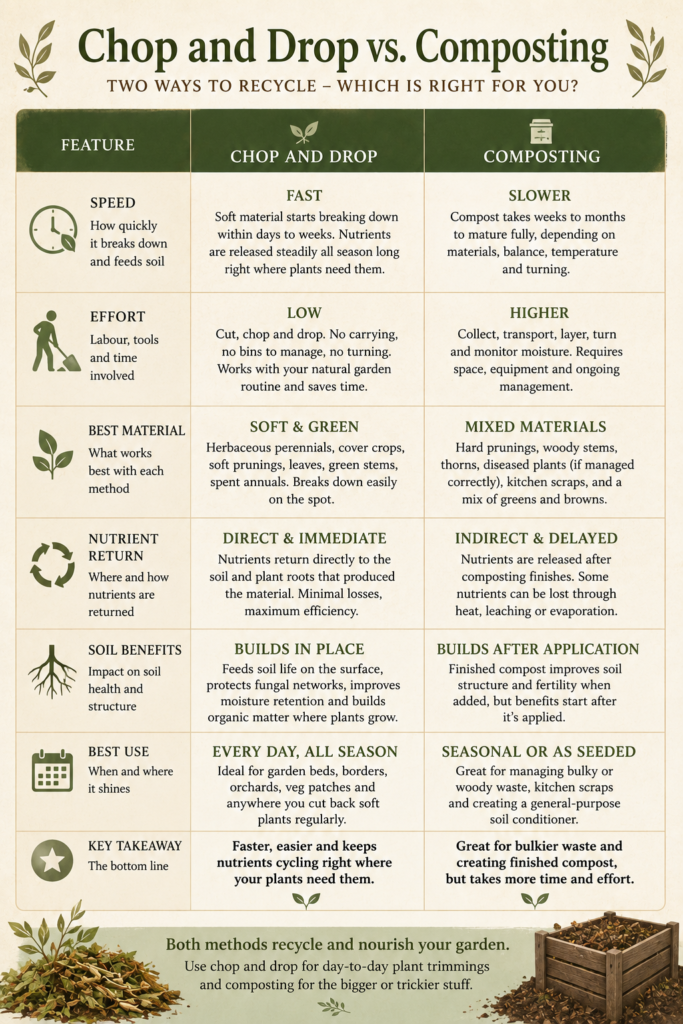
Where chop and drop pulls ahead is speed and effort. Compost heaps typically take months to mature into something usable, and they require a reasonably balanced mix of green and brown material plus occasional turning to work well. Chop and drop skips that entire cycle for suitable material, feeding nutrients back into the soil in situ without the labour of building, maintaining, or eventually shifting a heap.
Used together, the two methods cover almost everything a garden produces. Soft, quick-to-rot trimmings go straight back onto the bed they came from. Tougher, woody, or larger volumes of material go to the compost heap, where time and heat can process them properly. Neither approach removes the value of thinking carefully about organic versus synthetic feeding for the parts of your garden that need an extra nutrient boost beyond what mulching alone provides.
A Few Gentle Cautions
Chop and drop is genuinely low-effort, but "low-effort" isn't the same as "no judgement required." UK landscapers and organic growers consistently flag the same handful of pitfalls worth watching for.
Only ever drop healthy material. Diseased leaves or stems left in place can reinfect the very plants they came from, effectively undoing the benefit of cutting them back in the first place. If you're at all uncertain whether foliage shows early signs of fungal disease, err on the side of removing it to the compost heap or, in the case of anything seriously affected, to council green waste collection.
Watch your seed timing carefully in ornamental borders where you don't want volunteer seedlings taking over next year's planting scheme. And keep an eye on slug and snail activity in the first season or two of adopting the method, since a fresh mulch layer can initially offer more shelter than bare soil, though most gardeners find this evens out as the wider ecosystem, including the predators that eat slugs, establishes itself around the new mulch.
Frequently Asked Questions
Does chop and drop attract pests to my garden?
It can offer more shelter for slugs and snails in the short term, particularly in the first season, but this typically balances out as ground beetles, frogs, and other predators move into the improved habitat. Keeping mulch a few centimetres clear of vulnerable seedlings and crowns reduces most of the risk.
Can I chop and drop grass clippings?
Yes, in thin layers. Grass clippings are extremely high in nitrogen and break down fast, but a thick, wet layer can compact into a slimy mat that blocks air and water. Spread clippings thinly, or mix them with drier material like faded perennial stems.
Will chop and drop work on heavy clay soil?
It's actually one of the best interventions for clay. The organic matter improves structure over time, encouraging worms and roots to open up drainage channels that heavy clay typically lacks. Results take a season or two to become obvious, but they compound year on year.
Do I need to chop material very finely?
Not finely, just short. Hand-sized pieces or smaller decompose considerably faster than long, whole stems, which can take a full extra season to break down and may blow around in windy weather before they do.
Bringing It Together
Chop and drop rewards exactly the kind of gardening most of us actually have time for: cut, drop, walk away, and let the soil do the rest. It costs nothing beyond the secateurs you already own, it cuts down on barrow trips and green waste bags, and it builds the kind of soil structure that pays dividends for years rather than weeks.
Start small if the idea of leaving cut material on your beds feels unfamiliar. Try it on one border or one raised bed through a single cutting-back season, watch how the soil responds, and expand from there once you've seen the results for yourself.
Continue Your Journey
- No-Dig Gardening in the UK: Does It Really Work? — the wider growing philosophy that chop and drop fits neatly inside.
- How to Create Living Soil for Your Garden — the soil biology behind why this method works so well.
- How to Start a Wildlife-Friendly Composting System in Your UK Garden — the complementary system for material that doesn't suit chop and drop.
- Raised Bed Gardening UK: How to Build, Fill and Grow More Than You Ever Thought Possible — putting the technique to work in a no-dig raised bed system.
- How to Create Wildlife Habitats in a Small UK Garden — building on the overwintering benefits chop and drop provides.
Have you tried chop and drop in your own garden, or does the idea of leaving cut stems in place still feel a bit too wild for your borders? I'd love to hear how it's worked for you.
Want more low-effort, high-impact techniques like this one delivered straight to your inbox? Sign up for the Crafting Her Blooms newsletter for seasonal tips built specifically for British gardens.


