
October Garden Jobs UK: Complete Food Growing Guide for British Gardeners
I sometimes use affiliate links in content. This doesn’t cost you anything but I may make a commission payment from anything you buy through these links. As an Amazon Associate I earn from qualifying purchases. All opinions remain my own.
October asks two things of you at once. Half the garden is closing down for the year, and the other half is just getting started.
Runner beans are finishing their last flush, tomato vines are coming down, and the summer salad beds are looking tired and spent. At the same time, garlic cloves are going into the ground for next summer’s harvest, broad beans are being sown to overwinter, and greenhouse shelves are filling up with pots of parsley and chives that will carry you through to spring. It’s a month of closing one door and opening another, often on the same afternoon.
That dual pace is exactly why October trips people up. Miss the closing-down jobs and you leave beds vulnerable to slugs, disease and winter waterlogging. Miss the getting-started jobs and you lose a full season’s head start on next year’s harvest. Get both right, and October becomes one of the most quietly productive months in the British growing calendar.
This guide covers what to plant across vegetables, fruit and herbs in October, the wider jobs list for the month, the problems most likely to show up in a UK garden right now, and answers to the questions that come up most often at this point in the year. Timings are broken down by region, because an October in Cornwall and an October in the Scottish Highlands are not the same growing month at all.
Forged & Grown
Garden pieces, printed to order
3D printed planters and garden accessories, made in the UK. Self-watering designs, sculptural shapes, colour options — each one made when you order it.


October Jobs by UK Region
Tap your region to see this month’s planting and jobs timing for your part of the UK.
Southern England — the widest window this month
- Broad beans: direct sow outdoors right through most of October.
- Overwintering onion sets: plant outdoors, October into mid-November.
- Garlic: plant now for the best vernalisation window.
- Chicory & fennel: just enough time left to direct sow at the very start of the month.
- Winter salad leaves: can often manage outdoors under fleece, not just under cover.
- Mediterranean herb pots: rosemary, thyme and bay can usually stay outdoors, especially against a warm wall.
Timings are general guidance. Always adjust for your own local microclimate and current forecast.
Vegetables to Plant in October
October is not a big sowing month for vegetables, but the jobs that remain are high value. Get these right and you set up a genuinely earlier harvest next year, rather than starting from scratch in March.
Broad Beans for an Early Crop
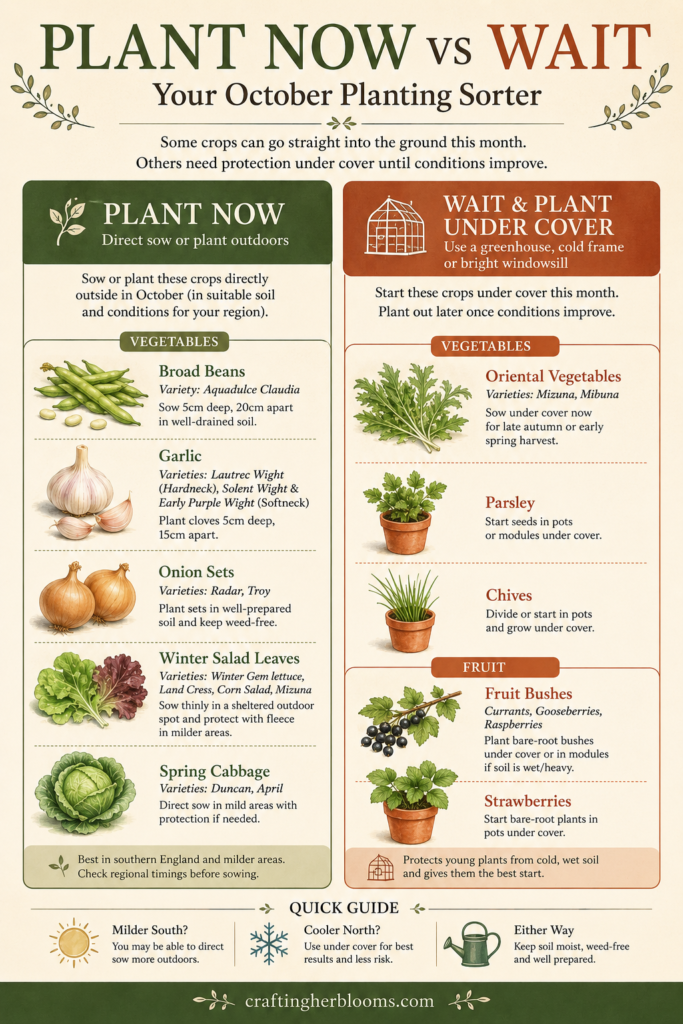
Autumn-sown broad beans are one of October's best-kept secrets. Sow a hardy variety like Aquadulce Claudia now and the plants overwinter as small, sturdy seedlings, then race away in spring to give you a harvest four to six weeks ahead of a spring-sown crop.
Sow direct into well-drained soil, about 5cm deep and 20cm apart, in a sheltered spot. If your garden sits on heavy clay or gets waterlogged over winter, start them instead in root trainers or deep modules in a cold frame or unheated greenhouse, then plant out in late winter once the ground has dried a little.
In southern England, direct sowing outdoors through most of October is reliable. In the Midlands and East Anglia, aim for the first half of the month so plants have time to establish before the first hard frosts. Across northern England, Wales and Scotland, module-raising under cover is the safer route, since young seedlings sown straight into cold, wet ground are more vulnerable to rot.
Overwintering Onions and Garlic
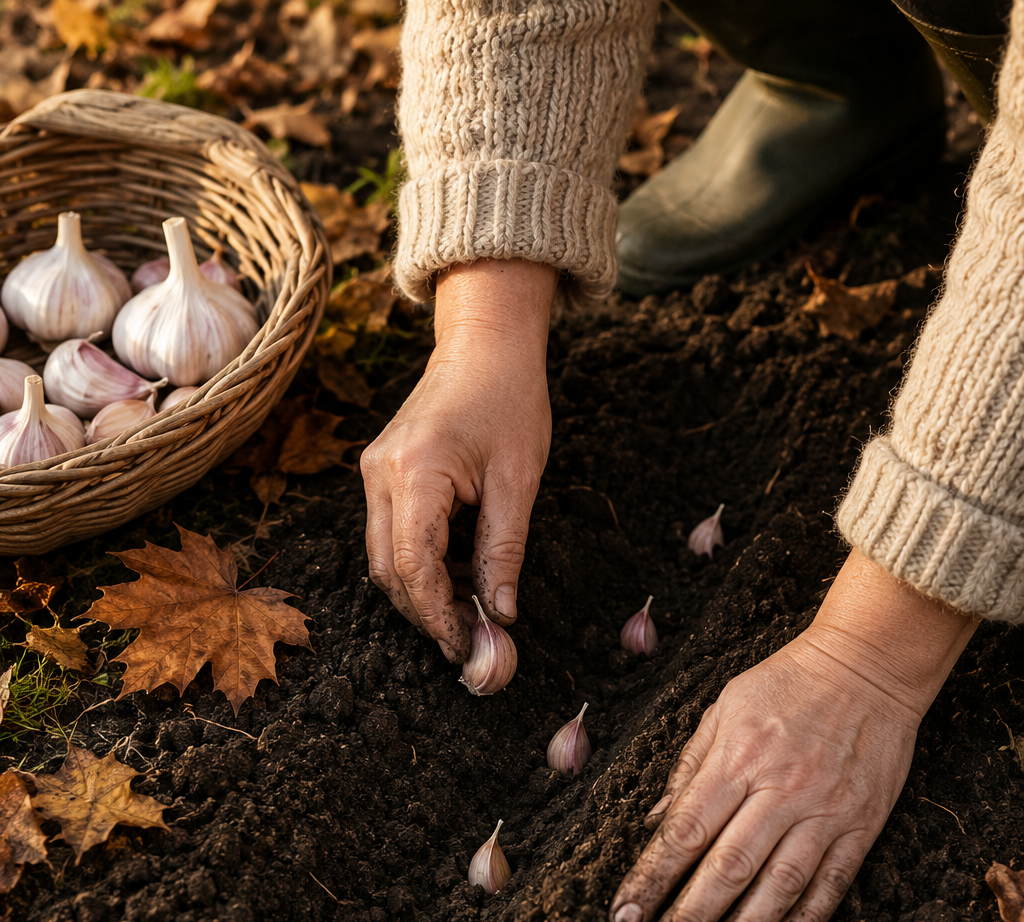
October is peak planting season for autumn garlic and overwintering onion sets, and getting this timed well genuinely changes the size of next summer's harvest. Garlic needs a spell of cold weather, known as vernalisation, to divide properly into cloves rather than forming a single round bulb.
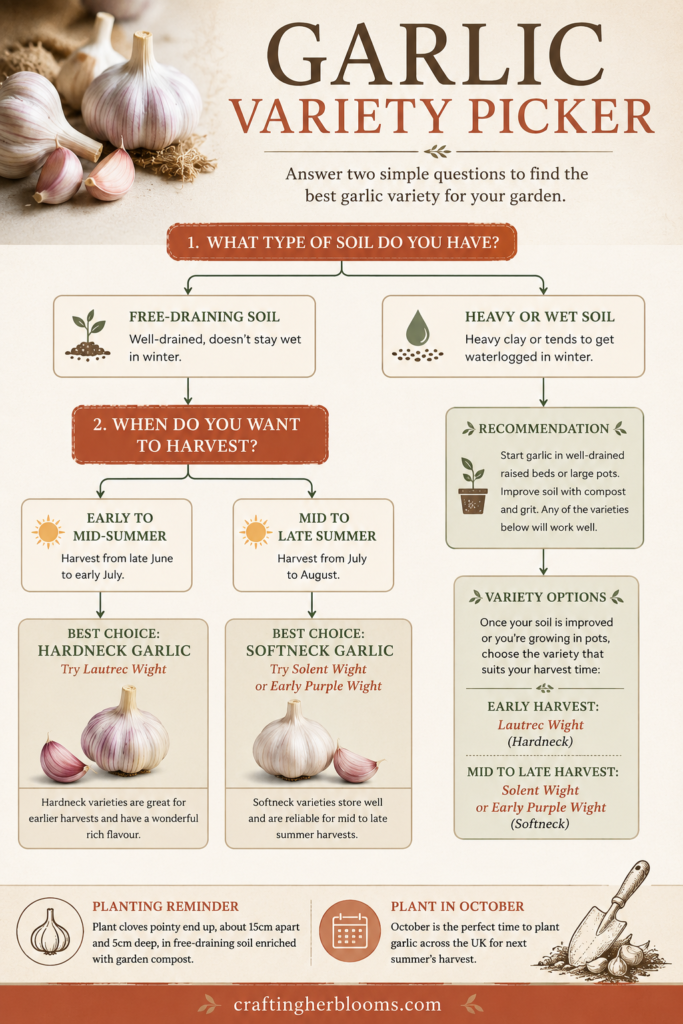
Hardneck varieties like Lautrec Wight and softneck types such as Solent Wight and Early Purple Wight are all reliable choices for UK gardens. Plant individual cloves pointy end up, about 15cm apart and 5cm deep, into free-draining soil that's had garden compost worked through it.
For overwintering onions, Radar and Troy are dependable UK varieties, planted as sets rather than seed. In southern England and milder coastal areas, October through to mid-November is the ideal window. In the Midlands, East Anglia, northern England and Wales, aim for earlier in the month so the sets root in before the ground turns cold. In Scotland, many gardeners find better results waiting until late winter for onion sets, since October-planted bulbs can rot in prolonged wet, cold conditions, though garlic remains reliable throughout the country given free-draining soil.
Salad Leaves and Quick Winter Crops
If you have a cold frame, greenhouse or even just a bright, cool windowsill, October is still worth sowing for. Winter-hardy salad varieties like Winter Gem lettuce, land cress, corn salad and mizuna will keep cropping through the colder months when direct-sown outdoor leaves have long since stopped.
Sow thinly under cover and thin seedlings as they grow to give remaining plants room. In the milder counties of southern England, a sheltered outdoor spot with fleece protection can also work for the hardiest of these leaves. Further north, cover is essential from this point in the year onward.
Oriental Vegetables and Spring Cabbage
In the mildest parts of the country, particularly southern England and sheltered urban gardens, there's still a narrow window to direct sow fast-maturing Oriental vegetables like mizuna and mibuna, along with spring cabbage varieties such as Duncan or April, for a late autumn or early spring harvest. Elsewhere, treat this as a job for under cover rather than open ground.
Fruit to Plant in October
October is one of the best months of the year to plant fruit, full stop. The soil still holds some warmth from summer, roots have time to establish before winter dormancy, and bare-root plants are widely available and considerably cheaper than container-grown stock.
Bare-Root Fruit Trees and Bushes
From mid to late October, garden centres and specialist nurseries start stocking bare-root apple, pear, plum and cherry trees, along with soft fruit bushes like blackcurrants, redcurrants and gooseberries. Planting now, rather than waiting for spring, gives roots a full winter to settle in before the demands of leaf growth begin.
For UK gardens, look for trees grafted onto a rootstock suited to your space. M26 and MM106 are common apple rootstocks that keep trees at a manageable size for most gardens, while M27 is a good choice for very small spaces or containers. When it comes to varieties, Discovery and Egremont Russet are reliable, well-flavoured choices for eating apples that perform well across most of the UK, while Victoria remains the standard workhorse plum for British gardens.
Dig a planting hole roughly twice the width of the roots, work in some well-rotted organic matter, and stake young trees against wind rock. This job works in every region of the UK, though gardeners in Scotland and upland areas should aim to get trees in the ground before the first hard frosts arrive, typically by the end of the month.
Strawberry Runners
If you've been letting strawberry plants send out runners over summer, October is a good time to plant these young rooted offsets into their final positions, or into fresh beds if your existing plants are getting old and less productive. Cambridge Favourite remains a dependable, well-flavoured variety for UK conditions, while Malwina is worth seeking out for a later harvest that extends the strawberry season.
Blueberries
For anyone wanting home-grown blueberries next summer, October planting works well, provided you can offer the acidic, ericaceous soil conditions blueberries demand. If your garden soil is neutral or alkaline, as much of the UK's is, growing in large containers filled with ericaceous compost is the more reliable route. Bluecrop is a widely available, reliable variety for UK gardens.
Herbs to Plant in October
Herb planting in October shifts almost entirely under cover. Very few herbs are hardy enough to establish well from seed straight into open ground at this point in the year, but a windowsill or unheated greenhouse can keep a steady supply going right through winter.
Herbs for the Windowsill and Greenhouse
Sow parsley, chives, dill and basil into pots or trays on a bright kitchen windowsill or in a heated propagator in the greenhouse. Basil in particular needs warmth and will sulk or fail entirely in a cold spot, so it's worth the extra effort of a heated propagator or the warmest windowsill you have.
Parsley is notoriously slow to germinate, sometimes taking three to four weeks, so patience is genuinely part of the process here rather than a sign anything has gone wrong. Chives are more forgiving and will often establish within one to two weeks given reasonable warmth.
Chicory and Fennel
Both chicory and Florence fennel can still go in during the very start of October in milder regions, particularly southern England, where soil retains enough warmth for germination. Given the six to eight weeks these need to reach a useful size before winter properly sets in, this is genuinely a narrow, closing window rather than an open one, and gardeners in the Midlands northward are better served sowing these under cover instead.
Bringing Tender Herbs Indoors
If you've been growing rosemary, thyme or bay in containers outdoors over summer, October is worth a check of your local conditions. In sheltered gardens across southern England, these Mediterranean herbs will generally cope outdoors through a typical winter, especially against a warm wall. Further north, and in exposed or frost-pocket gardens anywhere in the UK, moving containers to a cold frame, unheated greenhouse or a sheltered spot close to the house reduces the risk of losing plants to a hard frost or waterlogged roots.
Other October Garden Jobs
Planting is only half of October's job list. This is also the month where a bit of tidying, protecting and preparing pays dividends well into next year.
Lift and store root vegetables. Maincrop potatoes, if not already lifted, should come out of the ground before slug damage and blight risk increase further. Carrots, beetroot and parsnips can generally stay in the ground longer, particularly parsnips, which are traditionally left until after the first frost sweetens their flavour, but in areas prone to waterlogging or heavy carrot fly pressure, lifting and storing in sand is the safer choice.
Watch for unseasonal dry spells. October weather in the UK is genuinely unpredictable, and a run of dry, mild days is common even this late in the year. A lack of water at this stage can cause splitting in root vegetables and blossom end rot in any late tomatoes still ripening, so don't assume the watering can is done for the year just because autumn has arrived.
Keep hoeing. Weeds that get away with it now will overwinter and harbour slugs, aphids and disease that cause problems again in spring. A few minutes of hoeing on a dry October afternoon saves considerably more effort later.
Earth up celery and leeks. Both benefit from soil drawn up around the stems this month, blanching celery and protecting leeks against the cold to come.
Raise marrows and winter squash off the ground. A brick, tile or piece of slate under ripening fruit prevents rot and discolouration where the fruit sits in contact with damp soil.
Clear and compost spent crops. As runner beans, courgettes and summer salads finish, clear the debris promptly rather than leaving it to rot down in situ, which can harbour pests and disease over winter. Healthy plant material can go straight onto the compost heap.
Protect brassicas from pigeons. As other food sources become scarcer, pigeons turn their attention to overwintering brassicas like kale and sprouts. Netting now, before the birds develop a habit of visiting, is considerably easier than trying to deter them once they've started.
Regional timing matters here too. In Scotland and northern England, several of these jobs, particularly lifting tender crops and protecting containers, are worth doing early in the month rather than late, since the first significant frosts typically arrive earlier than in the south. In milder southern and coastal gardens, there's usually a little more flexibility to spread these jobs across the full month.
Common October Garden Problems
October's shifting weather, somewhere between summer's tail and winter's opening act, creates a specific set of problems worth watching for.
Blossom end rot on late tomatoes. This shows up as a dark, sunken patch on the base of the fruit and is caused by inconsistent watering disrupting calcium uptake, not a soil deficiency in most cases. Keep watering even and consistent right through to when you clear the plants.
Splitting root vegetables. A dry spell followed by sudden rain, a very common October pattern in the UK, causes roots to take up water too quickly and split. Consistent moisture, mulching where practical, is the best prevention.
Slug damage on overwintering seedlings. Broad beans and salad seedlings sown this month are particularly vulnerable while young. Beer traps, torchlit evening checks and clearing nearby debris where slugs shelter all help, and picking a dry, well-drained sowing spot reduces the risk from the outset.
Rust on garlic and onion foliage. Orange-brown pustules on leaves are common in damp autumn conditions. Good spacing for airflow and avoiding overhead watering where possible both help, though established, healthy bulbs can usually still be harvested successfully next summer even with some foliage rust.
Waterlogging around newly planted trees and bushes. Heavy October rain on recently disturbed soil can leave new plantings sitting in standing water. Check drainage before planting bare-root fruit, and consider raising the base of the planting hole slightly on genuinely heavy clay soils.
Frequently Asked Questions
Is it too late to plant garlic in October?
No, October is generally considered the ideal month for planting garlic across most of the UK, though you can continue successfully into November in milder regions. Garlic needs a period of cold to develop properly, so an October planting works with the season rather than against it.
Can I still sow vegetable seeds outdoors in October?
Direct sowing outdoors becomes increasingly unreliable as the month goes on, with broad beans being the main exception given a sheltered, well-drained spot. Most other sowing at this point in the year is better done under cover, in a cold frame, greenhouse or on a windowsill.
What fruit trees are best for planting in October?
Apples on a dwarfing or semi-dwarfing rootstock like M26 suit most UK gardens well, while plums such as Victoria and pears grafted onto Quince A rootstock are also reliable October plantings. Buying bare-root rather than container-grown at this time of year is usually both cheaper and better for root establishment.
Why are my October-sown seedlings growing so slowly?
Cooler soil and shorter daylight hours naturally slow germination and growth at this point in the year compared to spring or summer sowings. This is normal rather than a sign of a problem, though it's worth checking young seedlings for slug damage, which can also stall growth and is easily mistaken for slow development.
Should I bring my herb pots indoors in October?
Tender herbs like basil should come inside or under cover before the first frost, as they won't tolerate cold at all. Hardier Mediterranean herbs such as rosemary and thyme can generally stay outdoors through a typical UK winter in sheltered southern gardens, but benefit from being moved to a more protected spot in colder, northern or exposed locations.
What should I do with tomato plants that haven't ripened by October?
Green tomatoes can be brought indoors to ripen on a warm, bright windowsill, sped along by placing them near a ripe banana or apple, which release ripening gases. Alternatively, a good crop of green tomatoes makes excellent chutney, a popular use for the end-of-season UK glut.
Is October a good time to start a new vegetable bed?
Yes, particularly if you're planning to grow food next year. Clearing ground, digging in well-rotted organic matter or compost, and letting the bed settle over winter gives you a considerable head start on spring planting, when time and weather windows are often tighter.
Continue Your Journey
If garlic is going in this month, our complete guide to growing garlic in the UK covers variety choices, spacing and winter care in more depth.
Wondering what comes next as the garden moves fully into winter mode? Our December Garden Jobs UK guide picks up where this month leaves off.
Looking back at the tail end of summer's jobs list, our foods to plant in September guide covers the crops that should already be in by now.
If slugs and vine weevils have been troubling your autumn sowings, our guide to vine weevil problems is worth a read before you sow those broad beans.
Thinking beyond food crops this autumn, our piece on starting a wildlife garden from scratch shows how leaving some October tidying undone can actually support garden wildlife through winter.
Already planning ahead? Our March Garden Jobs UK guide is the benchmark post for this series and a good one to bookmark for when the growing season starts again.
And if windowsill sowing has caught your interest this month, our guide to edible flowers to grow indoors in the UK is worth a read alongside your parsley and chive trays.
What's going in your garden this October, the last outdoor sowings or the first indoor ones? Let us know in the comments below.
Enjoyed this guide? Sign up for our newsletter for seasonal UK growing tips delivered straight to your inbox, one month at a time.


