
November Garden Jobs UK: Your Complete Food Growing Guide
I sometimes use affiliate links in content. This doesn’t cost you anything but I may make a commission payment from anything you buy through these links. As an Amazon Associate I earn from qualifying purchases. All opinions remain my own.
November sits at an odd hinge point in the gardening year. It is the last month you can get certain crops into open ground before the soil truly shuts down for winter, and at the very same time it is the first month of an entirely different planting season: bare-root. While one door is closing on direct sowing, another is opening on trees, fruit bushes and crowns that can only go in while they’re dormant. Get the timing right this month and you are quietly setting up next year’s harvest while everyone else has already put the trowel away.
None of this needs to happen outdoors in a downpour, either. A good chunk of November’s jobs list is windowsill work, cold frame work, or ten minutes with a fork on one of the bright, cold, blue-sky days this month still throws up. Let’s go through what to plant, what to protect, and what to leave well alone until spring.
Why November Feels Like Two Different Months at Once
Most gardening months have a single clear character. March is about waking things up, June is about maintenance, October is about winding down. November genuinely splits in two, and understanding that split is the key to using the month well rather than feeling like there’s nothing left to do.
The first half of that split is a closing door. Direct sowing outdoors is nearly finished for the year, and the handful of crops that can still go into open ground, broad beans, hardy peas, garlic, onion sets, spring cabbage, are there precisely because they were bred or selected to cope with exactly this timing. Miss this window and you’re waiting until spring, full stop.
Forged & Grown
Garden pieces, printed to order
3D printed planters and garden accessories, made in the UK. Self-watering designs, sculptural shapes, colour options — each one made when you order it.


The second half is an opening door. Bare-root season for trees, fruit bushes, roses and perennials runs from November through to March, and this month is effectively its starting gun. Nurseries lift their stock while it’s dormant, and buying bare-root rather than container-grown is both considerably cheaper and, in most cases, produces a plant that establishes faster once it’s in the ground.
Holding both of these ideas in your head at once is what makes November’s jobs list make sense. You’re finishing one growing year and starting the infrastructure for the next, often in the same weekend.
Your November Garden by UK Region
Frost arrives in a very different order depending on where you garden, and November is the month this matters most. A mild spell in Cornwall can still support outdoor sowing while the same week in Aberdeenshire has already put the ground out of reach.
Southern England and Urban Areas. The mildest conditions in the UK, particularly in sheltered city gardens that benefit from the urban heat island effect. You have the most flexibility this month, with outdoor sowing windows sometimes stretching into the final week.
Midlands and East Anglia. A middling position, but East Anglia’s flat, exposed farmland means wind chill can catch out gardeners who are going by temperature alone. Get hardy crops in during the first half of the month if you’re in this region.
Northern England and Wales. Frosts are established by early November in most years, and Welsh hill gardens can see ground frost weeks ahead of the coast. Treat this month as largely a wrapping-up and protecting exercise rather than a planting one, with exceptions noted below.
Scotland. The growing season has effectively closed for anything tender by November, and even hardy crops need careful siting. Focus on bare-root planting, protection of what’s already in the ground, and indoor windowsill growing rather than fresh outdoor sowing.
None of this means Scottish or northern gardeners are shut out of the month entirely. Bare-root planting works just as well in a colder region, since dormant plants don’t care much about air temperature as long as the ground itself isn’t frozen solid. It’s specifically the direct-sowing jobs, broad beans and peas particularly, where southern and northern timings genuinely diverge, and where a Scottish gardener following a Southern England sowing date is likely to lose the crop to cold, wet soil before it ever germinates.
Vegetables to Plant in November
The last outdoor window for hardy crops
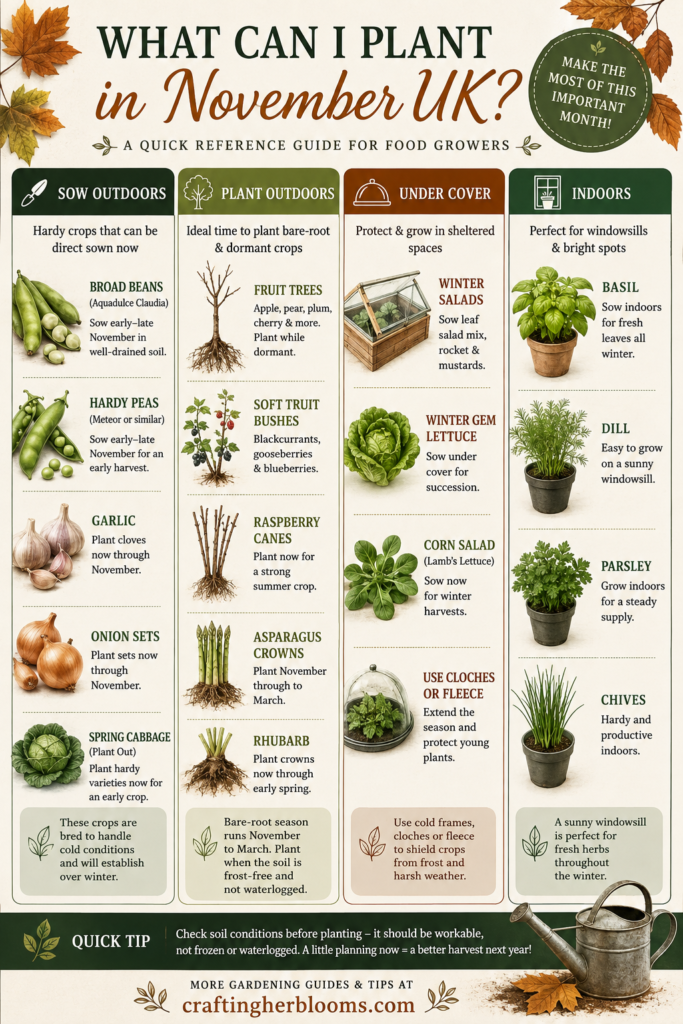
Broad beans are the classic November sowing, and the reason they work is simple: they’re one of the few crops genuinely bred to sit through a British winter outdoors. ‘Aquadulce Claudia’ is the variety to reach for specifically for autumn sowing, since it was developed for exactly this purpose and copes with cold, wet soil far better than spring varieties. Sow directly where they are to grow, in well-drained soil, and avoid ground that puddles after rain. If your soil is heavy clay, hold off until spring rather than risking rot.
Hardy pea varieties follow the same logic. ‘Meteor’ is a dwarf, exceptionally cold-tolerant type bred specifically for overwintering, producing an early crop that beats spring-sown peas to harvest by several weeks. Sow into well-drained soil and expect slow, steady growth rather than the rapid germination you’d see in April.
Garlic and onion sets both belong on this month’s list, though garlic in particular has enough nuance around variety choice and regional timing that it deserves its own deep dive rather than a rushed paragraph here. If you haven’t already, our complete guide to growing garlic in the UK covers variety selection and the regional planting windows in full. Onion sets such as ‘Senshyu Yellow’ can go in alongside your garlic for a reliable overwintering crop, and if you want to try something a little different, elephant garlic (technically a leek relative, not a true garlic) rewards autumn planting with enormous, mild-flavoured bulbs by midsummer.
Asparagus crowns are worth planting in November if you’re establishing a new bed, since dormant crowns settle in over winter and reward you with a proper harvest from their third spring onwards. Choose a permanent, sunny position, as asparagus beds are productive for fifteen to twenty years and genuinely don’t like being moved. ‘Connover’s Colossal’ remains a dependable, widely available variety for UK gardens.
Spring cabbage is the other direct-sow candidate this month, going in now to overwinter as small plants that romp away as soon as the days lengthen. ‘Durham Early’ is a classic hardy variety suited to this timing.
A word on spacing and siting for all of these autumn-sown crops: give broad beans and peas a sheltered spot if you can, since young winter growth is more vulnerable to wind rock than the same plants would be in spring, when they establish faster and root in before exposed weather arrives. A south or east-facing wall or fence line is genuinely useful here, not just for warmth but for cutting the worst of the wind.
Root crops and what’s already in the ground
November isn’t a planting month for root vegetables, but it is a lifting and storing one. Maincrop carrots, beetroot and parsnips that are still in the ground can generally stay there through mild winters, particularly parsnips, which are famously improved in flavour by a touch of frost. In heavier or wetter soils, though, lifting and storing in boxes of sand is the safer bet, since waterlogged ground rots root crops from the outside in regardless of how frost-hardy they are.
Under cover and on the windowsill
Cold frames and cloches extend what’s possible considerably. Spring onions and pak choi can both be sown under cover in November, sheltered enough to keep growing slowly through the coldest months. Winter salad leaves are worth the small effort of protection too: choose genuinely cold-tolerant types rather than summer lettuce varieties, since not everything copes with low light and low temperature. ‘Winter Gem’ lettuce, corn salad (also called lamb’s lettuce) and winter land cress are all bred or selected for exactly these conditions and will keep a windowsill or cold frame productive right through winter.
If you don’t have outdoor growing space at all, our guide to the best winter windowsill vegetables is worth a look, since several of November’s herb and salad jobs translate directly to a bright kitchen sill.
Fruit to Plant in November
November is prime bare-root season, and this is genuinely the best time of year to establish new fruit in a UK garden. Bare-root plants are lifted from the nursery field while dormant, sold without a pot of compost around the roots, and are both considerably cheaper and quicker to establish than container-grown equivalents bought later in the year.
Rhubarb crowns planted now will settle in over winter and reward you with a proper first harvest the following spring. Prepare the ground well with plenty of organic matter dug in, since rhubarb is a heavy feeder that will occupy the same spot for a decade or more. ‘Timperley Early’ is the variety most UK gardeners reach for, prized for producing usable stems earlier in spring than most other types.
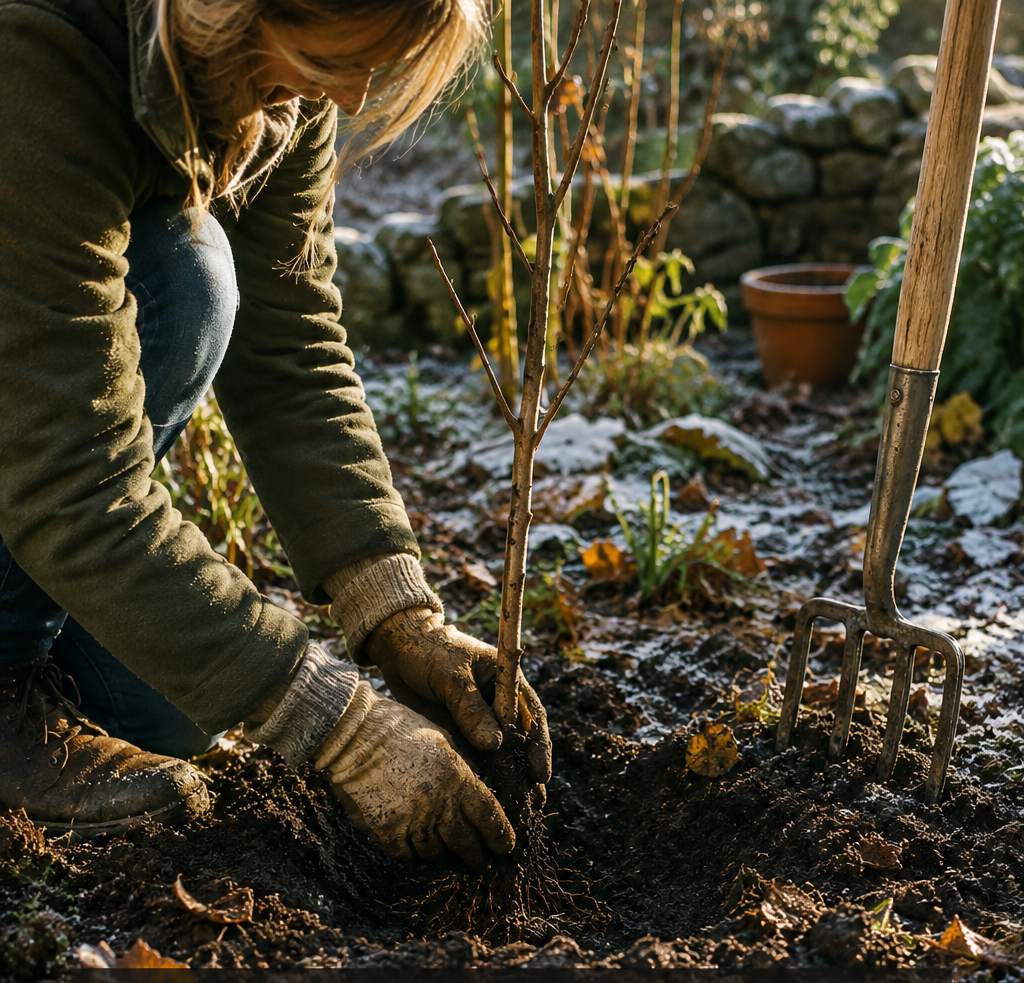
Dormant bare-root fruit trees and bushes, more broadly, should go in this month if the ground allows it. Apple, pear, plum and soft fruit bushes like currants and gooseberries are all sold bare-root through the winter months, and November is close to the ideal start of that window: the soil still holds some residual warmth from summer, which helps roots begin establishing before the depths of winter arrive.
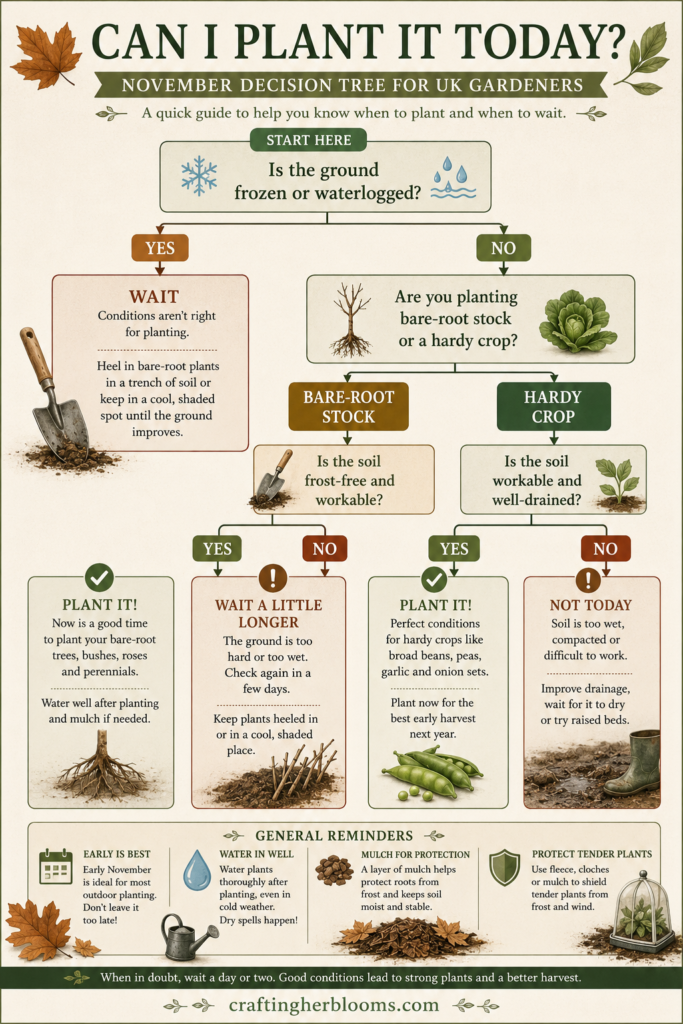
The one firm rule for all of this: never plant into frosted or waterlogged ground. If the soil is frozen solid or a squelching mess after heavy rain, wait for one of November’s brighter, drier days rather than forcing the job. Heel the plants in temporarily (burying the roots in a spare patch of soil or a bucket of compost) if you need to delay planting by more than a few days.
Choosing between bare-root and container-grown
If you’re weighing up whether to buy bare-root now or wait for a container-grown plant later in the year, the practical answer for most fruit is to go bare-root while you can. Beyond the cost saving, which is often significant, bare-root plants root into their new position over winter with no transplant shock from being tipped out of a pot, and they’re typically available in a far wider range of varieties than garden centres stock as container plants. The trade-off is a narrower buying window and the need to plant reasonably promptly once the roots arrive, rather than being able to leave a potted plant sitting by the back door for a few weeks.
Soft fruit deserves a specific mention here too. Autumn-planted raspberry canes, gooseberry and currant bushes all establish a season ahead of anything planted in spring, and November’s still-warm soil gives roots a genuine head start before the ground properly cools. If you’re planning a fruit cage or a new soft fruit bed for next year, this is the month to commit to it.
Herbs to Plant in November
Herb growing shifts almost entirely indoors this month, since the vast majority of culinary herbs simply aren’t hardy enough to get started outdoors in cold, low-light conditions. A bright windowsill, ideally south or west facing, is your best growing space for the next few months.
Basil, dill, parsley and chives can all be sown or potted up indoors now. Basil in particular is worth the extra care: keep it away from cold draughts and don’t let compost dry out, but equally don’t overwater, since basil is notoriously prone to damping off in low light and high humidity. Parsley and chives are more forgiving and will tick along steadily on a windowsill through the darker months, giving you fresh herbs for the kitchen when the garden itself has little to offer.
If you already have established outdoor perennial herbs such as rosemary, thyme or sage, November is a good month to check they haven’t been sitting too wet, since these Mediterranean-origin herbs are far more likely to be lost to waterlogged roots over a British winter than to cold itself. Improving drainage around the base, or moving pot-grown specimens somewhere more sheltered from driving rain, does more good than any amount of frost protection.
Light is the real limiting factor for windowsill herbs at this time of year, more so than temperature. A south-facing sill will keep basil and dill growing steadily; anything facing north is likely to produce pale, leggy growth regardless of how warm the room is. If a bright windowsill genuinely isn’t available, it’s worth treating this as a month to pause fresh sowings and rely on dried or frozen herbs from earlier harvests rather than fighting low light with struggling seedlings.
Other Garden Jobs for November
Tidying the potting shed and cleaning pots with a stiff brush ahead of the main spring rush pays off later, and it’s exactly the kind of job that suits a cold, bright November afternoon when there’s not much else pulling you outdoors.
Protecting overwintering crops matters more with each passing week. Check fleece and cloches are still secure after any windy weather, and firm back in any plants that frost has heaved loose from the soil.
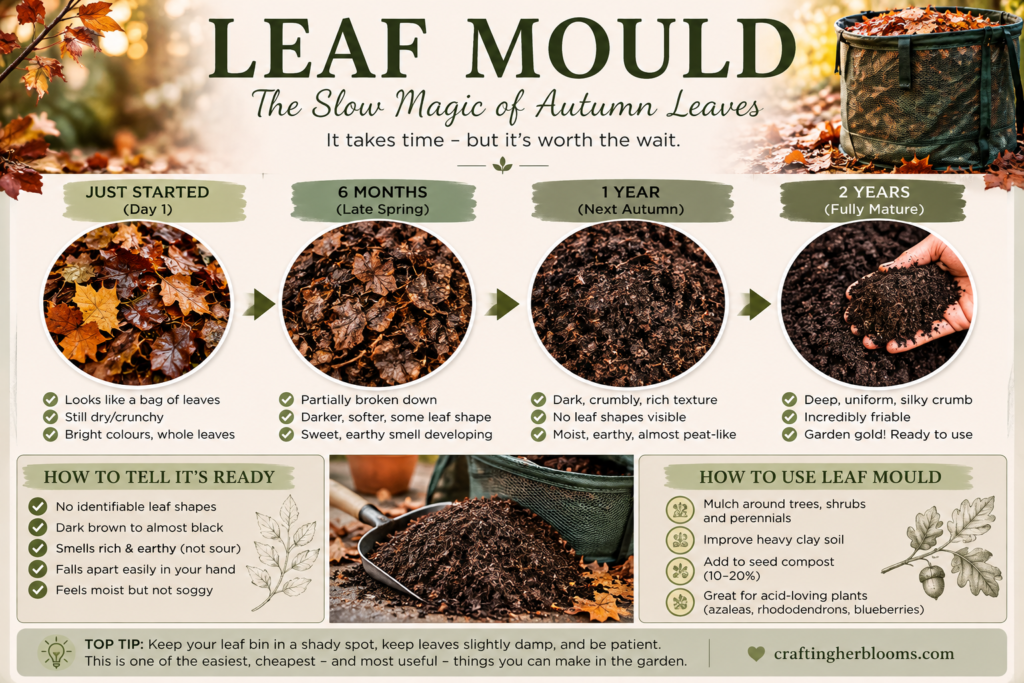
Collecting fallen leaves for leaf mould is one of the best free soil improvers available to a UK gardener, and November’s leaf fall makes it the obvious month to start. Bag them with a few holes punched in for airflow, or pile them in a simple wire cage, and leave them to rot down over the next year or two.
Digging over beds as summer crops finish clearing is worth doing now if you have heavy clay soil specifically, since frost action over winter will break large clods down into a finer, more workable texture by spring. On lighter, sandy soils this matters less and can even wash out nutrients, so hold off unless you’re adding compost as you go.
Cleaning and storing tools properly before the depths of winter set in is one of those jobs that’s easy to skip and mildly regret every year after. A wire brush to remove soil, a light oil wipe on metal parts, and a dry spot to hang them will keep secateurs and spades from rusting and blunting over months of disuse.
Testing and adjusting soil pH is worth doing now on beds you know run acidic, since lime needs time to work into the soil before spring planting begins in earnest. This is a once-every-few-years job rather than an annual one for most gardens, but November’s quieter pace makes it easier to fit in than a rushed spring schedule would.
If you’re growing for wildlife alongside food crops, this is also the month to resist over-tidying. Leaving seed heads, hollow stems and a corner of fallen leaves gives overwintering insects somewhere to shelter, which pays off in pollination and pest control come spring. Our guide to starting a wildlife garden from scratch covers this trade-off between tidiness and habitat in more detail if it’s new territory for you.
Common Problems in November
Waterlogging catches out more autumn plantings than frost does. British soils can hold an extraordinary amount of water after a wet autumn, and roots sitting in saturated ground will rot regardless of how cold-hardy the variety is. If a bed is still visibly waterlogged a day after rain stops, it’s not ready for planting, full stop.
Slug and snail damage on young overwintering crops like spring cabbage and broad bean seedlings tends to be worse in mild, damp Novembers than in a properly cold one, since the pests stay active rather than retreating. Checking under cloches and around cold frame edges after dusk on mild evenings will catch most of the damage before it’s serious.
Bird damage on newly sown peas and beans is a near-certainty if the rows are left uncovered. Netting or fleece over the row immediately after sowing is far easier than trying to save a decimated crop after the fact.
Transplant shock on bare-root fruit shows up as slow, sulky growth the following spring, and it’s usually down to roots drying out between lifting and planting rather than anything wrong with the plant itself. Keep bare-root stock’s roots wrapped and damp until the moment they go in the ground, and soak them in a bucket of water for an hour beforehand if there’s been any delay.
Mould and rot on stored root vegetables tends to trace back to damage sustained during lifting. A fork nick or bruise gives rot an entry point it wouldn’t otherwise have, so handle carrots, beetroot and parsnips gently when lifting for storage, and check stored crops every few weeks, removing anything showing soft spots before it spreads to its neighbours.
Leggy, pale windowsill herb seedlings almost always point to insufficient light rather than a growing fault. Rotating pots regularly to even out the light they receive helps a little, but if a sill genuinely doesn’t get several hours of direct light, the better fix is choosing a brighter spot over trying to compensate with feed or warmth.
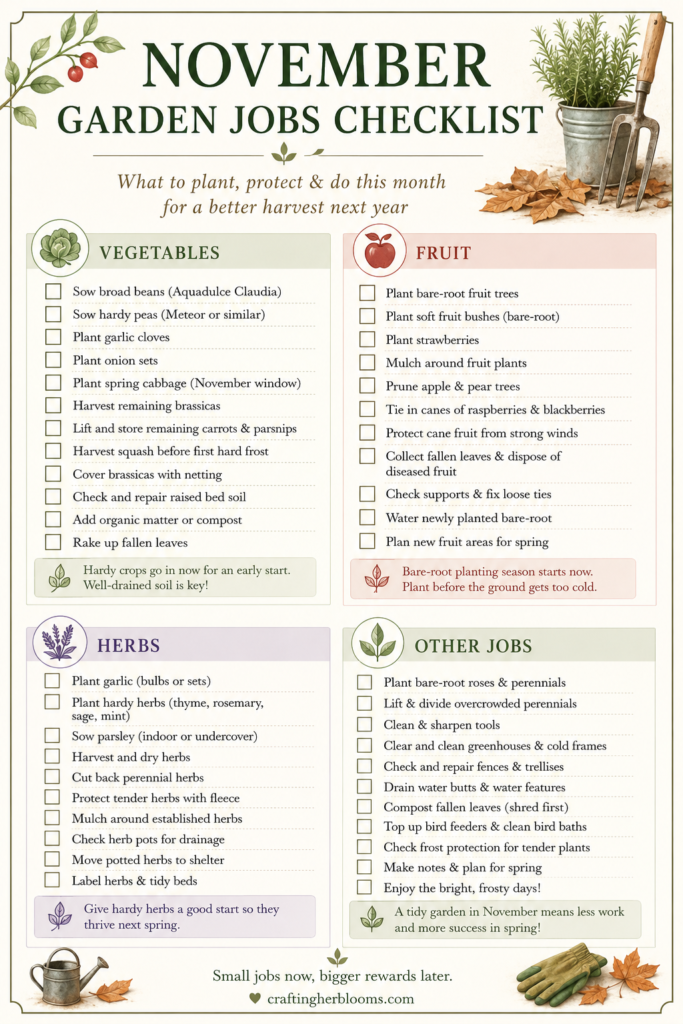
Frequently Asked Questions
Is it too late to plant garlic in November? Not in most of the UK. Garlic has a wide autumn planting window, and November planting is well within range for the Midlands and Southern England especially. See our full garlic planting guide for the region-by-region detail.
Can I still sow broad beans if I’ve missed October? Yes, and this is exactly what November is for. ‘Aquadulce Claudia’ is specifically suited to this later autumn sowing window.
What’s the difference between bare-root and container-grown fruit trees? Bare-root trees are lifted from the ground while dormant and sold without compost around the roots, available only through the winter months. They’re typically cheaper and establish faster than container-grown trees, which can be planted at any time of year but cost more and offer no real advantage if you’re planting during the dormant season anyway.
Do I need a greenhouse to grow herbs in November? No. A bright windowsill is enough for parsley, chives and dill. Basil is the trickiest of the four and benefits from the most consistent warmth and light you can offer it, but a warm kitchen sill away from draughts will usually see it through.
Why shouldn’t I dig over sandy soil in November? Frost breaking down soil structure over winter is most useful on heavy clay, which benefits from the freeze-thaw action. Sandy soil already has an open structure, and leaving it bare and dug over winter risks washing nutrients away with winter rain rather than improving anything.
What should I do if my ground is frozen when I planned to plant? Wait. Heel bare-root plants and crowns into a spare patch of soil, a bucket of moist compost, or even a cold frame temporarily, and get them into their final position on the next frost-free, well-drained day. A short delay does far less damage than planting into frozen or waterlogged ground.
Can I plant asparagus crowns in a container instead of a bed? Not successfully in the long term. Asparagus develops a deep, permanent root system and is productive for fifteen to twenty years, which makes it a poor fit for container growing. A dedicated bed in a sunny, permanent position is worth the space if you have it.
Is it worth sowing anything outdoors in a Scottish or northern garden this month? Generally no, beyond what’s already covered by fleece or a cold frame. Bare-root planting is the far better use of a northern November, since dormant plants establish regardless of how cold the air is, as long as the ground itself isn’t frozen.
Should I feed overwintering crops in November? No. Actively feeding hardy crops like autumn-sown broad beans or spring cabbage in November encourages soft, sappy growth that’s more vulnerable to frost damage, not less. Hold off on feeding until proper spring growth resumes.
How do I know if my broad beans have germinated before winter properly sets in? Small, sturdy shoots a few centimetres tall by early December are a good sign. If nothing has emerged by then, the seed may have rotted in wet soil, and it’s generally better to accept the loss and resow a short row in spring than to keep waiting.
Continue Your Journey
Ready to keep the momentum going through the rest of the gardening year? These guides pick up where this one leaves off:
- October Garden Jobs UK: what to have already finished before November’s jobs begin
- December Garden Jobs UK: Your Complete Winter Gardening Guide: the next month in the series, once the ground has properly shut down
- How to Grow Garlic in the UK: Complete Autumn Planting Guide: the full regional breakdown for one of this month’s key crops
- How to Grow Broad Beans: Everything You Need to Know: full growing detail beyond the autumn sowing window
- Best Winter Windowsill Vegetables to Easily Grow Indoors: for gardeners without outdoor growing space this month
- The Complete UK Guide to Growing Your Own Vegetables: the month-by-month overview this guide slots into
- Companion Planting UK: The Complete Guide to What to Plant Together: worth planning now for next year’s beds
- How to Create a Wildlife Garden from Scratch: The UK Beginner’s Guide: what your garden’s wildlife needs from you as growth slows down


