
Container Magic: Layering Bulbs Beneath Perennials for Year-Round Pots
I sometimes use affiliate links in content. This doesn’t cost you anything but I may make a commission payment from anything you buy through these links. As an Amazon Associate I earn from qualifying purchases. All opinions remain my own.
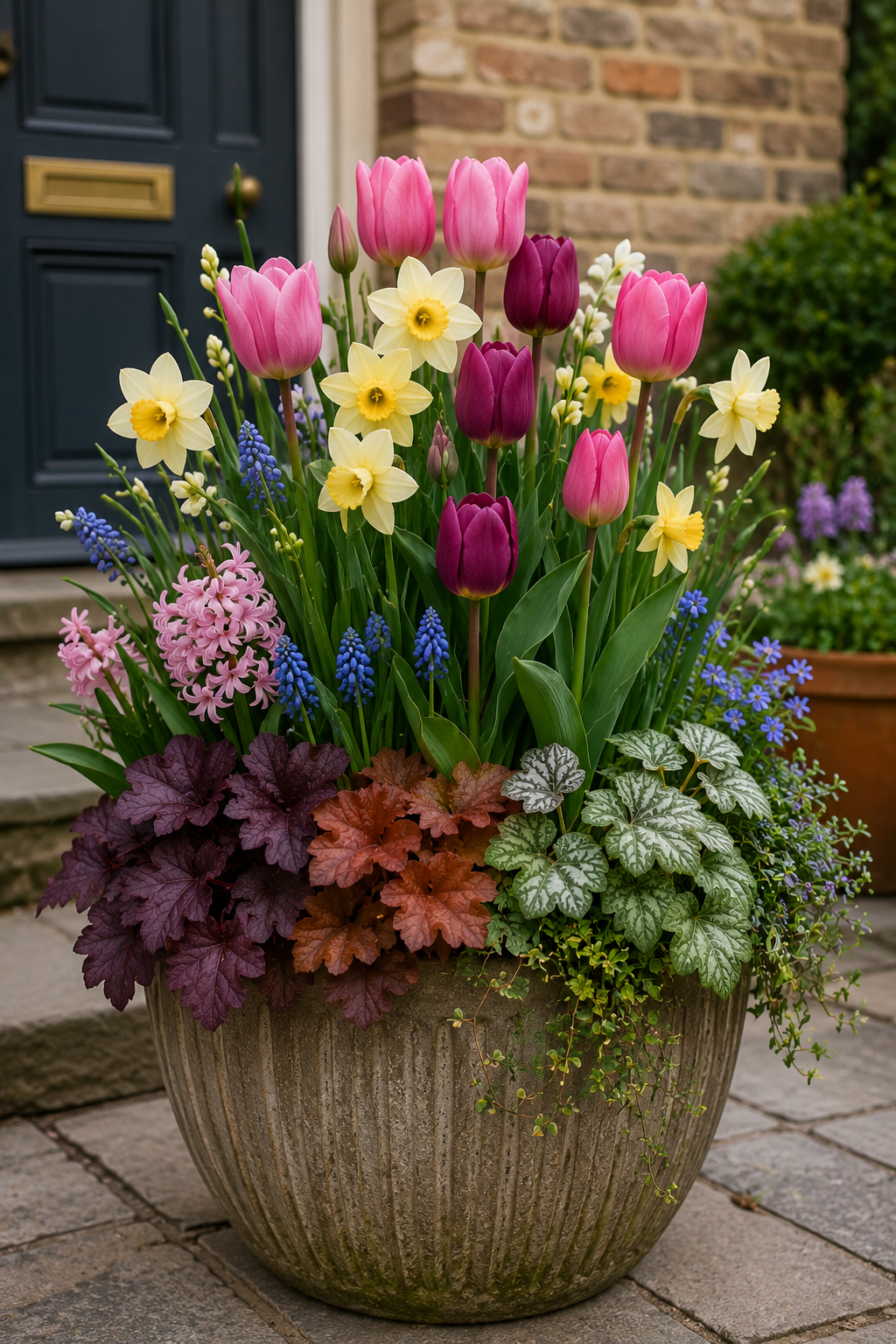
Bulb lasagna planting means layering several types of bulbs at different depths in one container so they flower in succession rather than all at once. Adding a hardy perennial to the top layer takes the technique further: once the bulbs finish for the year, the perennial keeps the pot looking good through summer, autumn and even winter, so a single container earns its space on the patio all year round rather than sitting empty from June onwards.
For UK gardeners working with small patios, balconies or courtyard beds, that’s the real appeal. One pot, planted once, gives months of colour instead of a few weeks.
🌷 What Is Bulb Lasagna Layering, and Why Add Perennials?
The “lasagna” name comes from the way bulbs are stacked in layers, largest and latest-flowering at the bottom, smallest and earliest at the top, much like layers in a dish. Each layer flowers as the ones above it fade, so the display moves through the seasons without any replanting.
Most guides stop there. But a pot full of spent bulb foliage in June is still a gap in the display, and cutting that foliage back before it dies down naturally starves next year’s bulbs. Planting a hardy perennial into the top of the container solves both problems. Its root system sits above the bulbs, its top growth screens the fading bulb leaves, and it carries the pot through summer and into autumn, when many perennials come into their own.
Forged & Grown
Garden pieces, printed to order
3D printed planters and garden accessories, made in the UK. Self-watering designs, sculptural shapes, colour options — each one made when you order it.


This isn’t a token addition. Treat the perennial layer with the same care as the bulb selection, choosing something that suits the pot’s position, won’t crowd the bulbs below, and earns its place across a full growing season.
🪴 Choosing the Right Pot and Compost
A layered bulb-and-perennial container needs more depth than a single-layer bulb pot. Aim for at least 40cm in depth and width, since anything shallower limits both the number of layers and the perennial’s root run. Terracotta, glazed ceramic or frost-proof plastic all work, but the pot must have generous drainage holes. Waterlogging is the most common cause of bulb rot in UK containers, particularly through a wet winter.
Use a peat-free, loam-based compost such as John Innes No. 2 or No. 3, mixed with roughly 20% horticultural grit for extra drainage. Add a layer of crocks or broken polystyrene at the base if the pot’s drainage holes are small.
🧅 Layering Order: Deep Bulbs First, Perennial Last
Working from the bottom up:
Bottom layer (around 20-25cm deep): Large, late-flowering bulbs such as tulips or alliums. These need the most depth and are typically the last to bloom.
Middle layer (around 12-15cm deep): Mid-sized, mid-season bulbs like daffodils or hyacinths.
Upper layer (around 6-8cm deep): Small, early bulbs such as crocus, scilla or grape hyacinth (muscari). These push through first, often as early as February.
Top layer: The perennial goes in last, planted at its normal depth in the compost surface just above the small bulbs. Position its crown so it isn’t sitting directly over a bulb tip, giving both plants room to emerge without competing.
Space each bulb layer so the bulbs don’t sit directly on top of one another. A slight offset, like laying bricks, lets each layer’s shoots find a clear path up through the compost.
🌸 Which UK-Hardy Perennials Work Best Above Bulbs?
Not every perennial suits life on top of a bulb lasagna. The best choices have shallow, non-invasive root systems that won’t disturb the bulbs beneath, and they need to cope with the drier conditions further down the pot once the bulb layers are dormant.
Heucheras (coral bells) are a strong choice. Their fibrous, shallow roots stay well clear of bulb layers, and their foliage provides colour from spring through to winter, well beyond the bulbs’ flowering window.
Hardy geraniums, particularly compact varieties like ‘Rozanne’ or ‘Ballerina’, flower for months over summer and die back tidily in autumn, leaving room for the bulbs to push through again the following spring.
Bergenia (elephant’s ears) offers evergreen structure and winter colour, useful for a pot that needs to look presentable in the coldest months.
Dwarf sedums suit a sunnier spot and tolerate the drier compost that develops once bulb roots have taken up much of the available moisture.
Avoid anything with an aggressive or deep-spreading root system, ornamental grasses with vigorous rhizomes, or perennials that need frequent lifting and dividing, since disturbing the perennial each year risks damaging the bulb layers below.
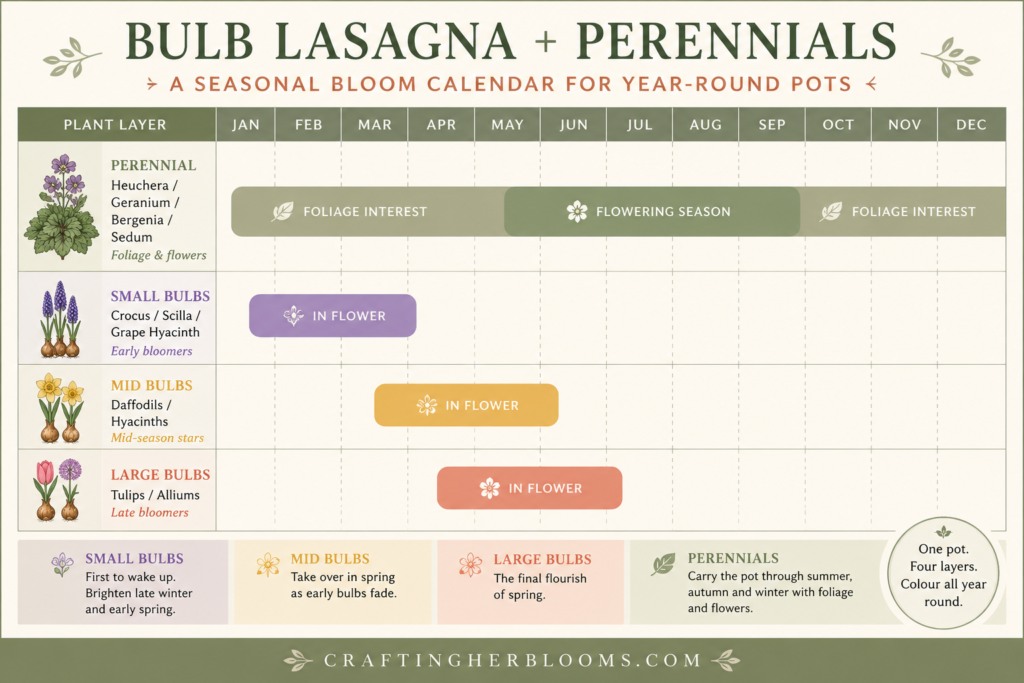
📅 Seasonal Succession: What’s Blooming, and When
A well-planned container gives a rough sequence like this across a UK growing year:
February to March: Early small bulbs (crocus, scilla) emerge first, often before the perennial has properly woken up.
April: Mid-season bulbs (daffodils, hyacinths) take over as the small bulbs fade.
May: Late bulbs (tulips, alliums) provide the final bulb display, while the perennial’s foliage is now filling out and beginning to screen the dying bulb leaves.
June to September: The perennial carries the display. Hardy geraniums flower through this whole stretch; heuchera and bergenia hold colour through foliage rather than bloom.
October to January: Foliage perennials like heuchera and bergenia keep the pot from looking bare over autumn and into winter, while the bulbs rest beneath, building up reserves for the following spring.
❄️ Overwintering and Frost Protection
UK winters vary enough by region that container bulbs need some adjustment for where you garden. As a general guide across UK hardiness zones, most of the bulbs and perennials named above are hardy down to around -15°C to -20°C in the ground, but containers offer far less insulation than open soil, so treat anything rated hardy to below -10°C with some extra care in a pot.
In milder areas (much of southern and coastal England), a sheltered spot against a house wall is usually enough protection over winter. In colder inland or northern areas, wrap the pot in horticultural fleece or hessian during hard frosts, or move it into an unheated greenhouse or porch for the coldest weeks. Raise the pot onto pot feet so it isn’t sitting in standing water, since waterlogged, frozen compost is far more likely to kill bulbs than cold alone.
Keep watering to a minimum over winter. Bulbs and most hardy perennials are dormant or semi-dormant and need very little moisture until growth restarts in spring.
✂️ Ongoing Care: Feeding, Deadheading and Dividing
Once the display is established, a layered container needs a light annual routine rather than constant attention.
Feeding: Apply a balanced liquid feed every two to three weeks from when the bulbs first emerge until the perennial finishes flowering. Switch to a potassium-rich feed (such as a tomato feed) once the bulbs are in bud, which supports better flowering the following year.
Deadheading: Remove spent bulb flowers as they fade, but leave the foliage to die back naturally, ideally for six weeks after flowering, so the bulb can store energy for next year. The perennial’s foliage helps disguise this dying bulb foliage, which is one of the main reasons the pairing works so well.
Dividing: Most of the perennials suggested here only need dividing every three to four years. When the time comes, lift the perennial carefully in autumn or early spring, taking care not to disturb the bulb layers beneath, replant a divided portion, and top up with fresh compost.
Refreshing the compost: Every two to three years, topdress the container with fresh compost in autumn, or fully renew the compost and re-layer the bulbs if flowering has noticeably declined.
🌼 In Short
A bulb lasagna layered with a hardy perennial on top solves the problem that stops most container bulb displays looking good all year: it gives a UK pot spring colour from successional bulbs (small varieties first, then mid-season, then large late bulbs) and then hands over to a shallow-rooted, hardy perennial like heuchera, hardy geranium or bergenia for summer, autumn and winter interest.
Plant in a deep pot with good drainage, layer bulbs from large and deep to small and shallow, position the perennial’s crown clear of the bulb tips, and give the whole container a light winter feed and protection routine, and one planting session delivers a container that earns its spot on the patio in every season.


