
How to Water a Vegetable Garden in the UK
I sometimes use affiliate links in content. This doesn’t cost you anything but I may make a commission payment from anything you buy through these links. As an Amazon Associate I earn from qualifying purchases. All opinions remain my own.
It rains in Britain, so surely the veg patch is looking after itself. That is the assumption most new growers make, and it is the reason so many courgettes sulk, lettuces bolt and tomatoes split by August.
A shower that darkens the path often leaves the soil a few centimetres down completely dry. Leaves shed the water, roots sit well below the damp surface, and a thirsty crop can still go short in the middle of a wet-looking week.
This guide is about getting water to the right crop at the right time, without wasting a drop. It covers the principles, the crops that matter most, and how to cope when a hosepipe ban arrives. Everything is metric and written for UK gardens, soils and weather.
💧 The Principles: Deep, Not Often
If you remember only one thing, remember this: water thoroughly and less often.
Forged & Grown
Garden pieces, printed to order
3D printed planters and garden accessories, made in the UK. Self-watering designs, sculptural shapes, colour options — each one made when you order it.


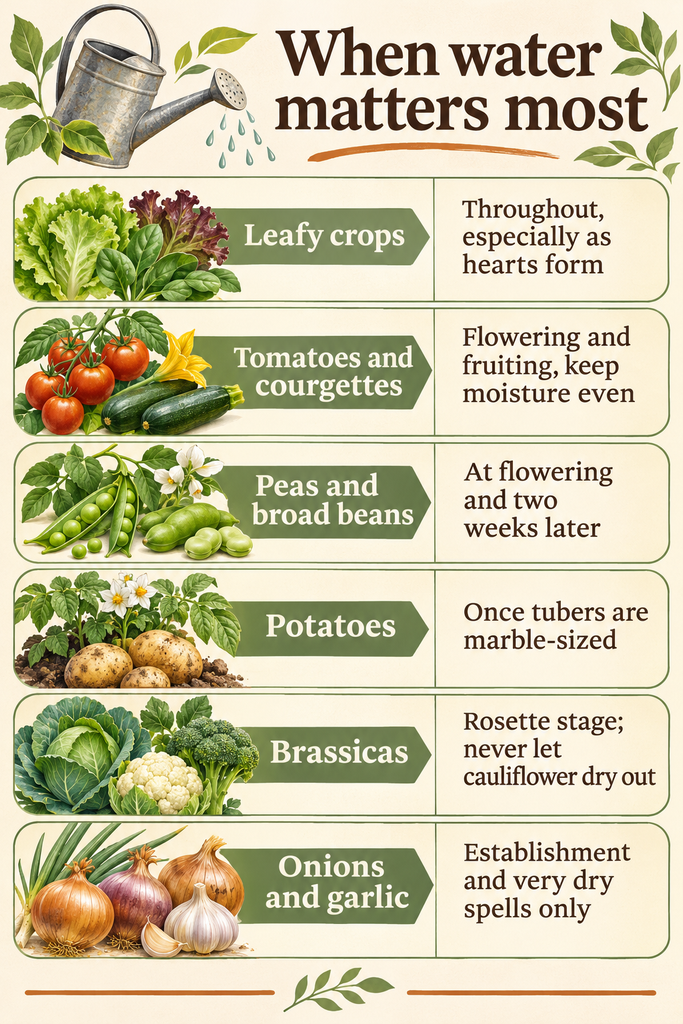
A quick sprinkle wets only the top centimetre or so. Roots then stay near the surface, where the soil dries fastest, and the plant becomes more fragile with every dry spell.
A good soak does the opposite. It draws roots downwards towards the cooler, damper soil below, which makes plants sturdier and far more drought-tolerant.
Aim the water at the base of the plant, not the leaves. Wet foliage wastes water and can encourage disease, while water at the roots goes straight to work.
🕰️ When to Water
Early morning is the best time. The soil is cool, evaporation is low, and plants have a drink ready for the heat of the day.
Evening watering is the next best option. It does carry one downside, because damp soil overnight can encourage slugs, so keep the water at the base of plants and avoid soaking the leaves.
Midday is the worst time. A lot of the water evaporates before it reaches the roots, and you will be working in the hottest part of the day.
🔍 Checking Before You Water
The easiest way to avoid both over- and under-watering is to look below the surface. Push a finger or trowel into the soil beside the plant.
Dig down about a spade’s depth if you can, and see what is happening at root level. If it is dry down there, water. If it is damp, wait.
Soil type changes everything. Sandy soils drain quickly and need watering more often, while clay holds water for longer but can bake hard on top. Our guide to understanding soil types will help you work out what you have.
There are no universal volumes that work for every garden. Weather, soil, plant size and season all change the answer, so let the soil tell you.
🌧️ Why UK Rain Is Not Enough
British summers can be deceptive. A rainy week sounds like plenty, but light showers rarely soak deep.
Dense leaf canopies on beans, courgettes and brassicas also act like umbrellas, steering rain away from the roots underneath. The soil beneath a big courgette can be bone dry after a downpour.
Dry spells in spring matter too. Seedlings and young transplants have shallow roots and cannot reach the moisture below, so they need help far earlier than you might expect.
🥬 Watering by Crop Type
Different crops need water at different moments. Knowing the critical window for each saves effort and gives a better harvest.
Leafy crops
Lettuce, chard, spinach and other salad leaves like steady moisture throughout their lives. Drought stress makes them bitter and encourages bolting, where the plant races to flower.
Water little and often while seedlings are small, then more deeply as they grow. Cabbages and lettuces particularly appreciate a good soak as their hearts form.
Fruiting crops
Tomatoes, courgettes and beans are thirsty, and the key is consistency. The RHS notes that uneven watering can cause blossom end rot in tomatoes, those ugly dark patches on the base of the fruit.
Water well at planting, then keep moisture even through flowering and fruiting. Our guide to growing tomatoes goes into more detail.
Courgettes need constant moisture right through to harvest. Runner beans need steady moisture for pods to set, while French beans cope with slightly drier conditions.
Peas and broad beans have a clear critical window. They need plenty of water at flowering, so pods set well, and again a couple of weeks later. Young plants do better kept a little on the dry side. Our broad bean guide shows the timing in practice.
Root crops
Carrots, beetroot and parsnips need water before the soil dries out completely. Erratic watering after a dry spell can make carrots split.
Potatoes are thirstiest once the tubers reach about the size of a marble. From then on, a thorough watering every 10 to 14 days in dry weather makes a real difference. Our potato guide explains when to start.
Radishes want a weekly drink in dry weather, otherwise they turn woody and fiery.
Brassicas
Cabbages, cauliflower, broccoli and kale hate drought. Cauliflower in particular should never be allowed to suffer, and if you can only water part of the time, prioritise the rosette stage.
Onions, shallots and garlic
These are the least demanding. Water onions and shallots while they establish and during very dry spells, then ease off as the bulbs swell and ripen. Our onion growing guide covers the ripening stage.
Keep them weed-free, because onions and garlic cope poorly with competition for water.
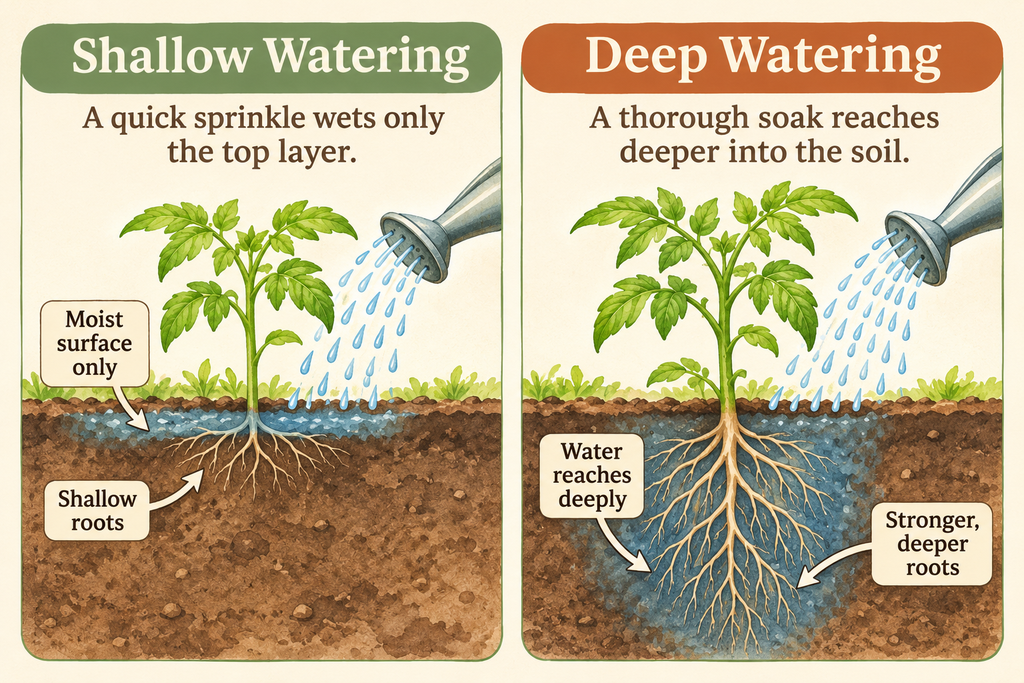
Quick reference
| Crop group | When water matters most |
|---|---|
| Leafy crops | Throughout, especially as hearts form |
| Tomatoes and courgettes | Flowering and fruiting, keep it even |
| Peas and broad beans | At flowering, and two weeks later |
| Potatoes | Once tubers are marble-sized |
| Brassicas | Rosette stage, never let cauliflower dry out |
| Onions and garlic | Establishment and very dry spells only |
🚫 Hosepipe Bans Explained
Hosepipe bans, officially temporary use bans, are decided by individual water companies. That means the rules in one county can differ from the next, and they change as conditions change.
Because of this, we have deliberately kept this section general. Always check your own water company’s website for what applies to you right now.
Broadly speaking, bans stop you using a hosepipe connected to the mains supply. They usually still allow watering by can or bucket, and a hose connected to a water butt or other stored supply is often permitted too.
Some companies have exemptions for growing food, particularly on allotments. The wording varies, so read it carefully before relying on it.
🛢️ Water Butts: Your Ban-Proof Supply
A water butt is the single most useful thing a veg grower can own. Stored rainwater is free, soft, and available even when the tap is restricted.
Fit the largest butt that sensibly suits your downpipe, and a diverter will stop it overflowing when full. If you have the space, link several butts together to catch more of every downpour.
Raising a butt on a sturdy stand gives you room for a watering can under the tap, and a bit of gravity for a hose. Our guide to punctured water butts and other clever ways to garden through drought covers the wider drought tactics, so we will not repeat them here.
A good watering can with a rose is a small but excellent investment. It lets you see exactly how much you are giving each plant, and it is ban-friendly.
🌿 Drip Irrigation and Soaker Hoses
Drip systems deliver water slowly, right at the roots, which cuts waste and saves a great deal of time. They suit rows of tomatoes, beans and courgettes particularly well.
They are worth it if you grow in quantity, if you are often away, or if you struggle to water regularly. A timer takes the daily chore out of summer.
A word of caution on bans. Some water companies allow drip irrigation under certain conditions, such as with a pressure-reducing valve or timer, while others restrict it. Check with yours before you rely on it.
Be careful too with soaker hoses. The RHS advises against porous rubber types, and recommends choosing food-grade materials where you can. Hard water can also clog fine drip lines, so flush the system now and then.
🍂 Mulch: The Moisture Saver
Mulching is the closest thing the veg patch has to a free lunch. A layer of organic matter over damp soil slows evaporation, suppresses weeds and feeds the soil as it breaks down.
Water or wait for rain first, then lay a layer about 5 to 7.5cm deep around your crops. Keep it clear of the stems themselves, so they do not rot.
Garden compost, leaf mould and well-rotted manure all work well. Our guide to the chop and drop method shows a no-fuss way to build mulch from the plants already in your garden.
Weeds drink a surprising amount of water, so keep beds clear. A hoe on a dry day takes minutes and saves buckets.
🌾 Drought-Resilient Choices
You can also design your veg patch to need less water. These choices add up across a season.
- Raised beds versus open ground. Raised beds drain faster, which can mean more watering, but they warm earlier and are easy to mulch. Our raised bed guide weighs up the options.
- Dig less. A no-dig approach keeps soil structure intact and holds moisture better.
- Plant a little lower. Setting transplants slightly below the soil surface makes a small basin that catches water.
- Choose tougher crops. Parsnips, onions, garlic and French beans cope with dry spells better than celery, cauliflower or runner beans.
- Group by thirst. Plant thirsty crops together so you can water them as one job.
Newly sown and newly planted crops always need the closest attention. Established plants, with deeper roots, are far more forgiving.
🌱 Seedlings, Transplants and Containers
Young plants are the most vulnerable of all. Their roots are tiny and shallow, so a day of drying wind can undo a week of care.
Water newly sown rows gently with a fine rose, so the seed is not washed away. Keep the surface of the soil evenly damp until seedlings appear, and then begin to water more deeply as they grow.
Transplants need a good drink at planting time, and again a few days later. After that, ease them into the deep-and-infrequent habit so their roots chase the water downwards.
Containers are the exception to nearly every rule. Pots and grow bags dry out much faster than open ground, and in a hot spell tomatoes in a container may need watering every day.
Check the weight of the pot, or push a finger in to the second knuckle. Large containers hold water for longer, and a layer of mulch on top slows the loss.
🔎 Reading the Signs
Plants will often tell you what they need, if you know what to look for.
Under-watered plants wilt in the afternoon heat and may recover by evening. If they are still limp in the morning, they are properly thirsty.
Other signs of thirst include leaves that curl, lettuce that bolts early, and tomatoes with sudden splits or blossom end rot. Peas and beans may drop flowers without setting pods.
Over-watering looks different. Leaves turn yellow, the soil stays soggy, and slugs thrive in the dampness. Carrots can split, and peas may grow lots of leaf at the expense of pods.
If you are unsure, the soil check beats guessing. A wilted plant in damp soil does not need more water.
📅 Through the Growing Season
Water needs change as the year moves along.
Spring. Seedlings and transplants need the most careful attention, even in cool weather. Cold, dry winds and sunny days can dry the surface quickly.
Early summer. This is when many crops flower and begin to set fruit, so it is the most important time to keep water steady. Mulch now, before the heat arrives.
Midsummer. The heat peaks, and thirsty crops such as tomatoes, courgettes and runner beans can need water several times a week. Stored rainwater in your butts gets its real test here.
Late summer and autumn. Demand falls as crops ripen and days shorten. Ease off on onions and garlic as they ripen, and focus on late brassicas and any autumn-sown crops finding their feet.
🛠️ A Simple Weekly Routine
Putting it all together does not need to be complicated. In a dry summer, a rhythm like this works for most growers:
- Check soil moisture at root depth in the morning.
- Water thirsty crops such as tomatoes, courgettes and brassicas deeply.
- Give flowering peas and beans a good soak.
- Leave onions, garlic and established roots unless the weather is very dry.
- Top up mulch where it has thinned.
- Refill butts after rain.
❓ Frequently Asked Questions
How often should I water my vegetables? There is no single answer. Check the soil, and water deeply when it is dry at root depth, rather than following a fixed schedule.
Is morning or evening better? Morning is best, as less is lost to evaporation. Evening works too, but water at the base to avoid encouraging slugs.
Can I use a hose during a hosepipe ban? Not one connected to the mains, in general. A can, or a hose from a water butt, is often allowed, but check your own water company for the current rules.
Which crops can I let go if water is short? Prioritise tomatoes, courgettes, beans, brassicas and anything newly planted. Onions, garlic and established root crops usually cope with less.
Do raised beds need more water? Often yes, because they drain more freely. Mulching helps a great deal.
🌻 Water Wisely, Grow Well
Watering is really about observation. Look at the soil, know your crops’ key moments, and save your effort for the plants that need it most.
Do that, and even a dry British summer can be a good one for the veg patch.


