
The Perfect January Garden: What Flowers to Plant and Jobs to Do
I sometimes use affiliate links in content. This doesn’t cost you anything but I may make a commission payment from anything you buy through these links. As an Amazon Associate I earn from qualifying purchases. All opinions remain my own.
January feels like the quiet month in most UK gardens, but the flower garden is already stirring if you know where to look. While the food growing jobs for January tend to grab the attention this month, there is plenty happening on the ornamental side too, from early seed sowing under cover to a handful of pruning jobs that genuinely cannot wait.
There are also several jobs that feel like they should happen in January but absolutely should not, and getting the timing wrong on these can cost you a whole season of flowers. This guide covers what to sow now, which jobs are safe to tackle, and which ones to leave well alone until later in the year.
Flowers to Sow in January
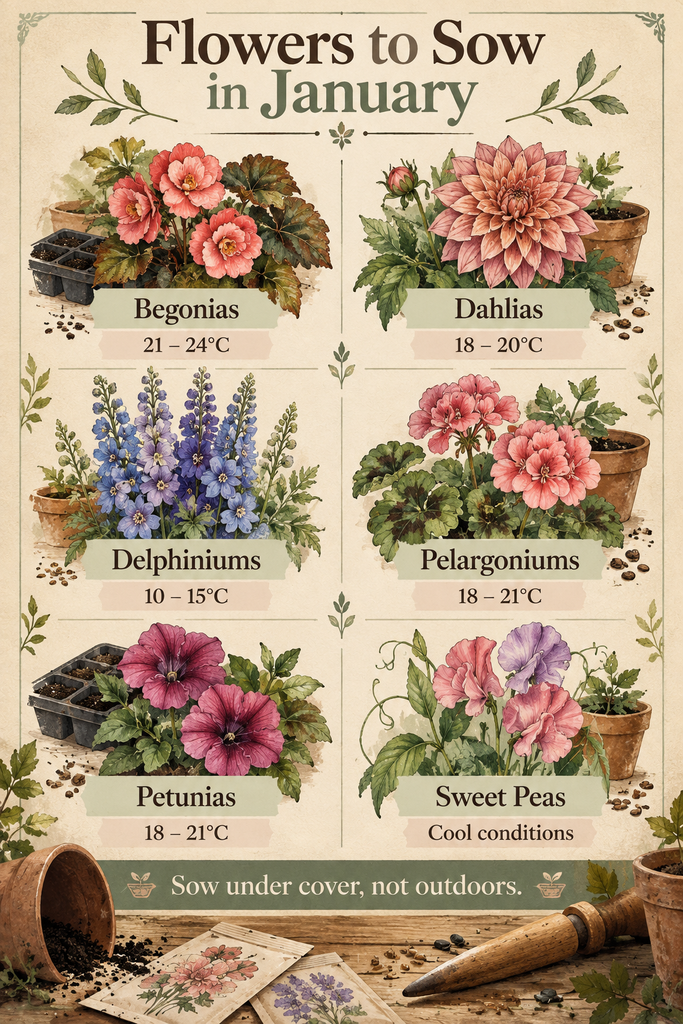
A few flower seeds genuinely benefit from an early start under cover, as long as you can offer warmth and light. Most need a heated propagator or a bright, frost-free windowsill, since a cold greenhouse will not give them what they need in January.
Begonias
Tuberous and bedding begonias can be started from seed in January for flowers from early summer onwards. The seed is dust-fine, so sow it on the surface of moist, peat-free seed compost and do not cover it, since begonia seed needs light to germinate and burying it will stop it from coming up at all.
Forged & Grown
Garden pieces, printed to order
3D printed planters and garden accessories, made in the UK. Self-watering designs, sculptural shapes, colour options — each one made when you order it.


Keep the compost consistently moist with a mister rather than a watering can, and maintain a temperature of around 21 to 24 degrees Celsius. Germination is slow and can take three to four weeks, so patience matters more than anything else here. Once seedlings appear, grow them on somewhere bright but out of direct, scorching sun, and see our begonias guide for pricking out and potting on.
Dahlias
If you want dahlias to flower earlier than usual, January is a reasonable time to start named varieties from seed on a warm windowsill or in a heated propagator at 18 to 20 degrees Celsius. Most gardeners still wait until February or March for dahlia seed, so treat January sowing as a head start rather than the standard timing.
Tubers overwintering in storage should be checked now for rot or shrivelling. Remove anything soft or mouldy promptly, since a single rotten tuber can spread to its neighbours in storage.
Delphiniums
Delphinium seed sown in January under glass, at a cool 10 to 15 degrees Celsius, can produce strong plants that flower in their first summer. Delphinium seed loses viability quickly, so use fresh seed from this season rather than seed saved from several years back, and keep it somewhere cool and dark between sowing and germination, since light levels and warmth both affect how reliably it comes up.
Geraniums and Pelargoniums
True hardy geraniums are generally propagated by division rather than seed, but tender pelargoniums (the plants most people call “geraniums” in UK garden centres) can be sown now from seed at 18 to 21 degrees Celsius for flowering plants by summer. Named pelargonium varieties are usually grown from cuttings rather than seed, so if you are working from cuttings taken last autumn, check they still have enough light and are not sitting too wet over winter. Our geranium care guide has more on keeping overwintering plants healthy until spring.
Petunias
Petunia seed can be started in January in a heated propagator at around 18 to 21 degrees Celsius, though many gardeners prefer to wait until February or March, when daylight levels make it easier to avoid leggy, stretched seedlings. If you do sow this early, be ready to use a grow light, since low winter light is the most common reason January-sown petunias end up weak and floppy. See our guide to growing petunias for pricking out and feeding once seedlings are established.
Sweet Peas
Sweet peas can be sown in January in deep pots or root trainers, which suit their long root systems better than shallow trays. Sow the seed about 2 to 3 centimetres deep, not deeper, since planting sweet pea seed too deep is a common reason for patchy germination.
A cold frame or unheated greenhouse works well once seedlings are through, since sweet peas do not need heat to germinate and can cope with cool conditions as long as they are protected from hard frost and heavy wet.
Flower Garden Jobs for January
Not every ornamental job in January is about sowing. A handful of pruning and tidying tasks are genuinely well suited to this month, mostly because the plants are either fully dormant or because doing the job now protects next season’s display.
Wisteria
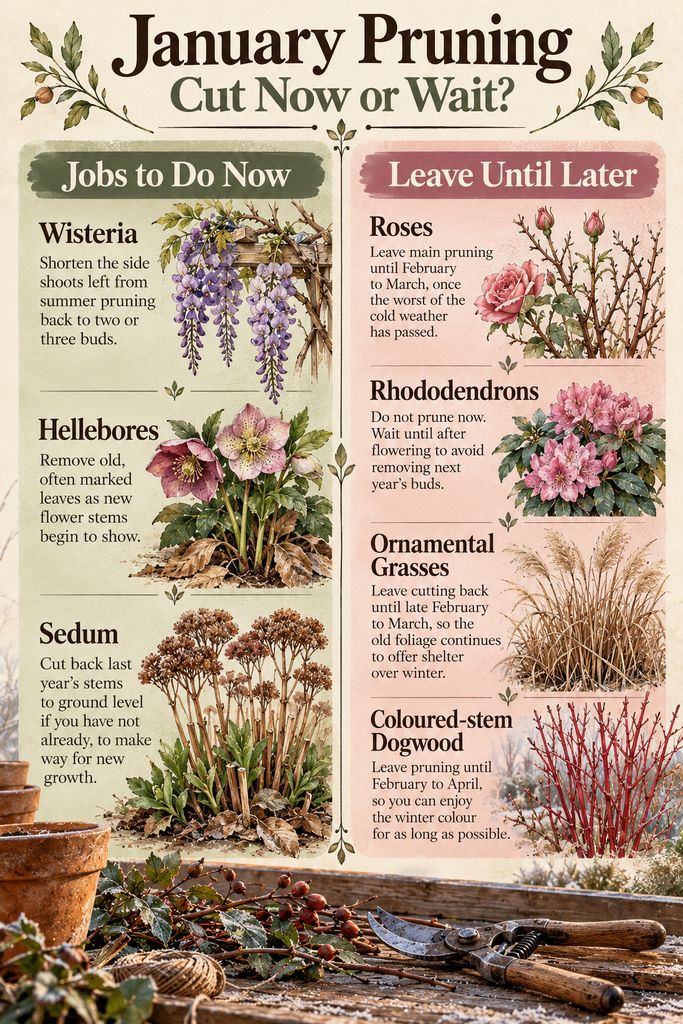
If you gave wisteria its summer prune in July or August, January or February is the time for the second cut. Shorten the side shoots left from summer pruning back to two or three buds from the main framework. This two-stage approach is what encourages the short flowering spurs that give a strong display later in the year, rather than a tangle of whippy growth.
Hellebores
Many hellebores hold onto old, often marked or diseased leaves through winter, and removing these in late winter, just as the new flower stems begin to show, tidies the plant and reduces the risk of leaf spot disease spreading from old foliage to new. Cut old leaves off at the base, taking care not to damage the emerging flower stems underneath.
Sedum and Other Perennials
Many herbaceous perennials, including sedum (now often sold as hylotelephium), are left uncut over winter for their seedheads and for the shelter they offer overwintering insects. January is a sensible time to cut these back to ground level if you have not already, clearing the way for new growth before it gets going in spring.
Ornamental Grasses
Deciduous ornamental grasses are usually best left until late February or March for their final cutback, since the old growth protects the crown through the coldest part of winter and the dried foliage still has a role to play in a winter garden. If you cut back this early, you lose some of that late-winter interest and offer the crown less protection against a late cold snap. If a grass has collapsed badly or is causing a problem, a light tidy now is fine, but hold off on the full cutback until nearer spring.
Jobs to Hold Off On
These are the jobs that catch people out most in January. Each one looks like a sensible winter task, but getting the timing wrong here has real consequences for flowering, and in one case, for the plant’s recovery from frost.
Roses
January is not the month to prune roses. Most bush and shrub roses are best pruned in late winter, during February or March, once the worst of the hard frosts have passed. Pruning too early in January can trigger new growth that then gets caught and damaged by a late frost, undoing the benefit of pruning in the first place.
If your roses need deadheading of any leftover hips or a general tidy, that is fine now, but save the structural cut for next month. Our guides to growing roses and pruning drift roses cover timing and technique in more detail.
Rhododendrons
This is the job to be most careful about. Rhododendrons set their flower buds for the coming spring during the previous summer, which means any January pruning risks cutting off the very buds that would otherwise open in a few months’ time. The correct time to prune rhododendrons, if they need it at all, is immediately after flowering in late spring or early summer, giving the plant the rest of the season to form next year’s buds.
If a rhododendron has suffered frost or storm damage, remove only the damaged wood now and leave any routine shaping until after flowering.
Honeysuckle
Timing here depends on which type you have. Late-flowering honeysuckles, which bloom on the current year’s growth, can take a light trim now to keep them tidy, but avoid a hard cutback, since removing too much growth now sacrifices the flowering wood for this coming summer. Early-flowering types bloom on last year’s growth and should be pruned after flowering, in mid to late summer, cutting back by around a third rather than touched now.
Coloured-Stem Willow and Dogwood
The bright red, orange and yellow stems of willows and dogwoods grown for winter colour are still earning their keep in January, so this is too early to cut them back. The better window is February through to April, once the stem display has done its job for the winter but before the plant puts its energy into new leaf growth. Cutting back hard then (coppicing close to the base) is what produces the vivid new stems for next winter.
Everyday January Jobs
Beyond the sowing and the pruning calls above, January has its share of routine maintenance in the flower garden. Check stakes, ties and supports on anything that took a battering in winter winds, and firm back in any perennials that have been lifted by frost heave. Climbers on walls and fences benefit from a check too, since loose ties can let stems whip around in wind and snap at the base.
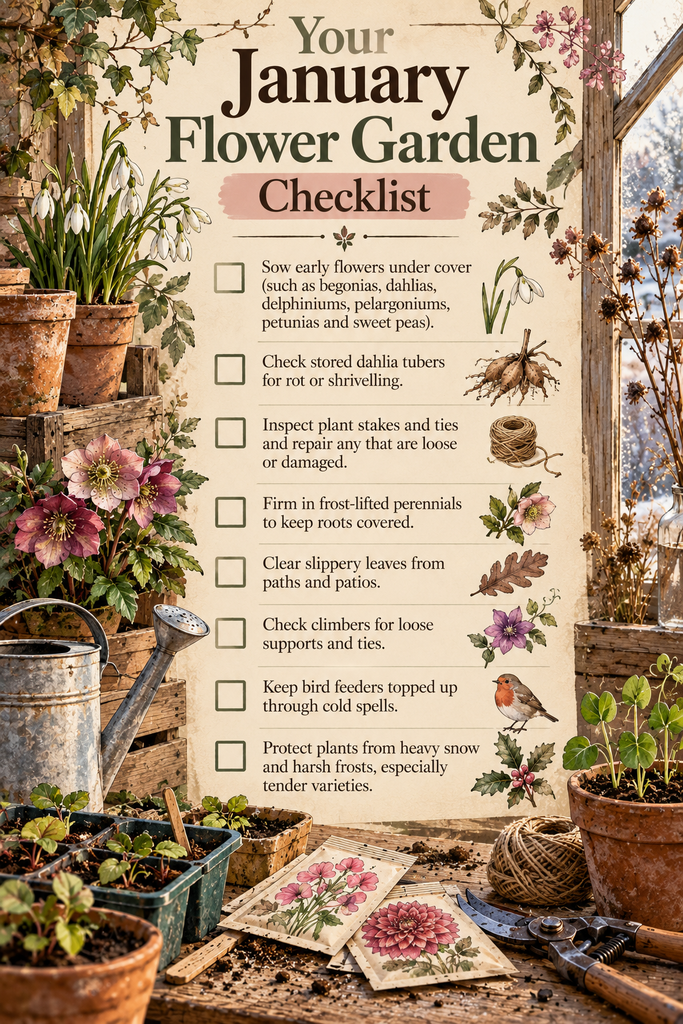
Keep paths and borders clear of slippery leaves, and knock heavy snow off shrubs and hedges before it has a chance to splay or snap branches. If you potted up amaryllis bulbs for indoor colour, keep them in a bright spot and turn the pot regularly so the flower stem grows straight rather than leaning towards the light.
Check dahlia tubers and other stored bulbs weekly for rot, as mentioned above, and keep an eye on humidity around houseplants, since central heating dries the air considerably in January. Finally, keep bird feeders topped up. Garden birds rely heavily on supplementary feeding in cold weather, and in return they take care of a good number of the pests that would otherwise trouble your borders come spring.
Frequently Asked Questions
Can I sow flower seeds outdoors in January? Not generally. Most hardy annuals and perennials still need warmer soil to germinate reliably, and outdoor sowing for most flowers does not begin in earnest until March or April. January sowing is almost always done under cover, with heat, for a handful of species like begonias, dahlias and sweet peas.
Is it too late to prune my roses in January? It is not too late, it is too early. Rose pruning is best done in late winter, during February or March, once the risk of hard frost has eased. Pruning in January can push out new growth that then gets damaged by frost.
Can I prune my rhododendron in January? Routine pruning should wait until immediately after flowering, in late spring or early summer. Rhododendrons set next year’s flower buds the previous summer, so a January cut can remove buds that would otherwise open this coming season. Only remove damaged or dead wood now if needed.
Why won’t my begonia seeds germinate? The most common cause is that the seed has been covered with compost or vermiculite. Begonia seed needs light to germinate and should be sown on the surface, left uncovered, and kept consistently moist until seedlings appear.
How deep should I sow sweet pea seeds? About 2 to 3 centimetres. Sowing much deeper than this is a common reason for poor or patchy germination.
What should I avoid pruning this month? Roses, rhododendrons, and coloured-stem willow or dogwood should all wait. Honeysuckle needs a type-specific approach, with only a light trim for late-flowering types and nothing for early-flowering ones until after they bloom. Pruning any of these now either sacrifices flowers for the coming season or exposes new growth to frost damage.
Making the Most of January
January in the flower garden is really about two things: getting a handful of seeds started while there is still time to benefit from it, and resisting the urge to tidy everything that looks a little untidy. The plants on the “hold off” list above are the ones most likely to be pruned out of habit rather than need, and in several cases that habit costs you the display you were hoping to improve.
Get the early sowing done under cover where you can offer warmth and light, tackle the genuine winter jobs like the wisteria and hellebore work above, and leave the rest until the calendar, and the plants themselves, are ready for it.
Continue Your Journey
- January Garden Jobs UK: Complete Food Growing Guide: what to sow, plant and prune in the food garden this month, with regional UK timing.
- March Flowers Garden: the next flower jobs on the calendar, including the main rose and grass pruning windows this guide tells you to wait for.
- Growing Roses: full guidance on rose care, including the pruning timing covered above.
- Ornamental Grasses: care and cutback timing for grasses through the seasons.
- Types of Pruning: a wider look at pruning techniques and when to use them across the garden.
What flowers are you starting indoors this January? Let us know in the comments, and subscribe for next month’s garden jobs guide.


