
July Garden Jobs UK: Complete Food Growing Guide for British Gardeners

I sometimes use affiliate links in content. This doesn’t cost you anything but I may make a commission payment from anything you buy through these links. As an Amazon Associate I earn from qualifying purchases. All opinions remain my own.
July is the month that divides the dreamers from the doers. Your seed packets are empty, your seedlings are out in the world, and the question is no longer what to plant but whether you can hold everything together long enough to actually eat it. That said, July is far from a write-off on the planting front — there are genuine sowing opportunities to seize, especially if you want fresh food stretching well into autumn and winter.
For British gardeners, July presents a particular kind of challenge. The weather can swing from generous sunshine to torrential downpours within a single week, pests are at the height of their season, and the maintenance list seems to expand daily. But those who understand how July works — and who stay ahead of it — will harvest the rewards for months to come.
This guide walks you through exactly what to plant in July across the UK, from Scotland to Cornwall. You’ll find regional timing guidance, variety recommendations suited to British conditions, the essential jobs that determine whether your garden thrives or struggles, and the succession planting strategies that keep fresh food arriving on your table long after summer ends.
Understanding July’s Growing Conditions in the UK
Before you reach for a seed packet, it helps to understand what July is actually offering your garden. It is simultaneously the peak of the growing season and the beginning of a subtle seasonal turn — days are long but already shortening after the solstice, soil is warm but may be drying out, and many crops are thinking about what comes next.
Forged & Grown
Garden pieces, printed to order
3D printed planters and garden accessories, made in the UK. Self-watering designs, sculptural shapes, colour options — each one made when you order it.


The Shift After Midsummer
The summer solstice passes in late June, and while July feels like summer’s height, plants register the change in day length immediately. This matters for food growers because some crops — particularly those that bolt in response to long days — become more reliable from July onwards. Autumn-maturing crops sown now will develop through shortening days rather than lengthening ones, which means less risk of premature flowering and better quality produce.
Soil temperatures in July typically sit between 15°C and 20°C across most of England and Wales, which is ideal for rapid germination. Seeds sown now germinate significantly faster than March sowings — often within a week rather than two or three. That speed advantage makes July surprisingly productive for quick-turnaround crops and for getting autumn brassicas established before the season turns.
Water Management: July’s Defining Challenge
The biggest variable in July is moisture. In a dry summer, your food garden can go from flourishing to stressed within forty-eight hours if watering lapses. In a wet July, slugs and fungal diseases escalate rapidly. Neither extreme is unusual in the UK, and most years deliver a bit of both.
Understanding your soil type helps enormously. Sandy and light soils drain quickly and need more frequent watering but are less prone to waterlogging. Heavy clay soils retain moisture well but can become compacted and waterlogged after heavy rain, cutting off oxygen to roots. Incorporating organic matter — well-rotted compost or manure — improves both scenarios over time, and mulching in July significantly reduces moisture loss during dry spells.
Watering technique matters as much as frequency. Deep, infrequent watering encourages roots to grow downward in search of moisture, making plants more resilient during dry periods. Frequent light watering keeps roots near the surface and creates dependency. For most vegetables, a thorough soak two or three times a week is preferable to a daily sprinkle, particularly during hot weather.
Pest Pressure at Its Peak
July coincides with peak activity for several of the UK’s most troublesome garden pests. Carrot fly have their second flight period, aphid populations reach their annual high, and slugs and snails exploit any rain to multiply rapidly. Understanding this seasonal peak helps you protect crops proactively rather than reacting after damage is done.
Physical barriers remain the most effective protection for many crops. Enviromesh over carrots and brassicas excludes flying pests without chemicals and withstands the wind and rain of British summers. Copper tape around vulnerable pots can deter slugs, though its effectiveness diminishes when wet. Beer traps, hand-picking at dusk, and encouraging natural predators like hedgehogs and ground beetles all contribute to integrated pest management that reduces chemical dependence.
Regional Timing Guide: When to Plant Across the UK in July
Britain’s regional climate variations are perhaps even more consequential in July than in earlier months, because the window for establishing autumn and winter crops narrows as the season progresses. What works in Dorset in early July may simply be too late if you attempt the same in Aberdeenshire.
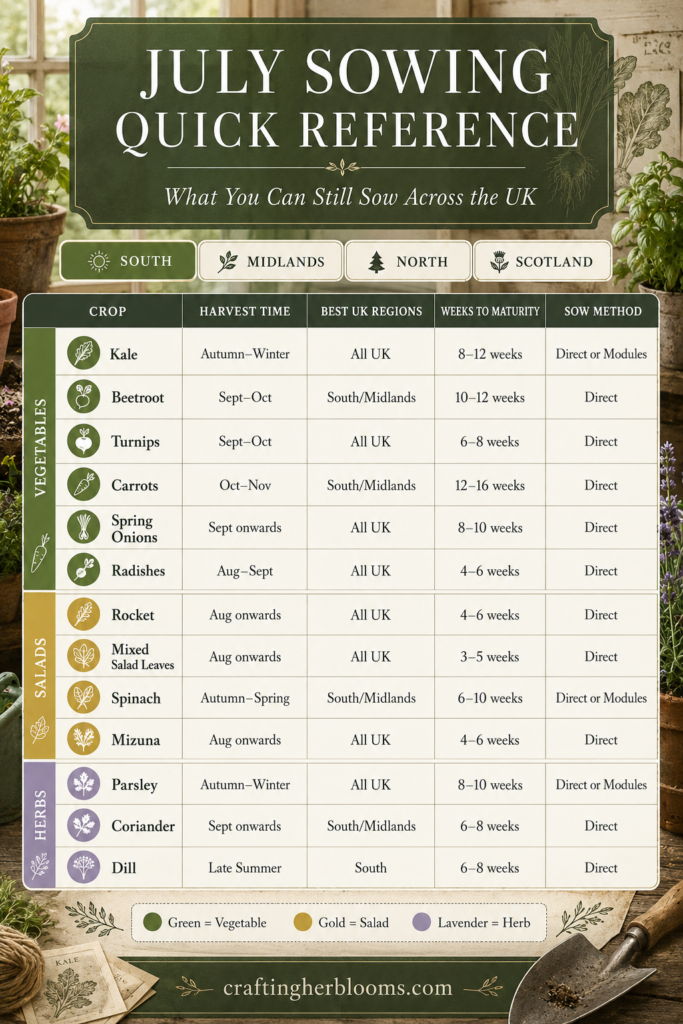
Southern England and Cornwall: The Best July Opportunity
Gardeners in the south and southwest enjoy the longest growing season and the widest July planting window. The warm, settled conditions typical of southern summers mean that crops sown in early July have time to establish properly before autumn’s chill arrives. This region can plant the full range of July crops confidently through the first three weeks of the month.
Coastal Cornwall and Devon benefit from particularly mild conditions that extend the useful growing window. Outdoor tomatoes, sweetcorn, and French beans — crops that struggle further north — perform reliably here. The maritime climate does bring its own challenges, particularly in wet summers, where fungal diseases on potatoes and tomatoes require vigilant monitoring and good air circulation around plants.
Midlands, Wales, and East Anglia: A Focused July Window
The middle belt of England and Wales faces conditions that make the first half of July the most productive planting period. Autumn brassicas, kale, and winter salads sown by mid-July have sufficient time to establish; sowings in the final week of the month become increasingly marginal for some crops. East Anglia, with its lower rainfall and continental climate influences, often enjoys a slightly longer reliable window than wetter western areas.
Gardeners in this region should prioritise speed-to-harvest crops and varieties bred for reliability in variable conditions. Choosing quick-maturing kale varieties over slower types, or selecting late-sowing beetroot varieties specifically, makes a meaningful difference to success rates.
Northern England: July’s Early Days Are Precious
For gardeners in Yorkshire, Lancashire, the Northeast, and Cumbria, July represents a genuinely limited window. Many crops that southern growers plant easily in mid-July need to be sown in the first two weeks in the north to have any realistic chance of maturity before autumn frosts arrive. The priority shifts significantly towards hardy crops — kale, spinach, spring onions, and salad leaves — that can withstand the season’s end better than tender crops.
Protected growing becomes increasingly important. A cold frame or cloche extends the effective growing season by several weeks and allows crops sown in late July to continue developing into October and November. If you do not already use some form of protection in northern gardens, July is an excellent time to invest in one.
Lowland and Highland Scotland: Seize the Window
Scotland’s growing season compresses July’s opportunities considerably. Lowland areas — around Edinburgh, Glasgow, and the central belt — can sow hardy crops in the first half of July with reasonable confidence. Highland areas face a much tighter window, and gardeners there should focus on the very hardiest crops: curly kale, perpetual spinach, land cress, and spring onions.
The compensation for Scotland’s short season is the quality of growth during long summer days. Crops that develop through June and July experience remarkable daylight hours that drive vigorous growth. Kale, in particular, thrives in Scottish conditions and becomes increasingly frost-sweet as autumn progresses — a genuinely superior crop for those who persist through the compressed planting season.
Vegetables to Plant in July
The vegetable planting list for July is more selective than May or June, but it contains some genuinely important crops. Miss these sowings and you will be without certain vegetables entirely come winter; seize them and your plot continues producing well into the cold months.
Crafting Her Blooms
July Succession Sowing Planner
See what to sow now and when your harvests will land
Timings are approximate guides for UK conditions. Always check seed packet instructions for specific varieties.
Brassicas for Autumn and Winter Harvest
July is the last reliable opportunity to establish many brassica crops that will harvest through autumn and winter. Kale is the most forgiving and valuable: varieties like ‘Nero di Toscana’ (cavolo nero), ‘Red Russian’, and ‘Dwarf Green Curled’ can be sown directly or into modules for transplanting in August. Kale tolerates poor conditions better than almost any other vegetable and becomes more flavoursome after the first frosts, making it a foundation crop for winter harvests.
Spring cabbage can be sown in July for transplanting in September and October, to stand over winter and heart up in spring. This is a long game that requires patience, but spring greens and spring cabbage are valuable crops in the hungry gap between late winter and the first new-season vegetables. Choose varieties like ‘Pixie’ or ‘Hispi’ for reliable results in most UK regions.
Brussels sprouts sown in July are late in the season and would normally be sown earlier, but if you missed that window, modules sown in early July can still produce plants in time for a late harvest. Transplant them into firm ground — brassicas need solid anchorage to develop well — and net immediately against cabbage white butterflies, which are active throughout the summer.
Salad Leaves and Cut-and-Come-Again Crops
If you only do one thing in July from a planting perspective, succession sow salad leaves. The summer sowing window produces leaves that mature as temperatures cool in September and October — often the finest quality salad of the entire year, crisp and flavourful without the bitterness of hot-weather growth. Mixed salad leaf blends, rocket, mizuna, mustard leaves, and lamb’s lettuce all perform exceptionally well from July sowings.
The key to July salad success is choosing bolt-resistant varieties and providing some shade during the hottest part of summer. Sow into moist compost, keep seedlings shaded for the first fortnight, and they will establish quickly and reward you with weeks of harvests. Successional sowings every two or three weeks through July into August extend the harvest further.
Rocket deserves particular mention as a July stalwart. It germinates rapidly in warm soil, and sowings made now will be ready to harvest within four to six weeks. By September, the plants will be producing in the cooler conditions that give rocket its characteristic peppery bite rather than the bitter heat of summer growth.
Root Vegetables for Autumn Harvest
Beetroot sown in early to mid-July matures in ten to twelve weeks, bringing harvests into September and October. ‘Boltardy’ remains the most reliable variety for summer sowings because its bolt-resistance extends beyond its name — it genuinely performs better than older varieties in the variable conditions of a British summer. Sow thinly in rows and thin progressively, using the thinnings as baby beetroot in salads.
Turnips respond particularly well to July sowings and are often overlooked as a genuinely useful autumn crop. Quick to mature — often ready in six to eight weeks — they provide substantial autumn harvests and can be left in the ground as the season cools. ‘Purple Top Milan’ and ‘Golden Ball’ are reliable UK varieties that cope well with the conditions typical of late summer and early autumn.
Radishes offer the fastest return of any July sowing, maturing in as little as four weeks. Successive sowings every ten days through July provide a continuous supply through the summer and into early autumn. As temperatures cool in September, radishes slow down but develop better flavour, with less of the fiery heat that hot weather accelerates.
Carrots can still be sown in early July in most UK regions. A July carrot sowing will mature as an autumn crop, often developing sweeter flavour as temperatures cool in September and October. The second carrot fly flight period peaks in July, so physical protection with enviromesh is even more important for these later sowings. Choose a shorter-rooted variety like ‘Amsterdam Forcing’ or ‘Chantenay Red Cored’ if your soil is heavy.

Spring onions sown in July provide rapid harvests from September onwards. They are genuinely easy to grow, tolerate a wide range of conditions, and require no thinning if sown in broad bands rather than single drills. ‘White Lisbon’ is the dependable standard variety; ‘Parade’ offers a slightly longer window before bolting.
Spinach and Leafy Greens
Spinach sown in July is quite different in character from spring sowings. It will establish through summer’s end and then effectively pause during the coldest months before resuming growth in early spring, providing valuable late winter and early spring harvests. This overwintering spinach technique is underused in UK gardens despite its reliability — once established, the plants require minimal intervention through winter.
Perpetual spinach (leaf beet or Swiss chard’s close relative) is even more reliable than true spinach for July sowings. It tolerates heat, cold, and drought better than its more demanding cousin and will provide leaves through autumn and winter with very little care. Sow directly or into modules, transplanting out when conditions allow, and harvest outer leaves regularly to encourage continued production.
Peas for Autumn
Peas sown in July face a race against the season that requires careful variety selection. Round-seeded varieties bred for autumn sowing — specifically ‘Meteor’ — tolerate the cooler, damper conditions of autumn better than wrinkle-seeded types. Sow in mid-July in most regions, with an earlier sowing in the north, and support plants carefully. They will not produce the abundance of a June harvest, but fresh autumn peas are a genuine treat that rewards the effort.
Fruit: What to Plant and Propagate in July
July is not a primary planting month for most fruit, but it is an important month for propagation and future planning that many gardeners neglect until it is too late.
Strawberry Runners: Your Future Harvest
If your strawberry plants are producing runners — the long stems that extend sideways and produce plantlets — July is the time to either peg them down to root or remove them. Pegging runners into small pots of compost sunk into the ground beside the parent plant creates new plants that can be lifted and replanted in a new bed in late August or September. These runner-raised plants fruit fully the following summer, making July runner management one of the highest-value tasks in the fruit garden.

Choose runners from your healthiest, most productive plants. Pin the first plantlet on each runner — the one closest to the parent — as it roots most vigorously. Once rooted (typically four to six weeks), sever from the parent and transplant to a prepared bed. Strawberry plants fruit best in their second and third years, so establishing new plants from runners every year or two maintains productivity.
Container Fruit: Watering and Feeding
Any fruit growing in containers — whether patio fruit trees, blueberries in ericaceous compost, or strawberry planters — requires consistent attention in July. Container-grown plants depend entirely on the gardener for water and nutrients, and the high temperatures of summer months mean pots can dry out within twenty-four hours during hot spells.
Feed container fruit every seven to ten days with a high-potassium liquid feed to support fruiting and the development of fruit buds for next year’s crop. Growing raspberries and other cane fruits in containers benefit particularly from consistent feeding through July to establish canes that will fruit the following year.
Summer Pruning of Trained Fruit
Established trained fruit trees — espaliers, fans, and cordons — benefit from summer pruning in July to August. Unlike winter pruning, which stimulates growth, summer pruning redirects the tree’s energy into fruit production by removing some of the current season’s growth. This is not a job for the faint-hearted with a brand-new tree, but for established trained forms it is an important annual task that maintains shape and improves fruiting.
For apple and pear cordons and espaliers, prune back side shoots from the main branches to three leaves above the basal cluster. For fan-trained stone fruit like cherries and plums, complete any pruning in summer rather than winter to minimise the risk of silver leaf disease — a serious fungal infection that enters through winter wounds on stone fruit.
Herbs: Late Summer Opportunities
July is productive for herb growing, particularly for the fast-establishing annuals and biennials that fill gaps left by spring sowings that have been harvested heavily.
Basil: Now or Never
Basil is genuinely a now-or-never July crop in the UK. It needs warm soil, warm nights, and adequate growing time before autumn’s cold arrives. Sow seeds in modules or small pots under cover, keeping them in the warmest available spot — a south-facing windowsill or greenhouse bench works well. Transplant to the garden only when overnight temperatures are reliably above 10°C. In southern regions, outdoor basil can thrive from July sowings; in the north, keep it under glass or on a warm windowsill.
The variety matters less than the conditions, but ‘Genovese’ remains the standard for flavour, ‘Sweet’ is reliably productive, and ‘Greek’ forms compact mounds that tolerate the UK’s variable summer better than large-leafed types.
Parsley for Autumn and Winter
Parsley sown in July will produce useful harvests through autumn and, if given cloche protection, into winter. It is slow to germinate — often taking three or more weeks even in warm soil — so patience is required. Soaking seeds overnight before sowing accelerates germination slightly. Sow directly where plants will grow, or into modules for transplanting, in moist compost. Flat-leaf parsley is generally considered superior in flavour; curly parsley is more cold-hardy for winter production.
Chervil and Coriander
Chervil, a delicate anise-flavoured herb often overlooked in UK gardens, actually prefers the cool, shortening days of late summer and autumn. July sowings produce superior plants to those sown in spring, as chervil bolts rapidly in hot, long-day conditions. Sow directly into a shaded position — it performs surprisingly well under taller plants or in dappled shade — and harvest regularly from September onwards.
Coriander is similarly bolt-prone in summer and benefits from a July sowing in a semi-shaded position. The shortening days slow the plant’s tendency to flower prematurely, and September-maturing coriander provides some of the best leaf production of the year. For seed production rather than leaf, an earlier sowing is preferable, but for fresh herb use, July is an underrated opportunity.
Dill and Fennel
Both dill and fennel can be sown in July for late-summer and autumn leaf production. Fennel in particular — the herb rather than the vegetable — is a perennial that establishes well from July sowings and will provide bronze or green ferny foliage through to the first frosts. Growing outdoor garden herbs this late in the season requires choosing the right species and managing expectations: these will be young plants producing modest harvests, not the established bushes of a plant in its second or third year.
Essential July Garden Jobs
The planting list for July is modest by comparison with earlier months, but the maintenance list is longer than at any other point in the year. These are the jobs that determine whether July becomes a month of abundant harvest or one of disappointment.
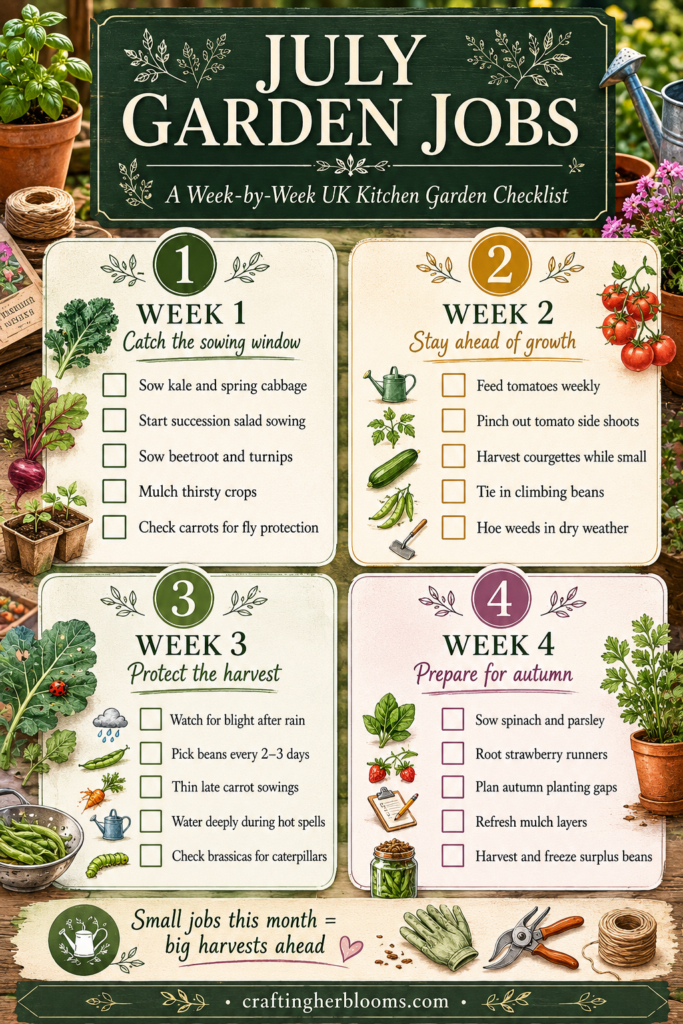
Watering: The Non-Negotiable Priority
Consistent watering is the foundation of July gardening success. Established plants can tolerate some variability, but fruiting crops — tomatoes, courgettes, beans, and cucumbers — are particularly sensitive to irregular moisture. Inconsistent watering of tomatoes causes blossom end rot and fruit splitting; allowing beans to dry out reduces yield significantly; courgettes will tolerate brief drought but fruit quality suffers.
Where possible, water in the morning rather than the evening. Morning watering gives foliage time to dry during the day, reducing fungal disease risk. It also means water reaches root zones before midday heat increases evaporation. Evening watering is better than no watering, but if you have the choice, morning is preferable.
Mulching in July is one of the highest-impact things you can do. A 5-7cm layer of garden compost, bark chippings, or straw around the base of plants reduces moisture evaporation, moderates soil temperature, suppresses weeds, and gradually improves soil structure. Apply mulch to moist soil — dry soil under mulch stays dry — and keep it away from direct contact with plant stems.
Tomato Care: The Monthly Essentials
Tomatoes require consistent attention through July to produce well. Cordon (indeterminate) varieties need weekly pinching out of side shoots — the small shoots that develop in the angle between a leaf stem and the main stem. Left to grow, these become secondary leaders that sap energy from fruit development and create congested plants susceptible to fungal disease.
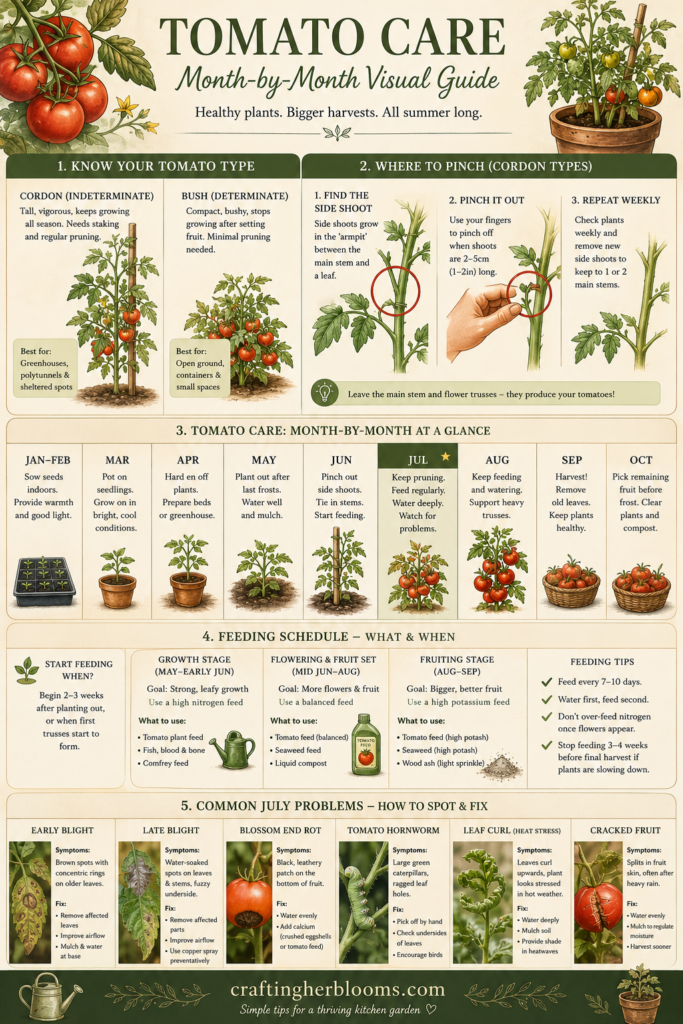
Feed cordon tomatoes weekly with a high-potassium liquid tomato feed once the first truss of fruit has set. This feeding regime continues through fruiting. Keep plants to four or five trusses of fruit on cordon types to ensure fruit ripens before the first autumn frosts — a critical point for UK gardeners where the season can end abruptly in September or October.
Watch for early signs of blight — brown patches on leaves with a yellowish halo, progressing to stems and fruit. Blight spreads rapidly in warm, humid conditions and can devastate a crop within days. Good air circulation around plants reduces risk; removing affected lower leaves early helps contain spread. If blight does appear, remove and bin (not compost) all affected material promptly.
Courgette and Squash Management
Courgettes have an unfortunate tendency to become marrows when you look away for a week. Check plants every two or three days in July and harvest courgettes at 15-20cm — the size at which they have the best flavour and texture. Regular harvesting also encourages the plant to produce more fruit rather than putting energy into swelling existing fruits to excessive size.
Summer squash varieties behave similarly to courgettes in this respect. Patty pans and round summer squash should also be harvested small for best quality. Winter squash and pumpkins, however, should be left to develop fully on the plant, but they benefit from being raised off damp soil on a tile or piece of wood to prevent the underside rotting.
Beans: Picking for Continuity
French beans and runner beans must be harvested regularly to keep the plants productive. Once pods begin to develop seeds noticeably, the plant shifts its energy from flower production to seed maturation and stops flowering prolifically. Picking every two or three days during peak production maintains yields and, in the case of runner beans, prevents pods from becoming stringy and tough.
If you find yourself with a glut — which is common in July — most beans freeze well. Blanch in boiling water for two minutes, cool quickly in cold water, dry thoroughly, and freeze in portions. This is a better outcome than leaving pods on the plant to mature, which reduces further production.
Supporting and Training
Climbing crops — runner beans, cucumbers, and any trained fruit — grow rapidly in July and need regular checking to ensure they are climbing their supports correctly. Cucumbers particularly benefit from being guided up their support and having side shoots pinched out to keep them manageable and well-ventilated.
Corn, which grows quickly in good July weather, may need individual staking in exposed gardens. Sweetcorn benefits from being grown in blocks rather than rows to improve wind pollination; if your plants are tasselling at the top, this is normal and indicates pollination is occurring.
Weeding While Conditions Allow
Weeding in dry July conditions is far more effective than weeding after rain. Hoeing on a dry, sunny day kills weed seedlings rapidly as they desiccate in the sun; the same job done after rain leaves uprooted weeds that re-establish within days. Aim to hoe vegetable beds every week in July, targeting the fine seedling stage when weeds are most vulnerable.
Perennial weeds — bindweed, couch grass, and ground elder — are at their most vigorous in July. Digging them out is effective if you remove every piece of root; leaving fragments behind produces new plants rapidly. Persistent hand-weeding through the season gradually reduces populations, though it rarely eliminates them entirely in a single year.
Pest Watch: July’s Key Threats
July brings several pest challenges to a head, and knowing what to watch for allows intervention before populations become overwhelming.
Aphids and Blackfly
Aphid populations peak in July, and colonies can develop on almost any food crop. Broad bean blackfly is often the most visible, coating growing tips and flower buds. Pinching out the top 8-10cm of broad bean plants once flowers have set (a standard June task) removes the soft growth where blackfly concentrate. Where plants are heavily infested, a firm blast of water from a hose dislodges colonies effectively and non-chemically.
On other crops, encouraging natural predators is the best long-term strategy. Ladybirds, lacewings, and parasitic wasps all consume aphids in large numbers; growing companion plants like sweet alyssum, dill, and fennel nearby provides habitat and food sources for these beneficial insects.
Carrot Fly Second Flight
The second carrot fly flight occurs in late July, making this the point when physical protection of carrots is most important. Carrot fly adults lay eggs in the soil near carrot plants; the larvae burrow into developing roots, causing characteristic rusty scarring that often goes unnoticed until harvest. Enviromesh tunnels (minimum 45cm high) exclude the low-flying pest effectively. If you do not have enviromesh, sowing late-season carrots in a raised bed away from previous carrot-growing sites reduces risk considerably.
Potato and Tomato Blight
Blight conditions — warm days above 10°C combined with humid nights — occur frequently in UK summers. Maincrop potatoes are particularly vulnerable in July, especially during wet weather. Earthing up potato rows properly improves drainage around stems and reduces spore transfer from foliage to tubers. If you notice blight on potato foliage, cut and remove all above-ground growth immediately — the tubers below will usually survive if the soil is not too wet.
Tomatoes grown outdoors face similar blight risk. A sheltered, south-facing position with good air circulation reduces but does not eliminate the risk. Regular inspection and prompt removal of any affected leaves reduces spread.
Frequently Asked Questions About July Planting in the UK
Is it too late to plant vegetables in July? July is certainly not too late, but it requires choosing the right crops. Salad leaves, kale, beetroot, radishes, turnips, spinach, spring onions, and carrots can all be sown productively in July. Crops requiring a long growing season — Brussels sprouts, maincrop potatoes, parsnips — are too late to plant from seed in July. Focus on fast-maturing varieties and crops that will harvest in autumn and winter.
What brassicas can I still plant in July? Kale, spring cabbage, and sprouting broccoli can all be sown in July for autumn and winter harvest. Kale is the most reliable — particularly varieties like ‘Nero di Toscana’ and ‘Red Russian’ — and can be sown directly outdoors or in modules for transplanting. Spring cabbage varieties like ‘Pixie’ sown in late July will transplant in September and overwinter for spring harvests.
Can I still sow carrots in July? Yes, in most UK regions carrot sowing remains viable through early to mid-July. Choose shorter-rooted varieties for heavier soils and use enviromesh protection against the second carrot fly flight. July-sown carrots will harvest in October and November, often with improved sweetness as they mature in cooling autumn conditions.
What is the most important job in the July vegetable garden? Consistent watering and harvesting. July’s warm conditions mean plants grow rapidly and produce abundantly — but only if moisture is consistent and crops are harvested regularly. Allowing crops like courgettes, beans, and peas to mature on the plant signals the plant to stop producing. Regular picking of beans every two to three days, checking courgettes every few days, and maintaining soil moisture are the three practices that most directly impact July harvest quality.
Should I be removing tomato side shoots in July? Yes, for cordon (indeterminate) varieties this is a weekly job throughout July. Side shoots develop rapidly in warm summer conditions and should be pinched out when small. For bush (determinate) varieties, side shoot removal is not required. If you are unsure which type you have, check the label or seed packet — most UK-grown outdoor tomatoes are bush types, while greenhouse varieties are more often cordons.
How often should I feed tomatoes in July? Weekly feeding with a high-potassium liquid tomato feed once the first truss of fruit has set. Continue this through August and into September while fruit is developing. Tomatoes are hungry plants and container-grown specimens in particular will exhaust the nutrients in their compost without regular supplementation.
Can I plant strawberries in July? Propagating from your existing plants’ runners is the best July strawberry activity. Peg runners down into small pots of compost sunk beside the parent plants in July; by late August they will be rooted and ready to transplant into new beds. Buying and planting bare-root strawberries is typically a September-October activity; pot-grown plants from garden centres can be planted in July but will not establish as well as autumn plantings.
Putting It All Together: Your July Planting Priorities
For most UK gardeners, July’s planting priorities can be distilled into three main tasks: sow the crops that will feed you through winter, maintain the crops that are already producing, and propagate the fruit plants that will give you harvests in future years.
The sowing list — kale, salad leaves, beetroot, turnips, radishes, spring onions, and spinach — takes precedence in the first half of July in most regions. These sowings are time-sensitive in a way that August and September sowings are not; delay them past mid-July in northern regions and you lose the window for some crops entirely.
Understanding how to plan a vegetable garden effectively means thinking several months ahead, and July demands exactly that discipline. The gardener who is eating well in November is the one who made time to sow kale in July, not the one who waited until October to wonder where the winter vegetables were.
If you are newer to growing your own food, July is an excellent month to start a vegetable garden with a focus on the fast-maturing crops that suit the season. Salad leaves, radishes, and spring onions can take a beginner from seed to harvest within weeks, building confidence and understanding of how vegetables grow before the more complex tasks of spring sowing next year.
The maintenance tasks — watering, feeding, harvesting, training, and pest management — are not optional extras in July. They are the core work of the month. Experienced gardeners allocate most of their July garden time to these tasks rather than to new planting, and the results reflect that prioritisation.
July asks a great deal of its gardeners, but it rewards those who show up consistently. The harvest it enables — from the summer crops now producing and the autumn crops you are establishing — makes every hour in the summer garden worthwhile.
Continue Your Journey
What Foods to Plant in June — Understand the momentum you brought into July with our comprehensive June growing guide for British gardeners.
What Foods to Plant in August — The season shifts in August: discover what to sow for autumn and winter harvests as days begin to cool.
Growing Your Own Vegetables: The Complete UK Guide — Everything you need to know about growing food in British gardens, from soil preparation to harvest.
Companion Planting — Discover how strategic plant combinations can reduce pest pressure and improve yields through July and beyond.
How to Grow Lavender in the UK — Not just for bees: lavender planted in July will establish before winter and bloom beautifully next summer.
What are you focusing on in your July garden this year — keeping on top of the summer maintenance, or getting those all-important autumn sowings in? Share your priorities in the comments below.
Ready to take your UK food garden to the next level? Subscribe to Crafting Her Blooms for seasonal growing guides, variety recommendations, and practical advice tailored to British gardens.


