
Vertical Growing for Small UK Gardens: Up, Not Out
I sometimes use affiliate links in content. This doesn’t cost you anything but I may make a commission payment from anything you buy through these links. As an Amazon Associate I earn from qualifying purchases. All opinions remain my own.
Small gardens do not need to stay flat. A fence, a wall, or a plain trellis panel is growing space waiting to happen, and once you start looking at your garden vertically, a patio that felt cramped can suddenly hold twice as much as you thought.
Vertical growing has had a moment in UK gardening coverage this year, with the RHS Chelsea Flower Show 2026 balcony gardens putting frames, arches, and wall systems front and centre for anyone gardening in a small space. But this is not a trend that fades once the show gardens come down. For anyone with a courtyard, a fence-lined plot, or a few square metres of patio, growing up rather than out is simply the most practical way to fit more planting into a limited footprint.
This guide walks through the main vertical systems, the best edible and ornamental plants for UK conditions, how to match plants to your walls and light, and a few easy combinations to copy in your own garden.
Why Vertical Growing Matters in Small UK Gardens
Ground space is the scarcest resource in most UK gardens, especially in newer housing with compact back gardens, courtyard plots, and balconies. Once the beds and pots are full, the only direction left to grow is up.
Forged & Grown
Garden pieces, printed to order
3D printed planters and garden accessories, made in the UK. Self-watering designs, sculptural shapes, colour options — each one made when you order it.


A bare wall or fence panel that currently does nothing for you can become a home for climbing beans, trailing strawberries, or a clematis in full flower. You get more growing capacity without giving up the seating area, the washing line, or the side path you actually need to use.
The Main Vertical Systems
There is no single right way to grow vertically. Most small UK gardens end up using a mix of the following:
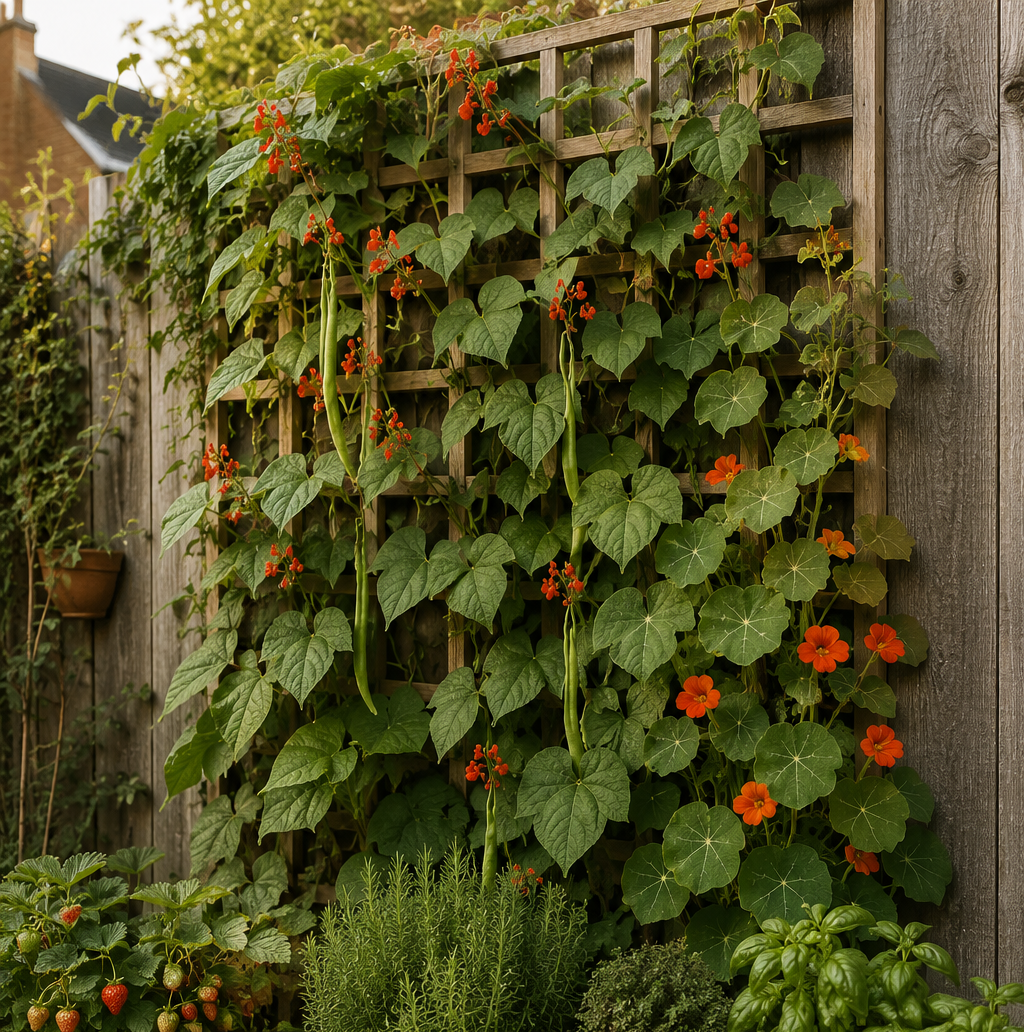
- Trellis panels, fixed to a fence or wall, for beans, peas, and flowering climbers
- Obelisks, freestanding metal or wooden frames that work well in a border or large pot
- Arches, ideal for a path or gateway and strong enough for trained fruit or a vigorous clematis
- Wall-mounted planters, which turn a flat wall into a planted surface without eating into floor space
- Hanging baskets, good for trailing flowers, strawberries, and some herbs
- Window boxes, useful on a wall, sill, or fence top for salad leaves and compact edibles
- Shelving units, stacking pots vertically against a sunny wall
- Trained fruit, such as apples, pears, and currants grown flat against a warm wall
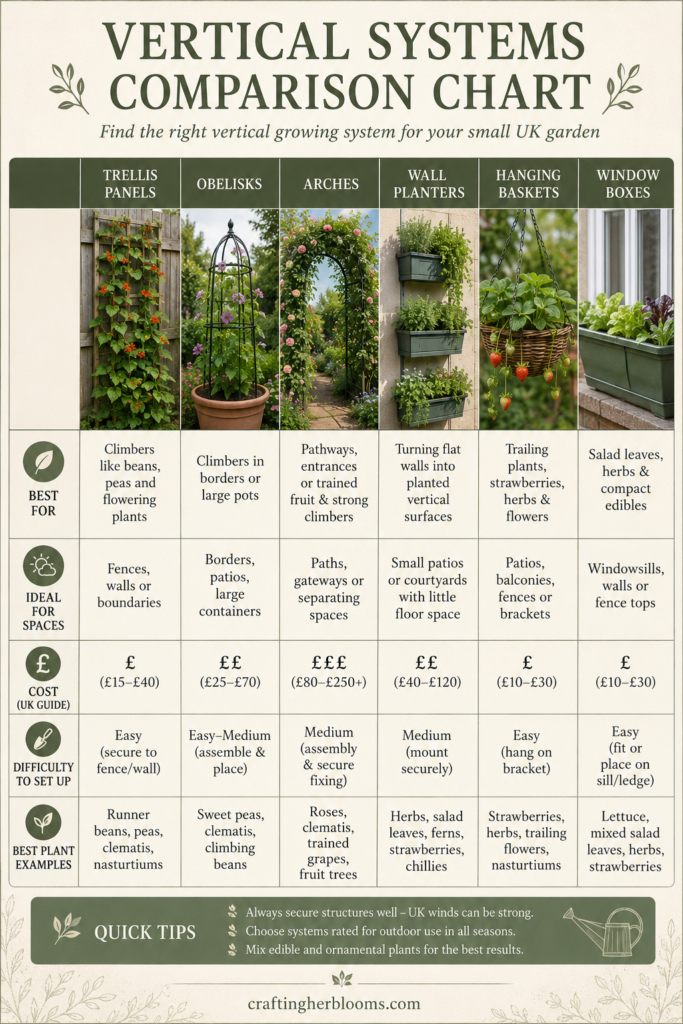
UK suppliers such as Harrod Horticultural and Agriframes both manufacture galvanised steel obelisks and trellis panels built to handle a British climate, so it is worth choosing a support rated for outdoor use rather than a lightweight decorative one.
Best Edible Plants for Vertical Growing
Climbing vegetables are the classic choice for vertical space, and UK growing guides consistently point to the same reliable performers.
Runner beans and climbing French beans are the easiest starting point. French bean varieties like Cobra and Golden Gate crop over a long summer period and are usually sown April to early May, or planted out as young plants in May and June once the frost risk has passed. Peas, climbing or cordon tomatoes, and cucumbers such as Marketmore also do well trained up a support, and even courgettes can be coaxed skywards with varieties bred for climbing habit, such as Shooting Star or Black Forest.
For containers and smaller supports, compact patio tomato varieties like Tumbling Tom, Totem F1, or Patio Choice Yellow give a good crop without needing serious height. Dwarf runner bean varieties such as Hestia are a sensible choice if you are working with a windowbox or a single large pot rather than open ground.
Strawberries do well trailing from hanging baskets or wall pockets, and herbs, salad leaves, and chillies all suit smaller vertical containers. Where there is a sunny wall to spare, trained apples or pears extend what a small garden can produce without needing an orchard’s worth of space.
Best Ornamental Plants for Vertical Growing
Vertical growing is not only about the vegetable patch. Clematis, honeysuckle, and nasturtiums all climb happily on trellis, obelisks, or arches, and give a small garden height and softness that a flat border cannot.
Trailing flowers work well in hanging baskets alongside strawberries or herbs. For shadier corners, foliage plants like ferns and heuchera bring texture and colour without needing direct sun, which is useful if part of your vertical space faces away from the light.
The strongest results usually come from mixing edible and ornamental planting rather than treating them as separate categories. A trellis carrying both runner beans and a flowering climber does more work for the space than either alone.
Matching Plants to Aspect and Light
Where a plant goes matters as much as what it is. A sunny, south-facing wall is the right spot for fruiting crops and sun-loving climbers such as tomatoes, beans, and clematis. Shadier walls and fences suit salad leaves, chives, mint, kale, ferns, and violas instead.
Before planting anything, spend a day or two watching how light moves across your walls and fences. It is a small step that saves a lot of disappointment later, since a fruiting crop planted in permanent shade will sulk no matter how well you feed it.
Setting Up: Supports, Compost, and Watering
Whatever system you choose, a few practical details make the difference between a vertical garden that thrives and one that struggles.
Leave a gap between wall-mounted mesh or planters and the wall itself, so air can circulate and stems can be tied in properly. A lightweight, multi-purpose compost is best for hanging and wall containers, since standard border soil is too heavy and drains poorly in a raised position.
Watering is the detail most small-space gardeners underestimate. Vertical containers dry out considerably faster than beds, especially once they are up at head height and catching more sun and wind. Building in easy access for a watering can, or setting up a simple drip system, is worth doing at the planning stage rather than working around it later.
Maintenance Realities
Higher planters are more exposed, which means more sun and more wind than a bed at ground level. In hot weather this can mean daily watering rather than the two or three times a week that ground-level containers might need.
Fruiting crops and flowering annuals in vertical containers also need regular liquid feeding, since the compost volume is small and nutrients wash through quickly with frequent watering. A weekly feed through the main growing season keeps both edibles and ornamentals producing well.
Design Benefits Beyond the Harvest
Vertical growing earns its place in a small garden even before you count what you can pick. A well-planted trellis or arch screens a view, softens a plain fence panel, and adds a layer of greenery at eye level that a flat border simply cannot provide.
Layering height through a small space, low pots near the ground, mid-height planters, and climbers reaching up a wall, makes the whole area feel larger and more established than it actually is. This is worth remembering if your garden is more about relaxing in than producing a harvest.
Easy Starter Combinations
If you are not sure where to begin, these combinations are simple, forgiving, and use ordinary materials like bamboo canes and basic trellis:
- Peas up a bamboo wigwam, with a few pots of lettuce tucked in below to use the shade at the base
- Strawberries and thyme planted together in wall pockets, so the trailing strawberries soften the hard edges
- Clematis trained through a simple screen, with herbs planted at the base to use the ground space underneath
- Nasturtiums mixed with climbing beans on the same trellis, which also helps draw in pollinators
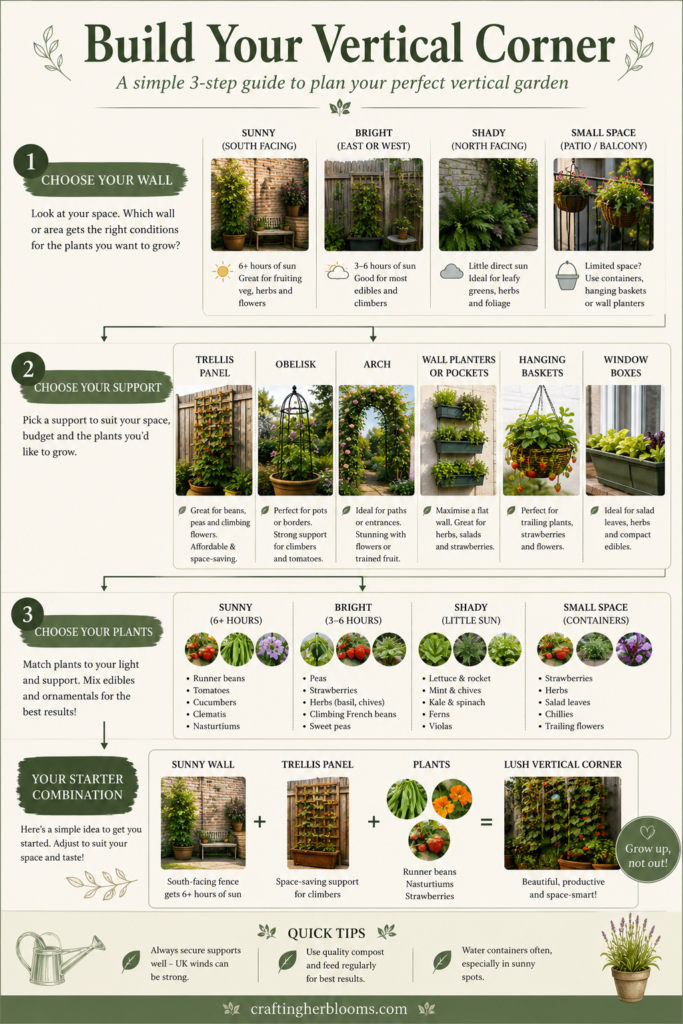
None of these need a large budget or a weekend of DIY. A length of trellis, a few bamboo canes, and the right compost will get you started.
Frequently Asked Questions
Do I need special equipment to start vertical gardening? No. A basic trellis panel, some bamboo canes, or a set of wall-mounted planters is enough to begin. More elaborate obelisks and arches are useful additions later, not a requirement to get going.
Will vertical growing actually save me space? Yes, but keep expectations realistic. You will gain meaningful extra growing capacity without losing floor space, though a small wall of beans will not replace a full allotment. Think of it as making better use of what you already have.
How often do vertical planters need watering? More often than ground-level beds or containers, particularly once the weather warms up. Higher planters catch more sun and wind, so daily watering in summer is common rather than unusual.
Can I mix vegetables and flowers on the same support? Yes, and it often works better than growing them separately. Runner beans with nasturtiums, or strawberries with thyme, both make good use of the same small footprint.
What is the easiest vertical crop for a beginner? Climbing or dwarf French beans are hard to beat for a first attempt. They are quick to establish, tolerant of ordinary UK summers, and reliably productive even in a modest container.


