
How to Create a Wildflower Garden That Thrives in UK Gardens

I sometimes use affiliate links in content. This doesn’t cost you anything but I may make a commission payment from anything you buy through these links. As an Amazon Associate I earn from qualifying purchases. All opinions remain my own.
When I first transformed a tired corner of my British garden into a wildflower meadow, neighbours actually stopped to ask what I’d planted. Within weeks, butterflies I’d never seen before appeared, bees hummed contentedly through dawn until dusk, and the space exploded with colour from May straight through September. The irony? This new showpiece required less work than the grass border it replaced—and cost about half as much to establish.
British wildflower gardens are among the most rewarding investments a gardener can make. Unlike ornamental borders that demand constant attention or lawns that require weekly mowing, a properly established wildflower garden largely maintains itself whilst creating vital habitat for our struggling pollinators. The RHS estimates that wildflower meadows can support up to 5 times as many insect species as conventional lawns, making them an ecological powerhouse for gardens of any size. Whether you’re working with a small patch in an urban border or converting a larger rural space, the principles remain remarkably similar—and the results equally spectacular.
This guide walks you through everything needed to create a thriving wildflower garden suited to UK conditions, from selecting the right native species for your soil type to managing your meadow through the seasons. We’ll explore both annual displays that bloom within months and perennial plantings that establish over several years, ensuring you understand the commitment and rewards of each approach.
| Plant Name | Type | Best Conditions | Flowering Period | Height | Key Benefits |
|---|---|---|---|---|---|
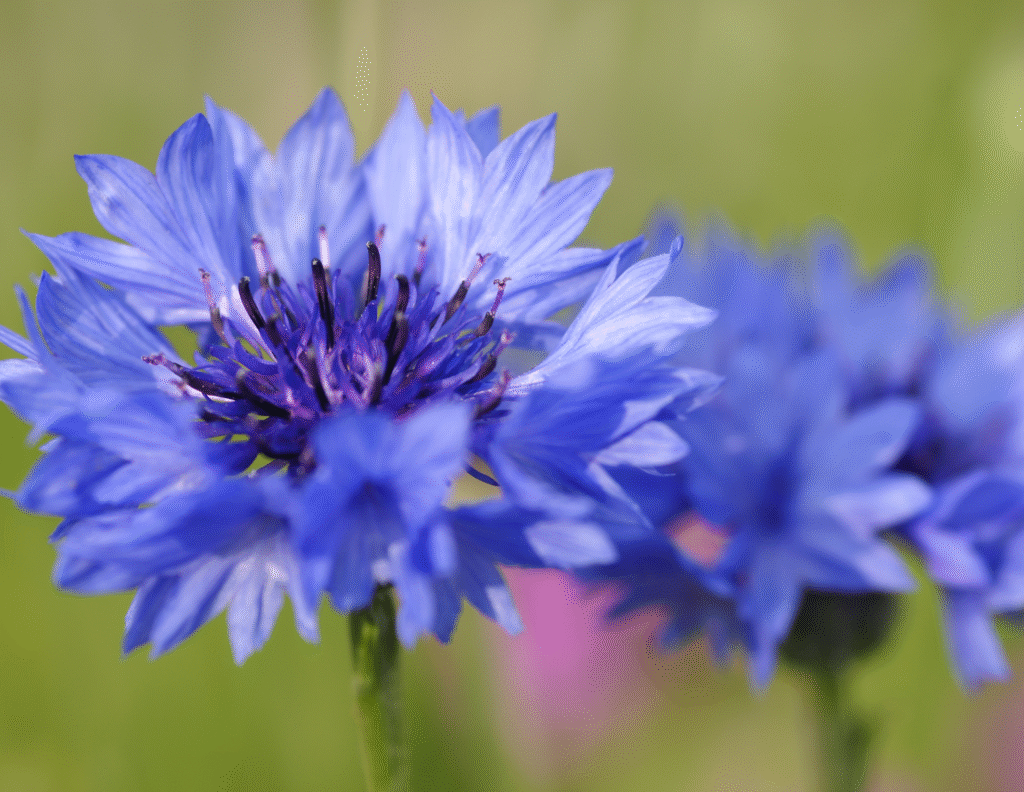
| Cornflower Centaurea cyanus | Annual | Full sun, well-drained | June-August | 30-90cm | Quick colour, attracts bees |
| Field Poppy Papaver rhoeas | Annual | Full sun, poor soil | June-August | 30-60cm | Classic meadow flower, self-seeds |
| Corn Marigold Glebionis segetum | Annual | Full sun, dry soil | June-August | 30-50cm | Bright gold blooms, hardy |
| Corncockle Agrostemma githago | Annual | Full sun, well-drained | June-August | 60-90cm | Pink flowers, cottage garden feel |
| Ox-eye Daisy Leucanthemum vulgare | Perennial | Sun, any soil | June-August | 40-90cm | Classic daisy, long-lived |
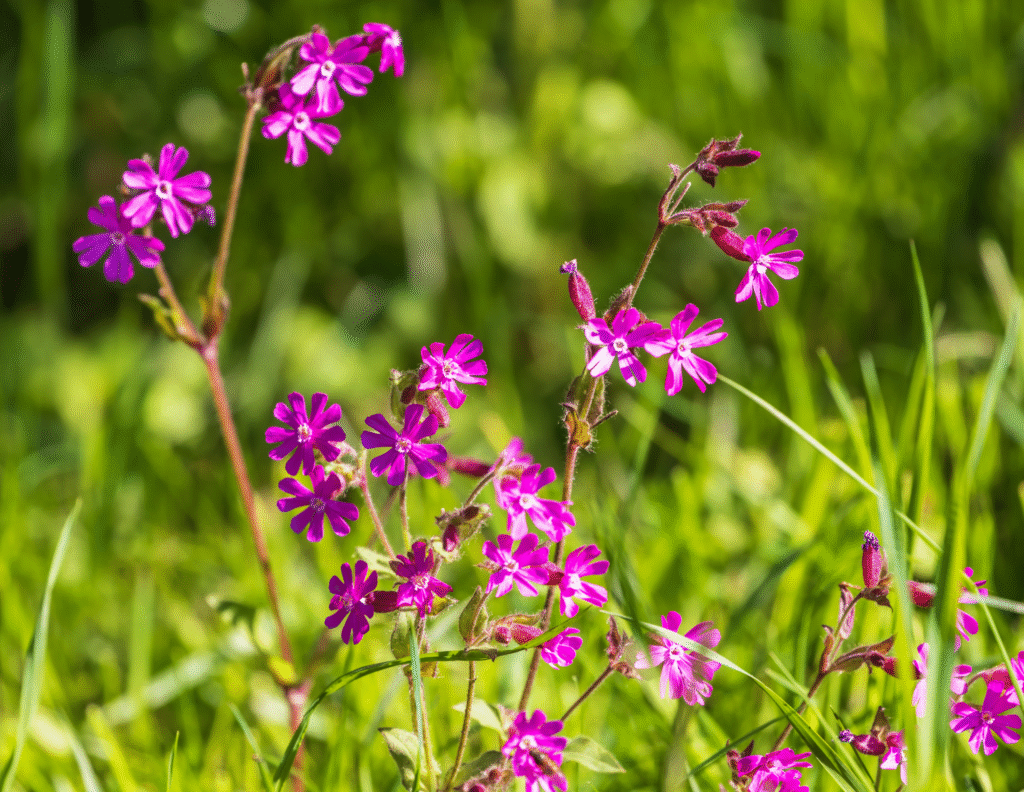
| Red Campion Silene dioica | Perennial | Shade/semi-shade, damp | May-June | 30-90cm | Woodland edges, early colour |
| Common Knapweed Centaurea nigra | Perennial | Sun, well-drained | July-September | 30-90cm | Butterflies love it, tough |
| Field Scabious Knautia arvensis | Perennial | Sun, well-drained | July-September | 50-100cm | Long flowering, attracts insects |
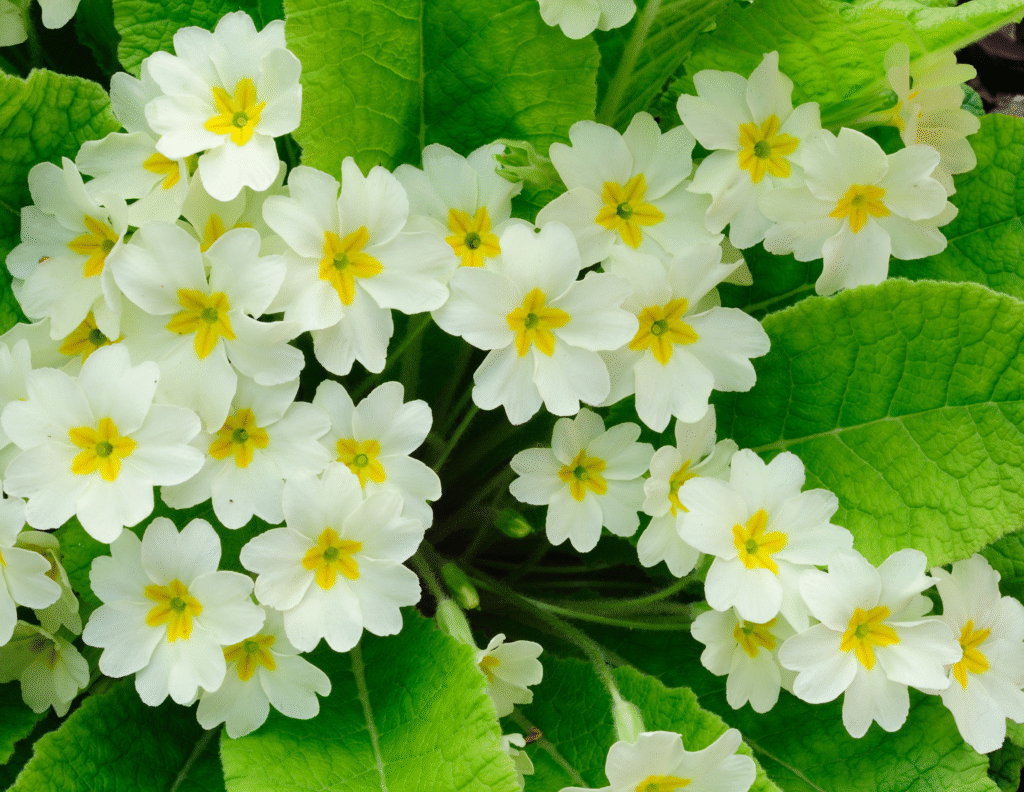
| Primrose Primula vulgaris | Perennial | Shade/sun, moist | March-May | 10-15cm | Early spring, banks and borders |
| Cowslip Primula veris | Perennial | Sun, well-drained | April-May | 10-30cm | Nodding yellow flowers, meadows |
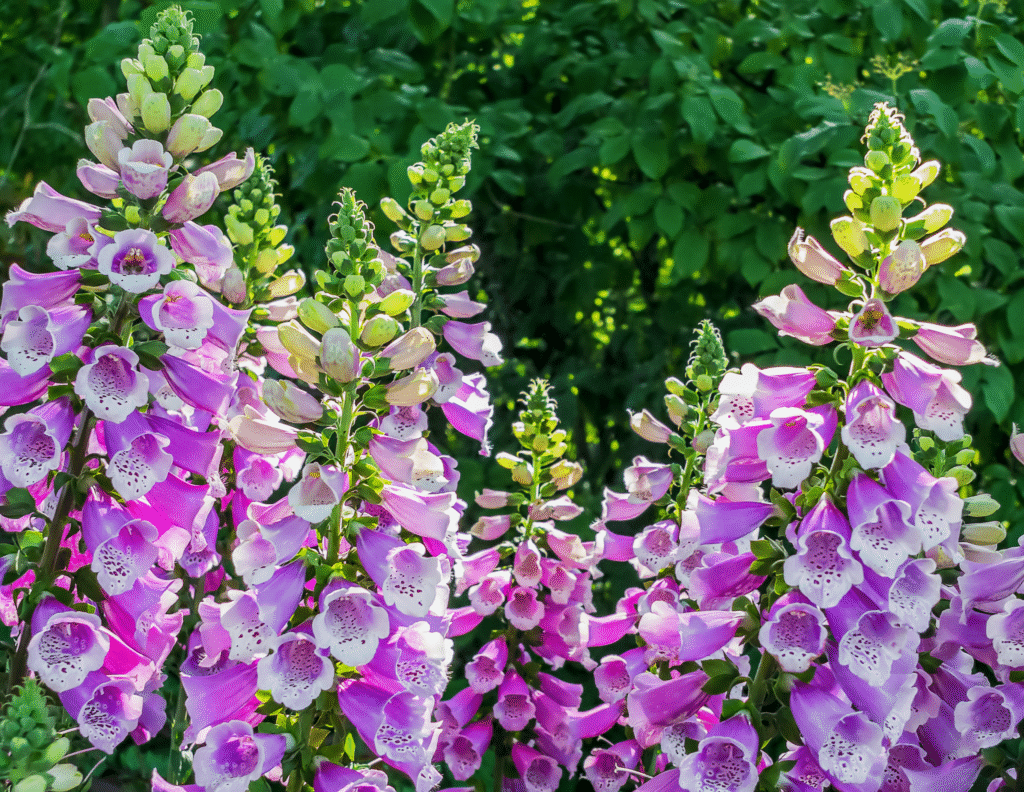
| Foxglove Digitalis purpurea | Biennial/Perennial | Shade/sun, any soil | June-July | 100-200cm | Dramatic height, bumblebee favourite |
| Yarrow Achillea millefolium | Perennial | Sun, dry soil | June-September | 30-60cm | Drought-tolerant, flat flower heads |
| Ragged Robin Lychnis flos-cuculi | Perennial | Damp/wet, sun/shade | May-June | 30-75cm | Pink petals, bog gardens |
| Viper’s Bugloss Echium vulgare | Biennial | Full sun, dry | June-September | 30-90cm | Blue spikes, bee magnet |
| Snake’s Head Fritillary Fritillaria meleagris | Perennial bulb | Damp, semi-shade | April-May | 20-40cm | Checkered bells, naturalises |
Understanding UK Wildflower Gardens and Their Benefits
A wildflower garden transforms outdoor spaces into natural, pollinator-friendly habitats requiring substantially less maintenance than traditional borders. Unlike the perfectly manicured aesthetic many British gardens aspire to, wildflower meadows embrace a more relaxed appearance that better serves local ecosystems. These gardens can occupy any area—from narrow strips between paving to entire lawn conversions—and typically flower between May and September, creating months of continuously changing colour.
Forged & Grown
Garden pieces, printed to order
3D printed planters and garden accessories, made in the UK. Self-watering designs, sculptural shapes, colour options — each one made when you order it.


The ecological benefits extend well beyond mere aesthetics:
- Nectar sources: Provide crucial food when bees and butterflies need it most throughout the growing season
- Pest control: Offer shelter for beneficial insects like ladybirds and hoverflies that naturally control aphids
- Breeding habitat: Create breeding grounds for species struggling in our increasingly developed landscapes
- Authentic nutrition: Native pollinators evolved alongside indigenous flora—field scabious and ox-eye daisies offer genuine sustenance rather than the “plastic food” of many imported ornamentals
- Biodiversity support: The RHS estimates wildflower meadows support up to five times more insect species than conventional lawns
The practical advantages prove equally compelling:
- Minimal watering: Deep-rooted wildflowers access moisture unavailable to shallow lawns—crucial during Britain’s increasingly unpredictable summers
- Low maintenance: One annual cut versus weekly mowing throughout the growing season
- No chemicals needed: Eliminate fertilisers that damage soil health and waterways
- Improves with age: Diversity actually increases as the meadow matures and finds its balance
- Self-sustaining: Once established, requires minimal intervention beyond annual management
Annual vs Perennial Wildflowers: Choosing Your Strategy
Understanding the fundamental difference between annual and perennial wildflowers shapes every subsequent decision about your garden. Each approach offers distinct advantages, and many successful wildflower gardens eventually incorporate both strategies in different areas.
Annual Wildflower Displays
Annual wildflowers complete their entire life cycle within a single year, germinating from seed, flowering prolifically, setting seed, then dying back before winter. Common British annuals include cornflowers (Centaurea cyanus), field poppies (Papaver rhoeas), corn marigolds (Glebionis segetum), and corncockles (Agrostemma githago). These species evolved to colonise disturbed ground quickly, which is why they germinate readily and flower within 8-12 weeks of sowing.
The primary advantages of annual wildflowers include:
- Speed to colour: Sow in April, flowers by July—instant gratification for impatient gardeners
- Incredible density: Each plant pushes to flower prolifically before winter, creating spectacular displays
- Encouraging results: Perfect for first-time wildflower gardeners wanting early success
- Flexibility: Easy to change the display each year or integrate with perennial areas
However, annuals come with trade-offs worth considering:
- Annual re-sowing required: Unless they self-seed reliably (unpredictable in British conditions)
- Limited season: Bare ground from autumn through early spring provides little visual interest
- Soil disturbance: Clearing and re-sowing each year partly defeats the low-maintenance appeal
- Less structural value: Don’t create the same habitat complexity as established perennial meadows
Perennial Wildflower Meadows
Perennial wildflowers take considerably longer to establish—typically two full years before flowering well—but continue growing and spreading for many years once settled. Excellent perennial choices for British gardens include ox-eye daisies (Leucanthemum vulgare), red campion (Silene dioica), common knapweed (Centaurea nigra), betony (Betonica officinalis), and field scabious (Knautia arvensis). These species develop extensive root systems that help them survive British winters and thrive through variable summer conditions.
The advantages of perennial wildflower meadows become apparent over time:
- Long-term investment: Minimal intervention required once established, flowering reliably for decades
- Extended flowering: Different species bloom in sequence throughout the growing season rather than one explosive display
- Better pollinator support: Consistent nectar sources across the months when wildlife needs them most
- Improved soil structure: Deep-rooting species like cowslips and field scabious break up compacted ground naturally
- Ecological complexity: Develops intricate relationships between plants, insects, and soil organisms
The primary challenge with perennials is patience:
- Two-year wait: First summer shows mostly leaves and a few tentative flowers
- Slow establishment: Year two is when the real magic begins
- Requires faith: That sparse first season tests the resolve of many gardeners
Many experienced wildflower gardeners eventually adopt a hybrid approach: planting perennial meadows in main areas whilst using annual mixes in containers or small patches for that immediate burst of colour. When you’re starting a vegetable garden, understanding these timing considerations becomes equally important.
Best UK Native Plants for Different Garden Conditions
Selecting appropriate species for your specific site dramatically increases the likelihood of success. British native wildflowers evolved alongside our soil types, rainfall patterns, and seasonal temperature fluctuations, making them naturally suited to conditions that would challenge many imported species. However, “British native” doesn’t mean “grows anywhere”—matching plants to your particular microclimate and soil type remains essential.
Wildflowers for Sunny, Well-Drained Sites
Most classic meadow wildflowers prefer full sun and soil that doesn’t stay waterlogged through winter. For these ideal conditions, primrose (Primula vulgaris) and cowslip (Primula veris) provide early spring colour before taller species emerge. Foxglove (Digitalis purpurea) creates dramatic vertical interest in late spring, whilst yarrow (Achillea millefolium) and selfheal (Prunella vulgaris) form reliable ground-level coverage throughout summer.
Viper’s bugloss (Echium vulgare) thrives in particularly dry, sunny spots and attracts an extraordinary range of bee species. Bugle (Ajuga reptans) works well as edging for wildflower patches, tolerating both sun and partial shade whilst providing early nectar sources. These species suit sandy or chalky soils particularly well, conditions that frustrate many gardeners attempting to grow conventional borders.
For late-season interest in sunny spots, consider adding devil’s-bit scabious and wild marjoram, both of which flower into October and support specialist butterfly species. When planning these sunny areas, think about the layering effect you’d use in container gardening, with taller species like foxglove positioned where they won’t shade lower-growing plants.
Wildflowers for Shade and Damp Conditions
Gardens with shaded or moisture-retentive areas need different species entirely. Ragged robin (Lychnis flos-cuculi) flourishes in damp ground that would rot many meadow flowers, creating vivid pink displays in late spring. Cuckoo flower (Cardamine pratensis) tolerates both damp soil and partial shade, providing crucial early food sources for orange-tip butterflies.
For truly wet areas—perhaps alongside ponds or in heavy clay soil that stays soggy—snake’s head fritillary (Fritillaria meleagris) creates exquisite nodding flowers in April. Wood anemone suits drier shade under trees, whilst forget-me-not (Myosotis sylvatica) carpets shaded areas with blue flowers that self-seed generously without becoming thuggish.
Hemp agrimony (Eupatorium cannabinum) towers over other shade-tolerant species, reaching up to 1.5 metres and flowering in late summer when most shade plants have finished. This makes it particularly valuable for extending the season in difficult spots. These damper, shadier areas also benefit from primroses, which often struggle in hot, dry spots but thrive with morning sun and afternoon shade.
Understanding your specific conditions prevents the disappointment of planting sun-lovers in shade or moisture-lovers in sand. When you’re considering soil types, remember that wildflowers generally prefer less fertile ground than vegetable gardens—rich soil encourages grasses to outcompete flowers.
Preparing Your Site for Wildflower Success
Proper site preparation determines whether your wildflower garden thrives or struggles. Counter-intuitively, the “better” your soil, the more work you’ll need to do—wildflowers have evolved to flourish in relatively poor conditions where grasses can’t dominate. This means the carefully enriched borders most gardeners pride themselves on actually work against wildflower establishment.
Assessing and Adjusting Soil Fertility
The first step involves honestly evaluating your soil’s current condition. If you’ve been adding compost and fertiliser for years, or if you’re converting a well-maintained lawn, your ground probably contains too much fertility for wildflowers. Nitrogen-rich soil encourages vigorous grass growth, which quickly smothers delicate wildflower seedlings before they establish properly.
For excessively fertile soil, the most effective solution involves removing the top 7-15 centimetres of topsoil to expose the less fertile subsoil beneath. This sounds extreme, but attempting to grow wildflowers in rich soil typically results in a grass lawn with occasional flowers—not the diverse meadow you envisioned. The removed topsoil needn’t go to waste; use it to enrich vegetable beds or create raised planters elsewhere in the garden.
If complete topsoil removal seems too drastic, an alternative involves sowing yellow rattle (Rhinanthus minor) the autumn before establishing your main wildflower mix. This semi-parasitic annual attaches to grass roots and suppresses their growth, effectively “mining” nitrogen from the soil whilst weakening grass competition. Yellow rattle has become wildflower gardeners’ secret weapon against persistent grasses.
Clearing Existing Vegetation
Thorough clearance of existing vegetation prevents established plants from outcompeting new wildflower seedlings. For converting lawn to meadow, stripping off turf with a spade works for small areas, though hiring a turf cutter makes sense for larger spaces. The removed turf can be stacked grass-side down to rot into loam for future use.
If perennial weeds like docks, nettles, or thistles dominate your chosen area, these need complete removal including roots. Forking through the soil repeatedly over several weeks, removing every piece of root you encounter, proves tedious but essential. These vigorous perennials will quickly overwhelm your wildflowers if given any chance to regenerate. Some gardeners resort to covering difficult areas with thick cardboard or black plastic for an entire growing season, effectively composting weeds in place before starting fresh.
Once cleared, rake the surface to create a fine, crumbly tilth—similar to the seedbed preparation you’d do when starting a vegetable garden. Remove stones and debris, breaking up any large clods of soil. The goal is a smooth, firm surface where small wildflower seeds can make good contact with the soil.
Creating Microclimates Within Your Space
Even a modestly sized area typically contains several different microclimates—spots that are slightly damper, drier, shadier, or more exposed than surrounding areas. Rather than trying to create uniform conditions throughout, embrace this variation by sowing different species in different zones.
That slightly boggy patch near the downspout? Perfect for ragged robin and cuckoo flower. The dry, exposed corner that gets baked by afternoon sun? Ideal for viper’s bugloss and yarrow. By matching species to these existing microclimates, you work with your garden’s natural tendencies rather than fighting them. Mark these different zones on a simple sketch before sowing, noting which species you’ll concentrate in each area.
Sowing Your Wildflower Garden: Timing and Techniques
The sowing process itself is straightforward, but timing and seed rate significantly impact results. British gardeners have two main sowing windows: spring (March to early May) and autumn (September to early October). Each season offers advantages depending on your chosen seed mix and local conditions.
Spring Sowing for Quick Establishment
Spring sowing suits both annual and perennial wildflower mixes, taking advantage of warming soil and increasing daylight to promote rapid germination. Aim for a soil temperature above 7°C—typically achievable from late March in southern England, mid-April in the Midlands, and early May in Scotland. Sowing too early into cold, wet soil leads to seed rot rather than germination.
Before sowing, check your local weather forecast for at least a week of dry conditions. Seeds need good soil contact without being washed away by heavy rain. If showers are predicted, delay sowing for a few days—patience at this stage pays dividends later.
When conditions are right, follow these steps:
- Mix seeds with sand: Combine your wildflower seeds with dry sand before sowing—this helps you see where you’ve already scattered seed and ensures even distribution
- Broadcast with wide sweeps: Use a wide, sweeping motion with your arm, aiming for even coverage rather than clumps
- Mind your seed rate: 3g per square metre for pure wildflower mixes, 5g per square metre for wildflower-and-grass combinations (less is more—most gardeners vastly overestimate quantities needed)
- Rake lightly: After broadcasting, rake seeds gently into the surface—barely covered, not buried, as many species need light to germinate
- Firm the surface: Tread across the area with small, shuffling steps to ensure good seed-to-soil contact
Autumn Sowing for Natural Dormancy Breaking
Autumn sowing allows seeds to undergo natural cold stratification over winter, which many perennial species require for successful germination. This mimics nature’s schedule, where wildflowers drop seed in late summer and autumn, with germination occurring the following spring.
Autumn sowing advantages:
- Natural dormancy breaking: Winter chilling satisfies germination requirements for many perennials
- Less weed competition: Most annual weeds have finished their life cycle by September
- Ready for spring: Seeds germinate earlier than spring-sown alternatives when conditions warm
- Better establishment: Autumn-sown seedlings develop stronger root systems over winter
Timing and protection:
- Sow window: September to mid-October for best results
- Bird protection: Cover with fleece for 2-3 weeks to prevent seed loss when other food sources dwindle
- Same technique: Follow the mixing, broadcasting, raking, and firming steps outlined above
Managing the Critical First Weeks
The weeks immediately after sowing determine success or failure. Keep the area evenly moist—not waterlogged—until germination occurs, which typically takes 14-28 days depending on temperature and species. In dry spring weather, this may require daily watering using a fine spray that won’t wash away seeds. Once seedlings emerge, gradually reduce watering frequency whilst increasing volume per watering session, encouraging deeper root development.
During this establishment period, weeds will inevitably germinate alongside your wildflowers. The challenge lies in distinguishing between wanted and unwanted seedlings when both are tiny. Generally, if a particular plant appears in large numbers and grows faster than everything else, it’s probably a weed. Remove obvious problem plants by hand, but avoid obsessing over every weed—some will disappear on their own once the meadow establishes its own balance.
Managing Your Wildflower Garden Through the Seasons
Wildflower gardens require minimal maintenance compared to conventional borders, but timing the interventions you do make proves crucial. The annual management cycle revolves around one major cut, with occasional spot maintenance addressing specific issues as they arise.
First Year: Setting the Foundation
The first year after sowing demands patience and light-touch management. Your maintenance schedule should look like this:
Spring (March-May):
- Cut nurse grasses twice at 5cm height if your mix includes them
- Prevents fast-growing grasses from shading delicate wildflower seedlings
- Water small areas regularly during dry spells until plants establish roots
Summer (June-August):
- Leave uncut to allow flowering plants to set seed
- Spot-weed obvious problems: docks, thistles, nettles that regenerate from missed roots
- Aim for 80% perfection, not 100%—some volunteers add interest
Autumn (September-November):
- Cut twice more at 5cm height
- Critical: Remove ALL clippings—leaving them adds fertility and encourages grass dominance
- This is non-negotiable for long-term success
What not to do:
- Don’t leave clippings to “feed” plants like you would with lawns
- Don’t over-weed every tiny volunteer—let the meadow find its balance
- Don’t expect spectacular flowers in year one if you’ve sown perennials
Year Two Onwards: The Annual Cut
Once your meadow is established, it requires just one main cut annually, timed after flowers have set and dropped their seed. Here’s your established meadow maintenance routine:
The Annual Cut (Late August-September):
- Check seed maturity: Walk through and check that seed heads have fully matured and begun dispersing
- Distribute seed: Lightly bash mature seed heads before cutting to help spread seed naturally
- Cut to 5-10cm height: Use a strimmer, scythe, or mower with collection box
- Remove ALL clippings: The single most important task—this gradually reduces soil fertility
- Leave clippings briefly: Pile cut material at meadow edge for 3-5 days, allowing insects to relocate
- Compost or dispose: After insects have moved, compost material away from the meadow
Optional Spring Cut (March):
Consider a second, lighter cut if:
- Autumn growth was particularly vigorous
- Moss is beginning to establish in the meadow
- You notice excessive dead material accumulating
- Cut back to 5cm and remove material as before
Why removing clippings matters:
By removing nitrogen-rich clippings each year, you gradually reduce soil fertility. This paradoxically increases wildflower diversity by preventing competitive grass species from taking over. It’s the opposite of lawn care, but essential for wildflower success.
Seasonal Spot Maintenance
Between annual cuts, spot maintenance addresses specific issues before they become problems. If nettles or thistles appear, cut them down before they flower, repeating several times if necessary to exhaust their root reserves. If grass begins dominating particular patches, those areas might benefit from targeted cutting every 4-6 weeks through the growing season, weakening grass whilst allowing rosette-forming wildflowers to thrive.
During prolonged summer droughts, established meadows rarely need watering—their deep root systems access moisture unavailable to shallow-rooted lawns. However, first-year meadows might require deep watering during exceptionally dry periods. Apply water infrequently but thoroughly, encouraging roots to grow downward rather than forming a shallow mat near the surface.
In early spring, before growth resumes properly, you might scatter yellow rattle seed across any areas where grass is encroaching. This semi-parasitic annual helps suppress grass growth naturally without harming broad-leaved wildflowers. It’s also an excellent time to add new species—simply scatter seed of any wildflowers you’d like to introduce, raking them lightly into the soil surface.
Enhancing Your Wildflower Garden with Additional Features
A wildflower meadow forms the foundation of a wildlife-friendly space, but adding complementary elements creates an even richer habitat whilst extending the season of interest. These enhancements needn’t be elaborate—often, the simplest additions provide the greatest benefit to both wildlife and your own enjoyment of the space.
Creating Pathways and Access Points
Mowing distinct pathways through your wildflower meadow immediately makes it feel more intentional and less neglected, addressing concerns neighbours or family members might have about “letting the garden go.” These paths also provide practical access for enjoying the meadow up close, allowing you to walk through and observe insects, seed heads, and seasonal changes without trampling plants.
Path placement can follow formal geometric patterns or meander naturally through the space, depending on your garden’s character. Mow paths every 2-3 weeks during the growing season, keeping them to lawn height whilst the surrounding meadow grows tall. Consider varying path widths—a main pathway at 1-1.5 metres with narrower tributaries branching off—to create visual interest and provide multiple vantage points for appreciating different areas.
Strategic pathway placement also allows you to feature particularly successful plant combinations or specimen plants. A path that curves past your best stand of ox-eye daisies or leads to a bench positioned for viewing butterflies on hemp agrimony adds purpose and draws people into the space. When you’re thinking about patio design ideas, consider how pathways might connect wildflower areas to more formal garden spaces.
Adding Structure and Height Variation
Whilst wildflowers themselves provide changing height through the seasons, adding permanent structural elements extends interest into winter and provides different niches for wildlife. A simple post or log pile at the meadow’s edge provides hibernation sites for insects and small mammals whilst creating visual punctuation in the landscape.
Bird baths or shallow dishes of water scattered through the meadow support bees, butterflies, and other insects that need drinking water. Position these on stones or bricks to raise them slightly above surrounding vegetation, making them easier for insects to find and use safely. Clean and refill weekly during warm weather to prevent mosquito breeding whilst maintaining a reliable water source.
If space allows, consider leaving one or two larger logs to slowly decompose within the meadow—these become increasingly valuable to wildlife as they rot, hosting beetles, fungi, and eventually contributing nutrients back to the soil. Partially buried logs create particularly good habitat, providing damp conditions for ground beetles whilst their exposed tops create basking spots for butterflies and solitary bees.
Seasonal Bulb Integration
Bulbs planted through wildflower meadows extend the flowering season both earlier and later, creating waves of interest from February through October. Spring bulbs like crocuses, snake’s head fritillaries, and wild daffodils flower before most meadow plants emerge, providing crucial early nectar sources when bees first become active.
Plant bulbs in naturalistic drifts in autumn, pushing them through the meadow turf with a bulb planter. Avoid formal rows or geometric patterns—scatter them by hand first, then plant where they fall for the most natural effect. Choose species that don’t require lifting and dividing, as you won’t be able to access them easily once the meadow is growing.
Late-flowering bulbs like autumn crocuses (Colchicum) extend the season after your main meadow cut, providing colour and interest through September and October. These create particularly lovely effects when the meadow grass is short, allowing their goblet-shaped flowers to stand out clearly. When you’re growing other outdoor garden flowers, think about how bulb timing can create continuous interest through your entire garden.
Troubleshooting Common Wildflower Garden Challenges
Even well-planned wildflower gardens occasionally face challenges, particularly during the first few years of establishment. Understanding common issues and their solutions prevents minor problems from becoming major setbacks, keeping your meadow on track toward the diverse, colourful space you envisioned.
When Grass Dominates Your Meadow
Grass dominance represents the most common complaint from wildflower gardeners, often appearing in the second or third year after planting. This typically indicates excessive soil fertility—either the ground was too rich initially, or you’ve inadvertently added fertility by leaving clippings.
Why grass takes over:
- Excessive soil fertility: Rich soil encourages vigorous grass growth that smothers delicate wildflowers
- Clippings left in place: Each year you leave clippings adds nitrogen back into the soil
- Too-frequent cutting: Cutting more than once annually favours grasses, which evolved to tolerate frequent mowing
Solutions to reclaim your meadow:
- Remove all clippings religiously: Every single time you cut—this gradually mines nitrogen from the soil over several years
- Sow yellow rattle in autumn: This semi-parasitic annual attaches to grass roots and suppresses their growth naturally
- Target problematic patches: In heavily grass-dominated areas, cut those sections every 4-6 weeks to weaken grass whilst sparing wildflowers
- Last resort for severe cases: Remove the top 5-10cm of soil and re-sow if grass has completely taken over
What NOT to do:
- ❌ Don’t cut more frequently thinking it will help—this favours grass over wildflowers
- ❌ Don’t add fertiliser or compost to “improve” the meadow
- ❌ Don’t leave any clippings, even small amounts
Disappointing First-Year Results
Perhaps the most common source of disappointment comes from unrealistic expectations about first-year flowering. Unless you’ve sown a pure annual mix, your wildflower meadow will look fairly sparse during its first summer, with mostly grass and perhaps a handful of early flowers. This is completely normal—perennial wildflowers focus on root establishment during their first year, with flowering coming in year two.
If you’re growing from seed, accept that year one is largely an investment in future success. The plants are there, establishing themselves below ground, even if you can’t see much evidence above. Resist the temptation to dig up disappointing areas to “see what’s happening”—you’ll simply set back establishment further. Instead, maintain the first-year cutting regime and wait for year two before judging success.
For gardeners who can’t bear a sparse first year, combining perennial wildflowers with annual species provides insurance. The annuals flower quickly whilst perennials establish, then gradually phase out as perennials mature and fill the space. Alternatively, plant your meadow with plug plants rather than seed—more expensive initially, but guaranteeing some flowers in year one.

Managing Unexpected Weed Problems
Discovering patches of docks, thistles, or other vigorous weeds in your new meadow can feel dispiriting, but these problems are manageable if caught early. The key lies in identifying problem plants whilst they’re young and removing them before they set seed. A single dock plant can produce 60,000 seeds, so addressing even one plant before it matures prevents exponential problems.
For persistent perennial weeds like bindweed or ground elder, spot treatment with a gel-based glyphosate product applied directly to leaves using a paintbrush allows targeted weed control without harming surrounding wildflowers. Whilst organic approaches are preferable for many gardeners, sometimes these particularly aggressive weeds require more decisive intervention. Apply treatment on a calm day to prevent drift, and mark treated plants so you don’t accidentally treat them again.
Some plants that gardeners consider weeds actually provide significant wildlife value—nettles host several butterfly species, whilst teasels provide winter seeds for goldfinches. Unless these plants threaten to take over, consider leaving a few at the meadow’s edge where they won’t dominate but can still contribute to the ecosystem. This balanced approach—removing genuine threats whilst tolerating some spontaneous additions—creates richer habitat than any purchased seed mix alone.
Addressing Pest and Disease Issues
Wildflower meadows rarely suffer serious pest or disease problems, as their diverse plant population prevents the kind of monoculture conditions that allow problems to spread. However, occasionally certain plants might show signs of stress or damage. Generally, the best approach involves doing nothing—allowing natural predators to address pest populations, or accepting that some damage is natural and doesn’t threaten the meadow as a whole.
If you notice caterpillars on certain plants, resist the urge to remove them—they’re likely larvae of butterflies or moths that your meadow is specifically meant to support. Many caterpillars are highly species-specific, feeding only on particular plants, and their temporary damage is a sign your meadow is fulfilling its purpose. When you’re growing basil or other herbs, you might protect them carefully from pests, but wildflower meadows benefit from a lighter touch.
Fungal issues like mildew or rust occasionally appear, particularly during damp summers. These typically affect individual plant species without spreading to others, and rarely cause serious harm. Simply remove obviously diseased material when you do your annual cut, disposing of it away from the meadow rather than composting it. The diversity of species in a proper wildflower meadow provides natural disease resistance, as problems that might devastate a monoculture simply move from plant to plant without finding enough suitable hosts to cause real damage.
Planning for Long-Term Wildflower Garden Evolution
Wildflower meadows are living, dynamic spaces that change character year by year as different species wax and wane in response to weather, competition, and management. Understanding this natural evolution prevents unnecessary intervention whilst helping you guide development in positive directions.
Observing and Recording Changes
Keeping simple records of your meadow’s development provides invaluable information for future management decisions. Take photographs from the same vantage points several times each year—perhaps in May, July, and September—to document flowering progression and identify trends over multiple years. Note which species appear to be increasing, which are declining, and any unexpected plants that establish spontaneously.
These records help you understand whether your management approach is working or needs adjustment. If grass is steadily increasing despite removing all clippings, you might need more aggressive fertility reduction through yellow rattle. If certain wildflowers consistently fail to thrive, they may be poorly suited to your conditions despite appearing in “suitable for your area” lists. Every garden has unique microclimates and soil characteristics that only reveal themselves through experience.
Consider keeping a simple notebook specifically for meadow observations, recording not just plants but also insects, birds, and other wildlife using the space. Over time, you’ll notice patterns—perhaps certain butterfly species appear only when specific wildflowers are in bloom, or particular birds nest at the meadow edge. This growing understanding deepens your connection to the space whilst informing management decisions.
Introducing New Species Over Time
Your initial seed sowing needn’t be the final word on your meadow’s composition. As you observe how the space develops, you can strategically introduce additional species to fill gaps, extend the flowering season, or support particular wildlife. The easiest time to add new plants is early spring, when you can scatter seed across the meadow and rake it lightly into the soil surface.
Before adding new species, consider what your meadow currently lacks. If you have plenty of early flowers but nothing blooming after August, late-season species like devil’s-bit scabious or meadow cranesbill would be valuable additions. If particular spots stay damp whilst most of the meadow dries out, introducing moisture-loving species like ragged robin or marsh marigold to those areas makes sense.
You can also introduce wildflowers as plug plants, which establish more reliably than seed in an already-dense meadow. Plant plugs in autumn or spring, clearing small spots of vegetation to give new plants a chance to establish without immediate competition. Water them regularly for the first few weeks until roots penetrate the surrounding soil. This approach works particularly well for species like cowslips that can be slow to establish from seed.
Balancing Intervention with Natural Processes
The temptation to constantly tinker with your meadow—adding more species, removing less successful ones, adjusting the cutting regime—can be strong, particularly for gardeners accustomed to more hands-on borders. However, wildflower meadows generally benefit from a lighter touch, allowing natural processes to shape their development. Not every plant from your original seed mix will thrive, and that’s acceptable—those that do succeed are inherently well-suited to your specific conditions.
Some years will produce different effects than others based purely on weather patterns. A wet spring favours certain species, whilst a hot, dry summer benefits others. Rather than viewing these variations as problems requiring correction, appreciate them as natural fluctuations that create different expressions of the same fundamental space. This acceptance of natural variability represents a significant mindset shift for many gardeners, but it’s essential for maintaining sanity with a wildflower meadow.
That said, some intervention proves genuinely beneficial. If you notice bare patches developing, over-seeding those areas makes sense. If a single species begins to completely dominate, deliberately cutting just that species before it sets seed can help maintain diversity. The key lies in working with your meadow’s natural tendencies rather than trying to force it into a preconceived image of how it “should” look. When you’re considering eco-friendly garden ideas, this philosophy of gentle guidance rather than heavy control proves valuable across all garden areas.
Creating Your Own UK Wildflower Garden: Taking the First Steps
The prospect of transforming lawn or bare ground into a wildflower meadow can feel daunting, but breaking the project into manageable stages makes it surprisingly achievable. Here’s your step-by-step action plan:
Phase 1: Choose Your Location
- Start small if uncertain—even a few square metres provides valuable habitat
- Consider difficult-to-mow slopes or awkward corners first
- These challenging spots often make excellent wildflower areas due to interesting microclimates
- Look for areas with good sun exposure (6+ hours daily for most species)
Phase 2: Prepare Your Site (Allow 2-4 Weeks)
- Clear all existing vegetation thoroughly—don’t rush this crucial stage
- Remove perennial weed roots completely (docks, nettles, thistles)
- Assess soil fertility:
- If rich/well-fertilised: Remove top 7-15cm of topsoil, or plan to use yellow rattle
- If poor/sandy: Proceed with minimal intervention
- Create a fine, crumbly seedbed by raking and removing debris
Phase 3: Source Quality Seed
Look for suppliers offering:
- “UK native species” specifically stated
- Regional provenance when possible (local wildflowers suit local conditions)
- Separate annual and perennial options, or mixed if you want both
- Avoid generic “wildflower” mixes with non-native species
Phase 4: Sow at the Right Time
Spring sowing (March-May):
- Suits both annuals and perennials
- Wait for soil temperature above 7°C
- Check forecast for 7+ days of dry weather
Autumn sowing (September-October):
- Best for perennials requiring cold stratification
- Minimal weed competition
- May need bird protection (fleece covering)
Phase 5: Set Realistic Expectations
- Year 1: Mostly leaves, a few flowers (perennials), or full display (annuals)
- Year 2: Real progress becomes visible, diversity increases
- Year 3+: Genuinely diverse display changing week by week
- Patience is your most important tool—no instant gratification here
Your British wildflower garden becomes more valuable to wildlife and more satisfying to observe with each passing season, gradually knitting itself into the local ecosystem whilst requiring less maintenance than almost any conventional garden feature. Whether you start with a small border experiment or commit to converting your entire lawn, you’re creating habitat urgently needed by our native pollinators and wildlife—whilst simultaneously reducing your own gardening workload and water consumption.
The flowers that bloom in your meadow next summer won’t just be pretty—they’ll represent your active participation in supporting local biodiversity, one native plant at a time.
Continue Your Journey: More UK Gardening Wisdom
Ready to expand your gardening knowledge? These guides complement your wildflower garden beautifully:
Starting a Vegetable Garden — While wildflowers prefer poor soil, vegetables need rich conditions; learn to balance these different needs across your garden.
Companion Planting Guide — Discover which plants benefit from growing near wildflower meadows and how to create mutually supportive plant communities.
Understanding Soil Types — Deep dive into British soil characteristics and how they influence which wildflowers will thrive in your specific garden.
Eco-Friendly Garden Ideas — Explore more ways to make your entire garden a haven for wildlife whilst reducing environmental impact.
Climate-Friendly Gardening — Learn how wildflower meadows fit into broader sustainable gardening practices suited to Britain’s changing climate.
What unexpected wildlife has appeared in your garden this year? Share your wildflower experiences and discoveries in the comments below—your observations might help other gardeners in your area!


